Quick Answer: What You Need to Know About Commercial Vehicles in Singapore
A commercial vehicle in Singapore is any vehicle designed for transporting goods or providing commercial services. These include vans, lorries, trucks, and buses used by businesses for logistics, delivery, construction, and other commercial operations. In Singapore, commercial vehicles are regulated by the Land Transport Authority (LTA) and come in different categories based on their maximum laden weight (MLW) and intended use.
Key Categories:
-
Light Goods Vehicles (LGV): Up to 2,500 kg
-
Heavy Goods Vehicles (HGV): 2,501 kg to 12,000 kg
-
Very Heavy Goods Vehicles (VHGV): Above 12,000 kg
The average commercial vehicle in Singapore costs between $24,000 to $60,000+ depending on the type and features, plus additional costs for Certificate of Entitlement (COE), registration, and insurance.
Understanding Commercial Vehicles in Singapore
What Defines a Commercial Vehicle in Singapore?
Commercial vehicles serve the backbone of Singapore's business operations. From small food delivery vans to large logistics trucks, these vehicles are essential for businesses operating across retail, food and beverage, construction, logistics, and service industries.
Unlike private cars used for personal transportation, commercial vehicles are specifically designed and registered for business purposes. The Singapore regulations clearly distinguish between different vehicle types, with specific requirements for registration, parking, insurance, and operation.
Types of Commercial Vehicles Available in Singapore
Singapore's commercial vehicle market offers diverse options to match different business needs. Understanding the types available helps you make an informed decision about which vehicle suits your operations best.
Compact Vans (LGV Category)
These smaller commercial vehicles are perfect for urban deliveries and businesses with modest cargo requirements. They typically seat the driver with a compact cargo area, making them ideal for courier services, small retail businesses, and food delivery operations.
Popular models in this category include the Suzuki Spacia, Honda N Van, and Nissan NV200. These vehicles offer excellent fuel efficiency—often achieving 14-18 km/litre—and are easy to maneuver in tight Singapore streets. Their compact dimensions make parking and navigating urban areas straightforward, reducing operational headaches.
Browse our complete compact van collection to see current inventory and pricing options.
Medium Vans (LGV/Light HGV Category)
Medium-sized commercial vans provide the balance between cargo capacity and ease of handling. These vehicles can transport larger loads than compact vans while remaining manageable for drivers navigating Singapore's busy roads.
The Toyota Hiace remains Singapore's most popular choice in this category. Known for outstanding reliability and durability, the Hiace offers multiple seating and cargo configurations. Businesses choose the Hiace for diverse applications: passenger shuttles, logistics operations, mobile service businesses, and general commercial transport.
Other respected options in this segment include the Toyota Townace, which offers versatility for smaller businesses, and the Nissan NV variants, which provide excellent cargo accessibility and modern safety features.
Explore our Toyota Hiace inventory and configurations or read our detailed Commercial Vans Singapore Guide for comprehensive information.
Heavy Lorries (HGV Category)
For businesses requiring substantial cargo capacity, heavy lorries deliver the power and payload needed for demanding operations. These vehicles handle construction materials, bulk goods, wholesale distribution, and heavy logistics—the demanding applications that keep Singapore's economy moving.
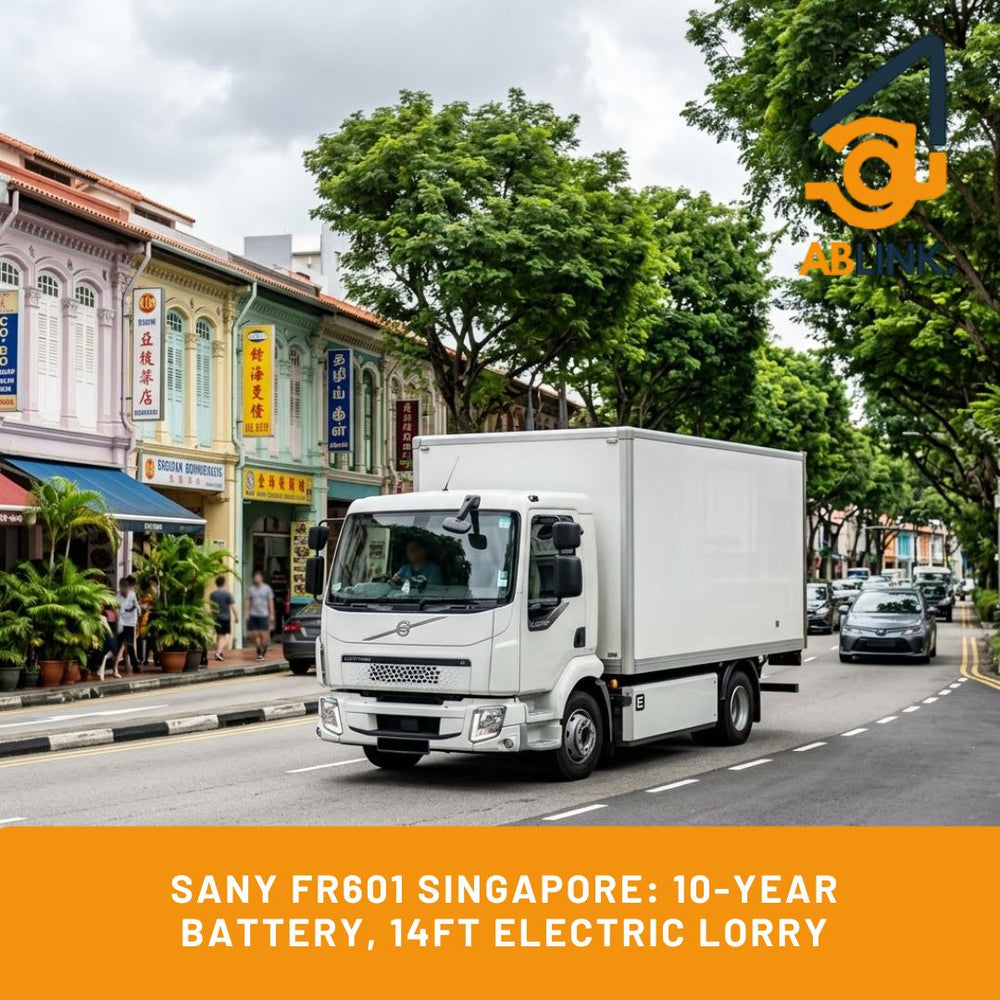
The 10-foot and 14-foot lorries are the most popular heavy vehicle configurations in Singapore. The 10-foot lorry offers a balance between load capacity and maneuverability, making it suitable for both urban and inter-island operations. The 14-foot lorry provides maximum deck space for businesses with consistent high-volume transport needs.
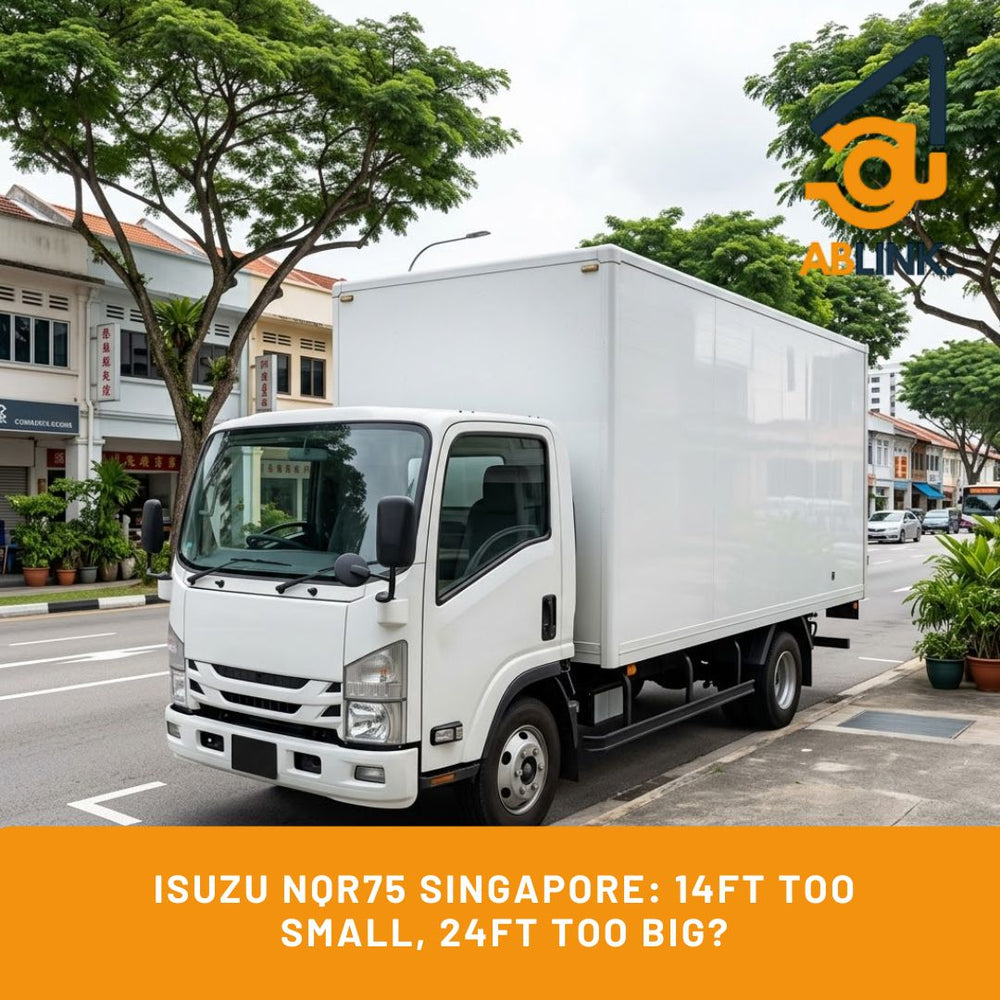
Popular models include the Toyota Dyna, Isuzu N-Series, Hino Dutro, and Mitsubishi Canter. These vehicles are built with reinforced frames, powerful diesel engines, and robust suspension systems designed for the rigorous demands of commercial operations.
View our 10-foot and 14-foot lorry options or explore our detailed guides: 10ft Lorry Buying Guide and 14ft Lorry 2026 Guide.
Electric Commercial Vehicles (Growing Segment)
Singapore's push toward sustainability has made electric commercial vehicles an increasingly viable option. These vehicles offer significant long-term cost advantages through reduced fuel and maintenance expenses, plus alignment with Singapore's environmental goals.
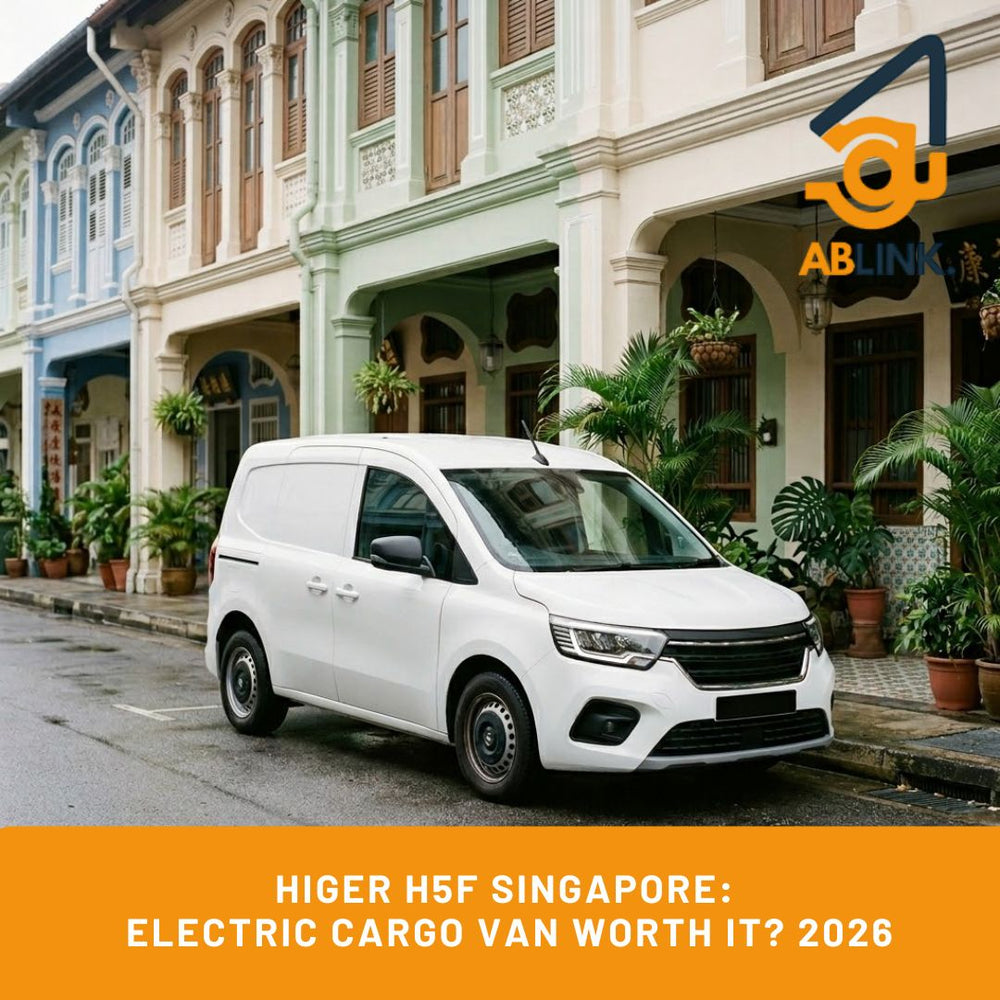
Electric vans like the BYD eT3, Maxus e Deliver 3, Citroen e-Berlingo, and Opel Combo-e represent the future of urban delivery and commercial operations. While initial purchase costs may be higher, the dramatically lower operating costs—electricity costs one-third to one-half of diesel—make these vehicles attractive for businesses committed to sustainability.
Check our electric vehicle collection to explore sustainable commercial vehicle options.
Commercial Vehicle Categories and Requirements
Singapore's LTA categorizes commercial vehicles based on their maximum laden weight and design purpose:
Category C (Goods Vehicles)
-
Designed primarily for transporting goods
-
Includes all traditional commercial vans, lorries, and trucks
-
Requires Certificate of Entitlement (COE) - Category C
-
Subject to 10-year COE validity with one renewal option (maximum 20-year vehicle lifespan)
Category E (Goods & Passenger Vehicles)
-
Vehicles designed to carry both goods and passengers
-
Often used for shuttle services or combined commercial operations
-
Also requires Category C COE for goods vehicles
-
Specific seating and cargo configuration requirements apply
Singapore's Commercial Vehicle Market in 2026
Market Overview and Business Growth Drivers
Singapore's commercial vehicle market thrives on the city-state's position as a major Southeast Asian logistics hub and the continuous expansion of e-commerce, food delivery, and service-based businesses.
The current commercial vehicle fleet in Singapore reflects steady demand from diverse sectors. Logistics firms, food and beverage businesses, construction companies, renovation contractors, courier services, and manufacturing businesses all depend on reliable commercial vehicles for their daily operations.
Why Businesses Choose Commercial Vehicles Right Now
E-Commerce Boom Fueling Demand
Singapore's e-commerce sector continues rapid expansion, driving unprecedented demand for last-mile delivery vehicles. Food delivery platforms, online retail, and subscription services all require extensive commercial vehicle fleets to meet same-day and next-day delivery expectations.
This surge in delivery demand has made commercial vehicles more essential than ever. Businesses that previously might have outsourced delivery now find it economical to operate their own vehicle fleets, creating consistent demand for new and used commercial vehicles.
Urban Business Expansion
Singapore's diverse business landscape—from established manufacturing and retail to emerging tech startups and food tech companies—all require commercial transportation. Whether transporting products, managing logistics, or providing services, business growth directly translates to commercial vehicle demand.
Leasing and Flexible Ownership Options
An important market trend is the growing popularity of commercial vehicle leasing among Singapore's SMEs. Rather than tying up capital in vehicle purchases, many businesses now prefer monthly lease arrangements that offer flexibility, predictable costs, and simplified maintenance.
This trend has created a dynamic market where both purchasing and leasing options serve different business needs at different growth stages. Learn more about leasing advantages in our Monthly Van Rental Guide and Lorry Rental 2026 Guide.
Industry Challenges and Considerations for 2026
Parking and Vehicle Storage
One of Singapore's most significant challenges for commercial vehicle owners is securing adequate parking. Vehicles over 5,000 kg maximum laden weight require designated Vehicle Parking Certificates (VPC), and the demand for VPC parking regularly exceeds available supply.
The limited public VPC parking (approximately $120-180 monthly) means many businesses resort to expensive private VPC arrangements ($960-1,440+ monthly). This is a critical cost factor in total vehicle ownership calculations and often influences decisions between purchasing and leasing.
Regulatory Requirements
Singapore's regulatory framework for commercial vehicles is comprehensive and regularly updated. From COE requirements to insurance mandates to emission standards, businesses must stay current with regulations. Fortunately, experienced commercial vehicle dealers help navigate these requirements.
Fuel Economy and Operating Costs
Fuel costs represent a significant operational expense. The choice between diesel, electric, and other fuel options directly impacts monthly operating budgets. Larger vehicles with higher fuel consumption naturally incur higher fuel costs, making this a critical factor in vehicle selection.
The 2030 Transition: Diesel Phase-Out Implications
Singapore's government has announced plans to gradually phase out diesel-powered commercial vehicles by 2030. While this transition extends beyond immediate 2026 decisions, it influences strategic vehicle purchasing choices today.
Businesses planning vehicles for long-term operation (beyond 2028) increasingly consider electric or hybrid alternatives, recognizing that diesel vehicles purchased today will face obsolescence pressure. For businesses with shorter operational timelines, traditional diesel vehicles remain economical choices. This creates an interesting market dynamic where vehicle selection increasingly depends on business planning horizons.
How to Buy a Commercial Vehicle in Singapore — Step-by-Step
Purchasing a commercial vehicle in Singapore requires careful planning and understanding of multiple factors. This section walks through the complete buying process, from initial needs assessment through final delivery.
Step 1: Assess Your Business Requirements
Before considering specific vehicle models, clearly define your operational needs. This foundation ensures you invest in the right vehicle rather than overshooting or undershooting your actual requirements.
Determine Your Payload and Cargo Volume Needs
How much weight will your vehicle typically carry? Consider both average daily loads and peak volume scenarios. A food delivery business operating near maximum capacity daily requires different vehicle specifications than a business with occasional heavy loads.
Evaluate Daily Usage Patterns
How many kilometers will your vehicle travel daily? How frequently will it run? Multiple short urban routes require different vehicles than long-distance inter-island operations. Urban vehicles benefit from compact dimensions and fuel efficiency; long-distance vehicles prioritize comfort and durability for drivers.
Consider Your Operating Environment
Will your vehicle primarily operate in urban Singapore with tight parking spaces, or will it make regular trips to neighboring regions? Urban vehicles benefit from compact dimensions; regional operations prioritize comfort and robustness.
Project Future Growth
Is this your first commercial vehicle, or are you expanding an existing fleet? A startup may choose a smaller, entry-level vehicle; an expanding business might invest in a larger vehicle supporting anticipated growth.
Step 2: Choose Your Vehicle Type
With clear understanding of your needs, evaluate which vehicle type best serves your operations.
Compact Van Option
If your operation involves frequent stops, light loads (under 1,500 kg), and primarily urban driving, a compact van like the Suzuki Spacia, Honda N Van, or Nissan NV200 delivers excellent value. These vehicles offer exceptional fuel efficiency (15-18 km/litre), ease of parking, and lower purchase prices ($23,800-$26,800 starting prices).
Compact vans suit courier services, food delivery platforms, small retail operations, and service businesses requiring vehicle mobility but not maximum payload capacity.
Medium Van Option
The Toyota Hiace stands as Singapore's most popular choice for general commercial operations. Its combination of reliability, cargo accessibility, seating flexibility, and proven durability makes it suitable across diverse industries.
The Hiace works well for businesses needing moderate cargo capacity (1,500-2,000 kg), passenger shuttle services, or flexible configurations supporting multiple business functions. Its strong resale value also provides good long-term economics.
Heavy Lorry Option
For businesses with substantial transport requirements—construction materials, bulk retail stock, wholesale distribution, or established logistics operations—10-foot or 14-foot lorries provide necessary payload capacity.
The 10-foot lorry offers good balance between load capacity (2,000-2,400 kg) and maneuverability. The 14-foot lorry maximizes deck space for bulk operations. Heavy lorries suit established businesses with consistent high-volume transport needs and dedicated commercial vehicle experience.
Electric Vehicle Option
Growing numbers of Singapore businesses now choose electric commercial vans for sustainability alignment and long-term cost advantages. The BYD eT3, Maxus e Deliver 3, and Citroen e-Berlingo offer competitive pricing ($30,800-$53,800) with dramatically lower operating costs.
Electric vehicles suit urban delivery operations, food delivery services, and businesses emphasizing environmental responsibility. The rapidly expanding charging infrastructure makes electric vehicles increasingly practical for Singapore operations.
Step 3: Calculate Total Cost of Ownership
Successful commercial vehicle purchasing requires understanding total costs, not just purchase price. This prevents choosing vehicles that deliver poor long-term economics.
Vehicle Purchase/Lease Price
New commercial vehicles in Singapore range from $23,800 (entry-level Suzuki Spacia) to $60,000+ for premium options. Used vehicles offer lower entry prices but may require higher maintenance investment.
For vehicle comparison across ABLINK's diverse inventory:
Certificate of Entitlement (COE) Costs
Every commercial vehicle registered in Singapore requires a COE. As of January 2026, Category C COE premiums stand at approximately $76,800. This significant cost is non-negotiable and represents a substantial portion of total vehicle cost.
Important note: COE validity lasts 10 years with one renewal option, meaning commercial vehicles have a maximum practical lifespan of 20 years in Singapore. Plan your vehicle investments accordingly.
Registration and Processing Fees
Registration fees include the $220 registration fee plus Additional Registration Fee (ARF) calculated at 5% of Open Market Value (OMV). For a $40,000 vehicle, ARF would equal approximately $2,000.
Insurance Costs
Commercial vehicle insurance is mandatory and costs more than private vehicle insurance. Expect annual premiums ranging from $2,500 to $5,000+ depending on vehicle type, coverage level, and usage. Comprehensive coverage is recommended for business-critical vehicles.
Parking Costs (Critical for Heavy Vehicles)
Vehicles exceeding 5,000 kg maximum laden weight require designated Vehicle Parking Certificates (VPC). Monthly VPC costs range from $120-180 for public parking to $960-1,440+ for private parking. This ongoing expense significantly impacts monthly operational budgets for heavy lorries.
Fuel and Energy Costs
Fuel economy directly impacts operating budgets:
-
Compact vans: 14-18 km/litre ($200-300 monthly at typical usage)
-
Medium vans: 10-14 km/litre ($350-500 monthly)
-
Heavy lorries: 6-10 km/litre ($600-1,000 monthly)
-
Electric vehicles: $100-200 monthly equivalent in electricity costs
Maintenance and Repair Costs
Budget approximately $100-200 monthly for routine maintenance across light vehicles and $200-400 for heavy lorries. Brand-new vehicles usually have extended warranties reducing immediate maintenance expenses; used vehicles may require more frequent servicing.
Sample Total Cost Calculation: Toyota Hiace Medium Van
-
Purchase Price: $45,000
-
COE: $76,800
-
Registration/ARF: $2,500
-
10-Year Total Insurance: $35,000
-
10-Year Fuel (at 12km/litre, $1.50/litre, 30,000km annual): $37,500
-
10-Year Maintenance: $14,000
-
10-Year Total Cost of Ownership: $210,800 (approximately $21,080 annually)
This calculation helps compare vehicles across their complete lifecycle rather than focusing only on purchase price.
Step 4: Secure Financing (If Needed)
Commercial vehicle financing in Singapore offers advantages over private vehicle loans. Banks and financial institutions recognize commercial vehicles as business tools rather than luxury assets, resulting in more favorable terms.
Advantages of Commercial Vehicle Financing
Unlike private vehicle loans capped at 60-70% loan-to-value ratio with maximum 7-year terms, commercial vehicle loans offer greater flexibility. Many financial institutions approve loans covering 70-90% of vehicle value with tenures extending to 84 months (7 years).
This means smaller down payments and lower monthly obligations, improving business cash flow. For a $45,000 vehicle with $76,800 COE, financing $70,000+ becomes possible rather than being restricted to $50,000.
Finding the Right Lender
Singapore's major banks and financial institutions offer commercial vehicle financing. Comparison shopping between lenders is worthwhile, as rates vary based on creditworthiness, down payment percentage, and vehicle type.
Many commercial vehicle dealers, including ABLINK, maintain relationships with multiple lenders and can facilitate competitive financing options. Read our comprehensive Business Vehicle Financing Guide to understand your financing options and advantages.
Financing Application Requirements
Prepare the following for commercial vehicle loan applications:
-
Business registration documents (if purchasing as business)
-
Recent financial statements (2-3 years)
-
Income documentation and tax returns
-
Personal identification
-
Proof of residential address
-
Details of intended vehicle usage
Applications typically receive approval decisions within 3-5 working days.
Step 5: Complete Vehicle Registration with LTA
Once you've selected your vehicle and secured financing, LTA registration becomes your next step. This process, while straightforward, requires specific documents and careful attention to requirements.
Required Documents for Registration
-
Certificate of Entitlement (COE) certificate
-
Vehicle Invoice/Purchase Agreement
-
Insurance Certificate (Third-Party Liability minimum)
-
Company registration documents (if purchasing as business entity)
-
Identification documents
-
Proof of residential address
Registration Process and Timeline
Submit your registration application through LTA's online portal or authorized dealers. The process typically takes 3-5 working days for approval. Once approved, you receive your vehicle registration number and can officially operate your commercial vehicle.
Vehicle Parking Certificate (VPC) Requirements for Heavy Vehicles
If your vehicle exceeds 5,000 kg maximum laden weight, you must arrange parking with a designated Vehicle Parking Certificate provider before or during registration. This requirement cannot be bypassed, making advance parking arrangements essential for heavy vehicle purchases.
Step 6: Arrange Proper Insurance Coverage
Commercial vehicle insurance is not optional—it's mandatory by Singapore law. Beyond legal requirements, adequate insurance protects your business investment.
Mandatory Insurance Requirements
Singapore law requires minimum Third-Party Liability insurance covering damage to other vehicles, property, and people. This basic coverage protects other road users but does not cover your own vehicle.
Recommended Coverage Options
Comprehensive Coverage: Covers your vehicle against collisions, theft, vandalism, fire, weather, and other perils. Highly recommended for business-critical vehicles. Deductibles (typically $500-1,000) apply per claim.
Third-Party Fire and Theft (TPFT): Covers third-party liability plus fire and theft to your vehicle. Provides middle-ground protection between minimum and comprehensive coverage.
Third-Party Only: Legal minimum, covering only third-party liability. Only recommended for very low-value or non-critical backup vehicles.
Insurance Costs and Selection
Commercial vehicle insurance costs more than private vehicle insurance due to business use and typically higher annual mileage. Expected costs:
-
Compact vans: $2,500-3,500 annually
-
Medium vans: $3,000-4,000 annually
-
Heavy lorries: $3,500-5,500 annually
Multiple insurers operate in Singapore. Shopping multiple quotes ensures competitive pricing for equivalent coverage.
Step 7: Finalize Parking Arrangements
For vehicles under 5,000 kg, standard HDB or private parking suffices. For heavier vehicles requiring VPC, finalize parking before or concurrent with registration.
VPC Parking Options
Public VPC Parking: Offered by HDB and URA at approximately $120-180 monthly. Highly sought after with often-extended waiting lists.
Private VPC Parking: Available from commercial parking operators at $960-1,440+ monthly. Significantly more expensive but immediately available.
Planning Considerations
The limited public VPC supply makes advance planning essential. When budgeting heavy vehicle operations, include private VPC costs unless you've already secured public VPC parking.
Section 4: Commercial Vehicle Financing Deep-Dive
Understanding commercial vehicle financing options helps optimize business cash flow while securing reliable transportation.
Why Commercial Vehicle Financing Is Different (and Better)
Commercial vehicles represent business assets with direct revenue-generating potential. Financial institutions recognize this, offering terms substantially more favorable than private vehicle loans.
Key Differences from Private Vehicle Financing:
| Aspect | Private Vehicle Loan | Commercial Vehicle Loan |
|---|---|---|
| Loan-to-Value Ratio | Maximum 60-70% | Up to 70-90% |
| Maximum Tenure | 7 years (84 months) | 7+ years (84+ months) |
| Interest Rates | Typically 3.0%-4.5% | Often 2.9%-4.0% |
| Flexibility | Standardized terms | More negotiable |
| Tax Treatment | No deduction | Operating expense deduction |
| Purpose | Personal use only | Business operations |
Practical Impact Example:
For a $45,000 vehicle with $76,800 COE (total $121,800):
-
Private car loan: Maximum ~$72,000 at 7 years (would need $49,800 down payment)
-
Commercial vehicle loan: Can finance $95,000+ at 7 years (only ~$26,800 down payment required)
This dramatically improves working capital availability, particularly important for growing businesses.
Interest Rates and Lender Comparison
Singapore's commercial vehicle financing market includes offerings from major banks and specialized finance companies. Rates vary based on:
-
Loan amount and term
-
Down payment percentage
-
Applicant creditworthiness
-
Vehicle age (new vs. used)
-
Collateral value
Expect rates ranging from 2.9% to 4.5% depending on these factors. Established businesses with strong financials often secure rates toward the lower end of this range.
Shopping Multiple Lenders
Comparing quotes from 2-3 lenders typically reveals 0.3%-0.7% rate differences, translating to thousands in interest savings over 7-year terms. Worthwhile lenders include Singapore's major banks, as well as specialized asset financing companies.
Maximizing Financing Advantages
Down Payment Strategy
While financing up to 90% of vehicle value is possible, consider strategic down payments balancing cash preservation and interest cost. A 20-30% down payment (common practice for business vehicles) balances reasonable monthly obligations with capital preservation.
Tenure Optimization
Longer terms (up to 84 months) reduce monthly payments, improving cash flow. However, longer terms increase total interest costs. Calculate your optimal tenure based on anticipated vehicle useful life and business cash flow requirements.
Including COE in Financing
Many commercial vehicle packages include COE in the financed amount. This simplifies financing while improving cash flow, as you're not required to pay the substantial COE upfront.
Tax and Accounting Advantages
Financed vehicles offer tax advantages as business assets. Monthly loan payments and operating expenses (fuel, maintenance, insurance, VPC) are generally tax-deductible business expenses, reducing taxable business income.
Consult your accountant regarding specific tax benefits applicable to your business structure and commercial vehicle usage.
Leasing vs. Buying — Which Is Right for Your Business?
Many Singapore businesses face the fundamental decision: lease a commercial vehicle or purchase one? Each approach offers distinct advantages depending on business circumstances.
The Case for Buying a Commercial Vehicle
Ownership and Asset Building
Purchasing creates business asset ownership. After the financing term concludes, you own a valuable asset with years of remaining utility. This appeals to established businesses planning multi-year vehicle operations.
No Usage Restrictions
Owned vehicles have no mileage limitations or usage restrictions. Whether your vehicle travels 30,000 km annually or 80,000 km, there are no additional charges or penalties.
Customization Freedom
Need specific modifications—cargo configurations, safety equipment, branding—for your business operations? Owned vehicles can be customized exactly to your specifications.
Long-Term Cost Efficiency
For established businesses operating vehicles consistently over 5-10 years, ownership delivers lower total costs compared to continuous leasing payments. The longer your ownership horizon, the more favorable purchasing becomes.
Business Continuity
Your business doesn't depend on lease agreements expiring or lease terms changing. Owned vehicles provide business continuity independent of external rental agreements.
The Case for Leasing a Commercial Vehicle
Lower Upfront Costs
Leasing typically requires minimal down payment—sometimes zero. This preserves working capital for other business investments or operational expenses. This advantage particularly appeals to startups or rapidly growing businesses.
Predictable Monthly Costs
Lease payments are fixed and predictable, simplifying business budgeting. No surprise repair bills or unexpected maintenance expenses—the leasing company covers maintenance.
Flexibility and Scalability
Need to add vehicles during busy seasons? Remove vehicles when demand declines? Leasing accommodates business fluctuations without long-term commitment. This appeals to project-based or seasonal businesses.
Always Current Equipment
Leases typically involve modern vehicles with latest features, technology, and safety systems. You avoid depreciation and the costs of aging vehicles requiring increasing maintenance.
Tax Advantages
Lease payments are typically 100% deductible as business operating expenses, potentially offering better tax treatment than ownership depreciation claims.
Maintenance Included
Most commercial vehicle leases include maintenance, servicing, and repairs. This eliminates surprise costs and ensures vehicles receive professional care.
Decision Framework: Lease vs. Buy
| Factor | Leasing Advantage | Buying Advantage |
|---|---|---|
| Upfront Capital | ✓ Minimal required | ✗ Substantial down payment |
| Monthly Costs | ✓ Predictable, fixed | ✓ Lower after financing term |
| Usage Flexibility | ✗ Often mileage capped | ✓ Unlimited use |
| Customization | ✗ Limited | ✓ Full freedom |
| Maintenance | ✓ Usually included | ✗ Your responsibility |
| Long-term Cost | ✗ Continuous payments | ✓ Lower if 5+ years |
| Asset Value | ✗ No ownership equity | ✓ Builds business equity |
| Seasonal/Variable | ✓ Perfect fit | ✗ Less suitable |
| Tax Deduction | ✓ Full lease amount | Depreciation only |
Real-World Scenarios
Scenario 1: Food Delivery Startup
A new food delivery service with 5 delivery vehicles faces high initial capital needs (rent, hiring, marketing). Recommendation: Lease. Leasing preserves capital, eliminates maintenance headaches, and allows fleet expansion if the business grows or contraction if needed. Explore flexible leasing options.
Scenario 2: Established Logistics Company
A 10-year-old logistics business with stable demand and consistent high-mileage usage wants to expand its 15-vehicle fleet. Recommendation: Buy. Long operational history justifies ownership; lower long-term costs make ownership more economical than continuous leasing; fleet consistency matters for business brand.
Scenario 3: Seasonal Construction Contractor
A construction contractor with highly variable monthly revenue and unpredictable vehicle needs (sometimes requiring 3 vehicles, other months requiring 1). Recommendation: Lease. Leasing matches variable needs perfectly; avoiding large ownership commitments during slow months preserves essential cash for operations. Check our lorry rental options.
Scenario 4: Manufacturing Distribution Center
An established manufacturer distributing products across Singapore with 4 dedicated lorries running daily. Recommendation: Buy. Consistent, high-volume usage makes ownership economical; dedicated vehicles justify customization; long operational horizon (10+ years) favors ownership economics.
Top Commercial Vehicles in Singapore 2026 — Expert Recommendations
Singapore's commercial vehicle market offers options across multiple segments. Here are the most popular and recommended vehicles based on reliability, value, and suitability for Singapore operations.
Best Overall: Toyota Hiace
The Toyota Hiace dominates Singapore's commercial vehicle market and for good reason. This versatile vehicle balances reliability, cargo flexibility, driver comfort, and long-term value in ways few competitors match.
Why Singapore Businesses Choose the Hiace:
Reliability stands as the Hiace's defining characteristic. These vehicles routinely operate for 300,000-500,000 kilometers with basic maintenance, delivering reliability that justifies the investment. For businesses where vehicle downtime directly impacts revenue, the Hiace's proven track record eliminates operational uncertainty.
Cargo flexibility makes the Hiace suitable across diverse applications. Seating configurations range from pure cargo to passenger-heavy setups to balanced combinations. Need to transport passengers one day and cargo the next? The Hiace accommodates both.
Driver comfort matters for vehicles with daily use. The Hiace provides ergonomic seating, easy controls, and good visibility, reducing driver fatigue during long operational days.
Specifications and Practical Details:
-
Engine: 1GD-FTV 2.8L diesel turbo (newer models) or 1KD-FTV 3.0L (older models)
-
Payload capacity: Approximately 1,500-2,000 kg depending on configuration
-
Fuel economy: 10-13 km/litre typical usage
-
Seating: 3 to 14 configurations available
-
Safety: Dual SRS airbags, ABS, traction control, reverse sensors
-
Price point: Mid-to-premium range within the commercial van segment
Best Business Uses:
The Hiace excels for food delivery platforms, logistics operations, hotel/resort shuttles, service businesses (plumbing, electrical, cleaning), retail distribution, mobile services, and passenger transport operations.
Browse ABLINK's Hiace inventory or read our comprehensive Commercial Vans Singapore Guide.
Most Urban-Friendly: Nissan NV200
For Singapore businesses prioritizing compact dimensions and urban maneuverability, the Nissan NV200 delivers excellent balance between cargo space and city-driving practicality.
Key Advantages:
Compact external dimensions (4.2 meters length) make parking and navigating Singapore's narrow streets straightforward. Unlike larger vans requiring careful maneuvering, the NV200 behaves almost like a regular sedan in traffic.
Cargo accessibility exceeds many larger competitors. The wide cargo door and low floor make loading and unloading quick, reducing vehicle idle time at delivery stops.
Fuel efficiency (12-14 km/litre) keeps operating costs lower than larger vehicles, important for delivery businesses operating on thin margins.
Ideal For:
Courier and parcel delivery services benefit most from the NV200's urban optimization. Small retail distribution, food delivery services, and businesses making frequent stops also appreciate the compact design.
View our NV200 collection for current inventory and pricing.
Practical Note:
The NV200 excels in specific use cases but trades maximum cargo space for urban maneuverability. Businesses with heavier or higher-volume cargo requirements should consider larger options.
Most Fuel-Efficient: Honda N Van
The Honda N Van represents the most fuel-efficient commercial vehicle option commonly available in Singapore. Its exceptional economy makes economic sense for high-mileage operations.
Standout Features:
Fuel economy of 16-18 km/litre dramatically reduces monthly fuel costs. A vehicle traveling 2,000 km monthly consumes approximately 110-125 liters at these efficiency levels, roughly half the consumption of less efficient vehicles.
Compact and nimble, the N Van navigates Singapore traffic effortlessly. Its size makes it ideal for solo operators and delivery businesses prioritizing efficiency.
Low acquisition cost ($24,800 starting price) makes the N Van excellent for businesses with limited capital budgets or testing commercial vehicle operations before larger commitments.
Best For:
Solo couriers, small delivery operations, document transport services, and businesses testing commercial vehicle operations before scaling.
Browse our Honda N Van options.
Considerations:
Limited cargo space and payload capacity restrict the N Van to lighter goods. Heavier loads or bulk operations require larger vehicles. As a kei car category vehicle, it appeals primarily to operators valuing efficiency over capacity.
Heavy-Duty Workhorse: Toyota Dyna
When businesses need serious payload capacity—construction materials, bulk goods, heavy logistics—the Toyota Dyna delivers proven heavy-duty performance.
Why Contractors Choose the Dyna:
Reinforced frame construction handles rough treatment and substantial loads day after day. The Dyna was engineered for abuse that would compromise lighter vehicles.
Powerful diesel engine provides torque needed for loaded hauling. The Dyna maintains consistent performance whether lightly loaded or at full capacity.
Comfortable driver environment reduces fatigue during long operational days. The Dyna balances utilitarian design with enough refinement to keep drivers comfortable.
Specifications:
-
Engine: 1GD-FTV 2.8L diesel turbo or 3.0L engine options
-
Payload: 2,000-2,500 kg depending on configuration
-
Deck sizes: 10-foot and 14-foot variants available
-
Fuel economy: 8-10 km/litre typical usage
-
Best for: Construction, bulk materials, established logistics
View our 10ft and 14ft Dyna options or read our detailed guides: 10ft Lorry Buying Guide and 14ft Lorry 2026 Complete Guide.
Emerging Choice: Electric Vans (BYD eT3, Maxus e Deliver 3, Citroen e-Berlingo)
Singapore's transition toward sustainable operations has made electric commercial vehicles increasingly attractive. These vehicles eliminate diesel emissions while dramatically reducing operating costs.
Economic Case for Electric:
Electricity costs approximately $0.03-0.04 per kilometer versus $0.10-0.15 per kilometer for diesel vehicles. A business traveling 30,000 km annually saves approximately $1,800-3,600 in fuel costs alone.
Maintenance is dramatically simpler—no oil changes, spark plug replacements, or complex diesel engine servicing. Reduced moving parts mean fewer failure points. Many operators report maintenance costs dropping 40-60% compared to diesel equivalents.
Supporting Infrastructure:
Singapore's expanding EV charging network (15,300+ public charging points) makes electric vehicle operations increasingly practical. Charging availability across business districts, HDB areas, and industrial zones provides convenient recharging options.
Business Impact:
Electric vehicles increasingly appeal to F&B delivery services, retail businesses, and logistics operations where sustainability messaging resonates with customers. The cost advantages make them economically sensible for high-mileage urban operations.
Explore our electric vehicle collection for sustainable commercial transportation options.
Considerations:
Range limitations (200-300 km per charge) suit primarily urban operations. Businesses requiring long inter-island operations or regional coverage should ensure their primary routes remain within charging range.
Upfront costs exceed diesel equivalents, though total cost of ownership often favors electric over longer operational periods.
Essential Regulations and Compliance for Commercial Vehicle Operations
Singapore's regulatory framework for commercial vehicles ensures safety, environmental protection, and fair operations. Understanding these requirements prevents costly compliance issues and ensures smooth business operations.
Certificate of Entitlement (COE) — The Foundation Requirement
Every commercial vehicle in Singapore requires a Certificate of Entitlement. The COE system manages vehicle population while generating government revenue.
How COE Works:
When purchasing a new commercial vehicle, the seller typically secures the COE before transfer. For used vehicle purchases, you inherit the existing COE. Monthly COE auctions determine prevailing COE prices for different vehicle categories.
Commercial vehicles fall under Category C (Goods Vehicles). As of January 2026, Category C COE prices fluctuate around $76,800, representing a significant component of total vehicle cost.
COE Validity and Renewal:
Your initial COE is valid for 10 years. After 10 years, you can renew the COE for an additional 10 years (total 20-year maximum vehicle lifespan). Upon COE expiration without renewal, your vehicle cannot legally operate.
Planning Implications:
Understand that vehicles have maximum 20-year practical lifespans in Singapore. Plan vehicle investments with this timeline in mind. A vehicle purchased in 2026 cannot legally operate beyond 2046, regardless of mechanical condition.
Vehicle Parking Certificate (VPC) — The Heavy Vehicle Requirement
Vehicles exceeding 5,000 kg maximum laden weight require designated Vehicle Parking Certificates (VPC) showing where the vehicle will be parked when not in use.
Why VPC Requirements Exist:
Heavy vehicles parked on regular roads create traffic obstruction and safety hazards. VPC requirements ensure these vehicles have designated parking, protecting roads and public spaces.
VPC Options and Costs:
Public VPC Parking: HDB and URA-operated facilities charging approximately $120-180 monthly. Limited supply creates often-lengthy waiting lists.
Private VPC Parking: Commercial parking operators provide immediate availability at $960-1,440+ monthly.
Critical Planning Requirement:
Secure VPC parking before or concurrently with vehicle registration. Without designated parking, LTA will not approve vehicle registration. For businesses without existing parking, budget substantial private VPC costs or plan extended waiting periods for public VPC availability.
Insurance Requirements and Compliance
Commercial vehicle insurance is not optional—it's mandatory by law and essential business protection.
Mandatory Coverage:
Singapore law requires minimum Third-Party Liability insurance. This covers damage to other vehicles, property, and people involved in accidents where your vehicle is at fault.
Recommended Additional Coverage:
-
Comprehensive Coverage: Protects your vehicle against collision, theft, fire, weather, and vandalism
-
Personal Accident Coverage: Covers medical expenses for you and passengers
-
Loss of Earnings Coverage: Compensates for revenue loss during vehicle downtime (available through some insurers)
Insurance Compliance:
Operating without valid insurance is illegal and exposes your business to catastrophic liability. Maintain continuous insurance coverage and carry proof of insurance in your vehicle.
Important Note:
Insurance requirements don't distinguish between new and used vehicles—both require identical coverage. Don't assume used vehicles can operate with minimal insurance; protection requirements remain identical.
Emission Standards and the 2030 Transition
Singapore is transitioning toward zero-emissions transportation. While this transition extends beyond 2026, understanding long-term trends helps inform vehicle purchasing decisions.
Current Standards (Through 2026):
Diesel vehicles meeting Euro 6 emission standards can legally operate through 2026 and beyond. Standard commercial vehicles sold today comply with these requirements.
2030 Transition Implications:
Singapore has signaled that diesel commercial vehicles will be phased out beginning 2030. While this timeline extends beyond immediate 2026 decisions, businesses purchasing vehicles with expected 8+ year operational lives should factor this transition into planning.
Electric vehicles avoid emission concerns entirely and align with Singapore's long-term transportation vision.
License and Driver Requirements
The driving license class required depends on your vehicle's maximum laden weight:
Class 3 License: Light vehicles up to 3,500 kg maximum laden weight
Class 4 License: Medium vehicles 3,501-5,500 kg maximum laden weight
Class 5 License: Heavy vehicles exceeding 5,500 kg maximum laden weight
Ensure your drivers hold appropriate license classes. Operating vehicles without proper driver licensing violates regulations and creates liability issues.
Safety and Maintenance Standards
While not requiring regular government inspections like some jurisdictions, Singapore expects vehicles to maintain safe operating condition. Defective brakes, worn tires, or safety failures can result in traffic violations and safety liability.
Maintain regular preventive maintenance schedules. For used vehicles, conduct pre-purchase inspections verifying mechanical soundness.
Section 8: Why ABLINK Is Your Ideal Commercial Vehicle Partner in Singapore
ABLINK has established itself as Singapore's trusted commercial vehicle dealer through consistent focus on quality, reliability, and customer service.
Our Diverse Inventory
ABLINK's commercial vehicle collection spans Singapore's market spectrum:
Light Commercial Vans: Including the ultra-efficient Suzuki Spacia, versatile Honda N Van, compact Nissan NV200, and popular Toyota Townace. Perfect for startups and small operations prioritizing efficiency. Browse our van collection.
Popular Medium Vans: The market-leading Toyota Hiace in various configurations. The proven reliability and cargo flexibility that countless Singapore businesses depend on daily. Explore Hiace options.
Heavy-Duty Lorries: Including 10-foot and 14-foot configurations of the Toyota Dyna, Isuzu N-Series, Hino Dutro, and Mitsubishi Canter. Purpose-built for demanding construction, logistics, and distribution operations. View our lorry collection.
Electric Commercial Vehicles: The BYD eT3, Maxus e Deliver 3, Citroen e-Berlingo, Opel Combo-e, and Golden Dragon EV. Supporting businesses committed to sustainability and seeking long-term cost advantages. Check our electric vehicle options.
Passenger Vans: For businesses requiring passenger transport alongside cargo operations. Browse all vehicles.
Partnership Approach
ABLINK's approach transcends typical dealer relationships. We partner with businesses to identify optimal vehicles matching specific operational requirements and budget constraints.
This partnership approach means:
Expert Consultation: Our team understands Singapore's commercial vehicle market comprehensively. We ask detailed questions about your operations, growth plans, and budget constraints, then recommend vehicles aligning with your actual needs—not just highest-margin sales.
Financing Solutions: Through relationships with multiple financial institutions, ABLINK facilitates competitive financing options. We handle paperwork, manage applications, and often secure better rates than you'd obtain independently. Learn about financing advantages.
Leasing Programs: Beyond purchasing, ABLINK offers flexible leasing programs accommodating varying business needs. Whether you need permanent fleet vehicles or temporary capacity during peak seasons, leasing options exist. Explore our leasing programs.
Regulatory Navigation: Our team manages regulatory complexities—COE documentation, LTA registration requirements, parking certificate coordination. We ensure smooth transitions from selection through operational deployment.
Ongoing Support: Post-purchase support includes maintenance recommendations, fleet optimization suggestions, and available upgrade options as your business evolves.
Why Businesses Trust ABLINK
Businesses across Singapore—logistics firms, construction companies, food delivery services, contractors, rental operations—partner with ABLINK for reliability, transparent dealings, and genuine commitment to their success.
Frequently Asked Questions About Commercial Vehicles in Singapore
Q: What's the difference between a commercial vehicle and a private car?
A: Commercial vehicles are registered and used primarily for business purposes—transporting goods, providing services, or business operations. Private cars are registered for personal transportation. Beyond registration differences, commercial vehicles are engineered with higher payload capacity and more durable construction suited to demanding business use. Learn more in our Commercial Vans Guide.
Q: Do I need a special driver's license for commercial vehicles?
A: Depends on vehicle weight. Vehicles under 3,500 kg maximum laden weight require a Class 3 license (same as private cars). Vehicles 3,501-5,500 kg require Class 4. Vehicles exceeding 5,500 kg require Class 5. Verify your driver's license class matches your vehicle.
Q: Can I drive a commercial vehicle in Malaysia?
A: Yes, but cross-border regulations apply. Your vehicle must have valid Singapore registration, insurance, and COE. Malaysian authorities may impose additional requirements. Clarify cross-border permissions before planning regional operations. Dedicated commercial vehicle dealers can advise on cross-border operational requirements.
Q: How long does commercial vehicle registration take?
A: Once you submit all required documents, LTA typically approves registration within 3-5 working days. Gathering documents (COE certificate, insurance certificate, etc.) often takes longer than the actual registration process. Read our complete buying process guide.
Q: What happens when my COE expires?
A: Your vehicle cannot legally operate. You can renew your COE for another 10 years (at significant cost), or de-register your vehicle. Many businesses evaluate vehicle replacement options when facing COE renewal costs.
Q: Is leasing or buying a commercial vehicle better?
A: Depends on your situation. Leasing suits businesses with variable needs, startups prioritizing cash preservation, and seasonal operations. Purchasing suits established businesses with consistent demand and multi-year operational horizons. Compare leasing vs buying options.
Q: What's included in commercial vehicle insurance?
A: Mandatory Third-Party Liability is required. Additional coverage options include Comprehensive (your vehicle protection), Personal Accident (medical expenses), and Loss of Earnings. Recommended coverage varies by business—consult your insurance provider.
Q: Can I operate a commercial vehicle from my HDB flat?
A: Vehicles under 2,000 kg unladen weight can park in HDB residential areas. Heavier vehicles cannot park in HDB areas. If exceeding 2,000 kg, secure designated VPC parking elsewhere.
Q: How much does VPC parking cost?
A: Public VPC parking (HDB/URA) costs approximately $120-180 monthly with often-lengthy waiting lists. Private VPC parking is immediately available at $960-1,440+ monthly. Budget accordingly for heavy vehicle operations.
Q: Which commercial vehicle is most fuel-efficient?
A: The Honda N Van achieves 16-18 km/litre, best among commercial vehicles. Compact vans (Nissan NV200, Suzuki Spacia) achieve 14-16 km/litre. Electric vehicles eliminate fuel concerns entirely. Larger lorries typically achieve 6-10 km/litre. Explore our efficient van options.
Q: What's the best commercial vehicle for food delivery?
A: Depends on operation scale. Solo operators prefer the Honda N Van or Nissan NV200. Established platforms managing multiple deliveries benefit from the Toyota Hiace or electric vans. Discuss your specific requirements with our team or explore our van collection.
Q: Are electric commercial vehicles reliable?
A: Yes. Electric vehicles from established manufacturers (BYD, Maxus, Citroen) offer proven reliability. Maintenance is simpler than diesel vehicles. As Singapore's EV infrastructure expands, electric vehicles become increasingly practical for urban operations. Check our electric vehicle options.
Q: How much maintenance does a commercial vehicle require?
A: Budget $100-200 monthly for light vans and $200-400 for heavy lorries. New vehicles under warranty require minimal maintenance. Used vehicles may require more frequent servicing. Preventive maintenance minimizes unexpected failures.
Q: Can I modify my commercial vehicle?
A: Depends on modifications and registration status. Contact LTA before making major changes. Minor modifications (paint, interior) typically don't require approval. Major structural or mechanical changes may require re-registration or inspection.
Q: What's total cost of ownership for a commercial vehicle?
A: Highly variable based on vehicle type, usage, and operational requirements. A medium van might cost $200,000-$250,000 over 10 years including purchase, COE, insurance, fuel, and maintenance. Heavy lorries might cost $300,000-$400,000. Calculate TCO specific to your requirements.
Q: Which commercial vehicle holds its resale value best?
A: Toyota products (Hiace, Dyna, Townace) hold value exceptionally well due to reliability reputation and strong demand. Nissan NV200 also maintains decent residual value. Electric vehicles' resale values are still establishing as market matures. View our inventory options.
Q: Can I get a commercial vehicle loan without substantial down payment?
A: Yes, commercial vehicle loans often allow 70-90% loan-to-value financing. A $121,800 vehicle (including COE) might be financed with only $25,000-30,000 down payment. Learn about financing options.
Q: What's the process for purchasing a commercial vehicle?
A: 1) Assess your needs, 2) Select your vehicle, 3) Calculate total cost, 4) Secure financing (if needed), 5) Register with LTA, 6) Arrange insurance, 7) Finalize parking (if applicable). See our detailed buying guide.
Q: Is it better to buy new or used commercial vehicles?
A: Both have merits. New vehicles offer warranty, latest technology, and known condition. Used vehicles cost less upfront. Consider depreciation, warranty, maintenance costs, and your confidence in vehicle condition. Certified used vehicles offer balance between cost and reliability. Browse our inventory.
Getting Started: Your Next Steps
Understanding commercial vehicles in Singapore positions you to make informed investment decisions. Whether operating your first commercial vehicle or expanding an established fleet, informed decisions maximize operational efficiency and financial returns.
Ready to Explore Your Options?
ABLINK's inventory spans the complete spectrum of Singapore's commercial vehicle market. Whether you need a compact delivery van, reliable medium van, powerful heavy lorry, or forward-thinking electric vehicle, we have options matching your requirements and budget.
Take the Next Step:
Our team is ready to partner with you in selecting the commercial vehicle that optimizes your business operations and financial performance.
Contact ABLINK today to discuss your commercial vehicle requirements. We're here to help your business move forward.