Most Singapore SME owners know that running a commercial vehicle costs money. Fewer know exactly how much of that cost the government lets you claim back through the tax system — and how to do it correctly.
Here is the short version: motor vehicle expenses incurred on goods and commercial vehicles such as vans, lorries and buses are fully tax-deductible in Singapore, according to the Inland Revenue Authority of Singapore (IRAS). The purchase cost of the vehicle can also be written off over time through capital allowances under the Income Tax Act 1947.
Private cars — regardless of whether they are used for business — are a different story. The rules are strict, and getting them wrong in either direction costs you money.
⚠️ Important Notice
This article provides general information about Singapore's tax framework for commercial vehicles, based on IRAS published guidance as at March 2026. It does not constitute tax or legal advice. Tax rules are subject to change. For advice specific to your company's tax position, consult a qualified tax professional or an IRAS-registered tax agent.
This guide walks through every category of tax benefit available for commercial vehicle owners in Singapore: what qualifies, what does not, how to calculate capital allowances, and what records you need to keep. All figures and rules referenced are drawn directly from IRAS official published guidance, linked throughout.
The Core Rule: Commercial Vehicle vs. Private Car
The entire framework of Singapore's commercial vehicle tax treatment rests on one critical distinction.
→ Official IRAS source: Tax Treatment of Business Expenses (M-R)
This rule applies absolutely. An S-plated private car used exclusively for business purposes is still non-deductible — IRAS does not make exceptions based on usage. The plate classification determines the treatment, not how the vehicle is actually used.
What You Can Deduct Every Month
Expenses IRAS Explicitly Confirms as Deductible
According to IRAS, motor vehicle running expenses on qualifying commercial vehicles are tax-deductible. IRAS explicitly lists the following:
-
Repairs and maintenance — workshop servicing, parts replacement, tyres
-
Petrol and fuel costs — diesel, petrol, or electricity charging costs for EVs
-
Parking fees — season parking, hourly carpark charges, and ERP fees
In addition, expenses that are wholly and exclusively incurred in the production of income are generally deductible under Section 14(1) of the Income Tax Act 1947. For a commercial vehicle used in business operations, this typically includes:
-
Motor insurance premiums for the commercial vehicle
-
Road tax
-
Vehicle washing and cleaning costs directly related to business use
-
Driver salaries where the driver is an employee of the company
What Is Not Deductible
IRAS is explicit: no deduction is allowed on motor vehicle expenses incurred on private cars (S-plated) and business cars (Q-plated and RU-plated cars registered on or after 1 April 1998) — whether the costs are directly incurred or paid as a reimbursement to an employee, and even if those vehicles are used for business purposes.
This catches many companies by surprise. If your director or employee uses their personal S-plated car for business trips and you reimburse the cost, that reimbursement is also non-deductible from the company's tax position.
Transport allowances paid to staff in cash — not tied to a specific vehicle — are treated differently: they are deductible for the employer (though taxable as employment income for the employee receiving them).
Writing Off the Vehicle Purchase Cost
What Capital Allowances Are
Depreciation recorded in your company's financial statements is not tax-deductible in Singapore. Instead, IRAS provides capital allowances as the tax equivalent — a structured write-off of the cost of qualifying fixed assets over time, under Sections 19 and 19A of the Income Tax Act 1947.
Commercial vehicles — vans, lorries, pick-up trucks and buses acquired for business use — are listed by IRAS as qualifying plant and machinery for capital allowance purposes. Private S-plated cars and Q-plated / RU-plated company cars (registered on or after 1 April 1998) explicitly do not qualify.
→ Official IRAS source: Capital Allowances
Three Methods to Claim
Method 1: Write-Off Over Prescribed Working Life (Section 19)
The vehicle cost is written off based on the prescribed working life in the Sixth Schedule of the Income Tax Act 1947 — 6 years for motor vehicles.
-
Initial Allowance (IA): 20% of vehicle cost, claimed in the first Year of Assessment (YA)
-
Annual Allowance (AA): remaining 80% ÷ number of years of working life, claimed each YA
From YA 2023 onwards, companies may elect to claim over 6 or 12 years for assets with a prescribed working life of 12 years or less. The election is irrevocable once made.
Method 2: 3-Year Write-Off (Section 19A(1))
The vehicle cost is written off equally over 3 Years of Assessment — 1/3 of the cost per YA. Claims do not need to be made in consecutive YAs, giving flexibility to defer claims to years when the company has higher taxable income.
For most SMEs, the 3-year write-off provides a faster tax recovery than the 6-year working life method and is commonly used for commercial vehicle purchases.
Method 3: 1-Year Write-Off for Low-Value Assets (Section 19A(10A))
If the qualifying asset costs S$5,000 or less, the full cost may be written off in a single YA. The total claim under this method is capped at S$30,000 per YA across all low-value assets.
This method is more applicable to accessories and equipment than to standard van or lorry purchases.
What This Looks Like in Practice
The following is a simplified illustration only and does not constitute tax advice. Actual figures depend on your company's specific tax position and the total acquisition cost of the vehicle.
A company purchases a qualifying commercial lorry with a total acquisition cost of S$80,000 (inclusive of vehicle base price, COE, and registration costs) in the financial year ending 31 December 2025, for YA 2026. Using the 3-year write-off method:
At Singapore's corporate income tax rate of 17%, this generates a total tax reduction of approximately S$13,600 over three years on the vehicle purchase cost alone — before accounting for ongoing running expense deductions on fuel, maintenance, and insurance across the same period.
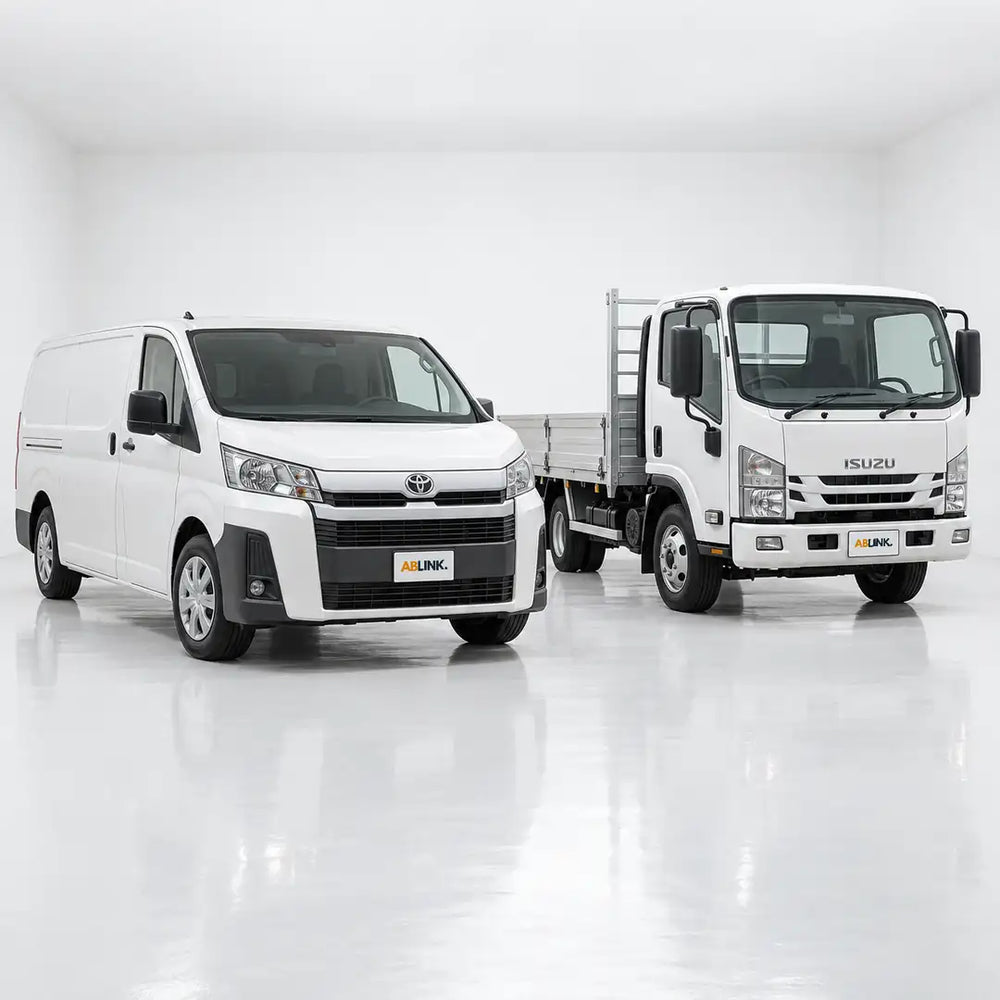
Every van and lorry in ABLINK's range qualifies for this treatment. Browse options by category:
-
Small Vans — NV200, Townace, Honda N-Van, Suzuki Spacia Base
-
Big Vans — Toyota Hiace
-
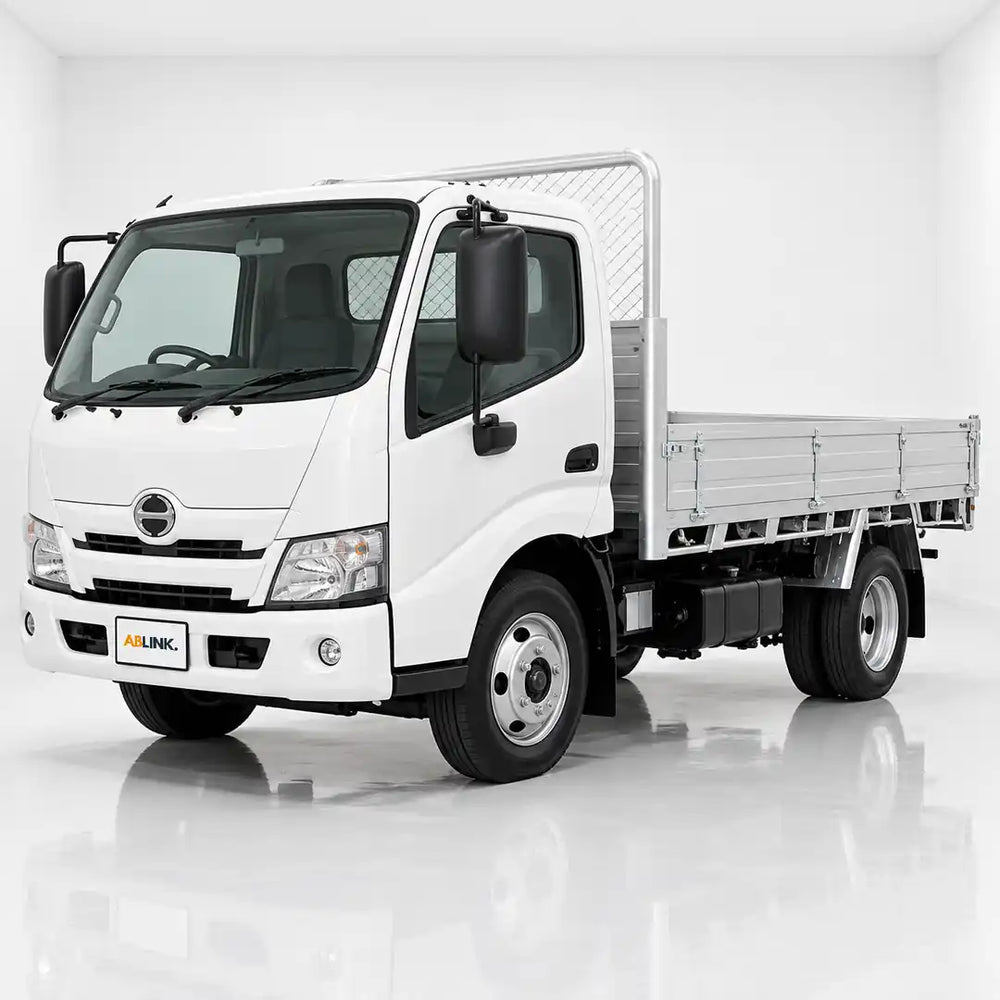
10ft Lorry — Toyota Dyna, Hino Dutro
-
14ft Lorry — Isuzu N-Series, Mitsubishi Canter, SANY FR601
-
EV Commercial — BYD eT3, Golden Dragon, Maxus e Deliver 5, Citroen e-Berlingo
Where COE Fits Into the Calculation
The Certificate of Entitlement is a significant cost component of any commercial vehicle purchased in Singapore. IRAS's treatment is clear:
COE expenditure is part of the vehicle's total acquisition cost for capital allowance purposes. If the vehicle qualifies for capital allowances (i.e., it is a goods/commercial vehicle), the COE cost is included in the total cost used to compute annual write-offs. COE cannot be separately deducted as a standalone revenue expense.
The same treatment applies to COE renewal: the amount paid upon renewal is treated as an additional cost of the vehicle and may be included in subsequent capital allowance claims.
If a COE is purchased but never subsequently used to acquire a vehicle, no capital allowance can be claimed on that expenditure.
For detail on financing COE and structuring commercial vehicle purchases, read the Commercial Vehicle Financing Guide Singapore 2026.
Buying on HP? Here's How Interest Is Treated
Many businesses purchase commercial vehicles through hire purchase (HP) arrangements. IRAS treats the two cost components of an HP agreement differently:
Capital allowances are calculated on the principal payments only — the deposit plus principal instalments paid. The total HP amount (including interest) is not the basis for the CA calculation.
HP interest is a separate revenue expense. It is generally deductible as a business financing cost under Section 14(1)(a) of the Income Tax Act 1947, provided it is wholly and exclusively incurred in the production of income.
For a 3-year write-off under HP:
-
Annual Allowance = 1/3 of the principal amount paid in each YA
-
Where deposit and instalments fall across different financial years, the CA is calculated on the basis of principal payments made in each respective YA
For a full comparison of hire purchase, outright purchase, and leasing from a total cost perspective, read the Commercial Vehicle Leasing vs Buying Singapore 2026 guide and the Van Leasing vs Rental vs Buying: Singapore SME Guide 2026.
GST-Registered? You Can Claim This Too
For GST-registered businesses, input tax recovery rules for commercial vehicles are separate from the income tax framework.
Under Regulation 25(1) of the GST (General) Regulations, GST incurred on the purchase and running expenses of a motor car is a disallowed input tax claim. However, vans, lorries, buses and other commercial vehicles that fall outside the definition of "motor car" under those regulations are treated differently.
GST-registered businesses can generally claim the GST component on the purchase price and running expenses of qualifying commercial vehicles as input tax, subject to the normal input tax rules.
Confirm the classification of your specific vehicle with your tax advisor, as the definition of "motor car" under GST regulations and under income tax regulations can differ in specific edge cases.
→ Official IRAS GST guidance: Purchase and Sale of Motor Vehicles – IRAS
Full Deductible vs Non-Deductible Reference Table
Source: IRAS – Tax Treatment of Business Expenses (M-R) and Capital Allowances
What Records You Must Keep
IRAS does not require supporting documents to be filed together with your Corporate Income Tax Return. However, all records must be retained and produced immediately upon IRAS' request. The standard retention period for business records in Singapore is 5 years from the relevant Year of Assessment.
Maintain the following for every commercial vehicle in your fleet:
-
Vehicle purchase invoice — total cost, COE component, and GST (if applicable)
-
Hire purchase agreement — principal, interest breakdown, deposit paid, and full instalment schedule
-
Capital allowance schedule per vehicle — cost, method elected, annual allowances claimed, and tax written-down value carried forward each YA
-
Receipts for running expenses — fuel, maintenance, repairs, parking, insurance premiums, road tax
-
Business use documentation — records confirming the vehicle is deployed in your business operations
How to File the Claim
Capital allowance claims are made in your company's Corporate Income Tax Return for the relevant Year of Assessment. Your company prepares a capital allowance schedule as part of the tax computation submitted with Form C. If filing Form C-S or Form C-S (Lite), retain the tax computation and capital allowance schedule, and submit only upon IRAS' request.
Running expense deductions are claimed as part of your company's normal business expense deductions in the tax computation. No special form is required beyond accurate record-keeping.
→ Capital allowances: iras.gov.sg/taxes/corporate-income-tax/…/capital-allowances
→ Motor vehicle expenses: iras.gov.sg/taxes/corporate-income-tax/…/tax-treatment-of-business-expenses-(m-r)
Key Takeaways
-
Commercial vehicles (vans, lorries, buses) — running expenses are fully tax-deductible, including fuel, repairs, maintenance, and parking fees, per IRAS published guidance.
-
Private S-plated cars — no deduction is allowed, even if used exclusively for business. The plate determines the treatment, not the usage.
-
Capital allowances allow you to write off the full acquisition cost (including COE) of a qualifying commercial vehicle over 1, 3, or 6 years under Sections 19 and 19A.
-
The 3-year write-off (Section 19A) is the most commonly used method for commercial vehicles; it does not need to be claimed in consecutive years.
-
COE is part of the acquisition cost for capital allowance purposes — it cannot be separately deducted.
-
HP interest is separately deductible as a financing cost; only the principal is used to compute capital allowances.
-
GST-registered businesses can generally claim input tax on qualifying commercial vehicle purchases and running expenses.
-
Retain all records for 5 years — invoices, HP agreements, CA schedules, and expense receipts.
Frequently Asked Questions
Are lorry and van running costs tax-deductible in Singapore?
Yes. According to IRAS, motor vehicle expenses incurred on goods and commercial vehicles such as vans, lorries and buses are tax-deductible. IRAS explicitly confirms this covers repairs, maintenance, parking fees, and petrol costs. The full IRAS guidance is at iras.gov.sg.
Can I claim a tax deduction on a company car (Q-plate)?
For Q-plated and RU-plated cars registered on or after 1 April 1998, both running expenses and capital allowances are not deductible. For those registered before 1 April 1998, running expenses are deductible subject to an IRAS-prescribed cap. Confirm your vehicle's registration date before making any claims, and consult a tax professional for the specific calculation.
What is the capital allowance write-off period for a commercial van or lorry?
IRAS prescribes a 6-year working life for motor vehicles under the Sixth Schedule of the Income Tax Act 1947. Under the 3-year write-off method (Section 19A(1)), the full cost is written off as 1/3 per Year of Assessment. Your company selects the method at point of claim.
Is the COE of a commercial vehicle tax-deductible?
The COE is part of the vehicle's total acquisition cost for capital allowance purposes. It is included in the total cost base from which capital allowances are calculated — it cannot be separately deducted as a standalone revenue expense.
I reimburse my employee's personal car expenses for business trips. Is that deductible?
No. IRAS explicitly states that reimbursements of expenses incurred on S-plated private cars are not deductible — even where the car was used for business purposes and the reimbursement is paid to an employee. Cash transport allowances (not tied to a specific private vehicle) are deductible for the employer, though taxable as employment income for the employee.
Can I claim GST on the purchase of a commercial van or lorry?
Generally yes, for GST-registered businesses — vans and lorries typically fall outside the "motor car" definition under GST regulations, allowing input tax recovery. Confirm the specific vehicle classification with your tax advisor, as edge cases exist.
Where is the official IRAS guidance on this?
-
Running expenses: Tax Treatment of Business Expenses (M-R) – IRAS
-
Capital allowances: Capital Allowances – IRAS
-
GST on motor vehicles: Purchase and Sale of Motor Vehicles – IRAS
This article is for general informational purposes only and does not constitute tax or legal advice. All information is based on IRAS published guidance as at March 2026. Tax rules are subject to change. Always consult a qualified tax professional or IRAS-registered tax agent for advice specific to your company's situation.
Ready to Buy a Tax-Deductible Commercial Vehicle?
Every commercial van and lorry at ABLINK qualifies for capital allowances and full running expense deductions under IRAS rules — unlike private cars. Confirm your vehicle eligibility and get a full on-road price quotation directly with the ABLINK team.
📍 421 Tagore Industrial Avenue, Tagore 8 Building, #02-13, Singapore 787805
📱 WhatsApp / Call: +65 8946 8228
✉️ sales@ablink.sg
🕐 Mon–Fri 9:00 AM – 6:00 PM | Sat 9:00 AM – 1:00 PM
Browse All Vehicles | Contact ABLINK | Explore Leasing
Which Vehicles Does This Actually Apply To?
Tax treatment only becomes real once there is a vehicle attached to it. If you are reading this while weighing up a purchase, the deduction is one input into the decision — usually a smaller one than the purchase price, the COE position and the running costs over the years you will hold the vehicle.
Treat the tax position as a tiebreaker between comparable vehicles rather than a reason to buy. A vehicle that is wrong for the work does not become right because of how it is treated at year end, and the difference between a well-matched and a poorly-matched vehicle over a full ownership cycle is almost always larger than the deduction.
Browse the commercial vehicle range
- 10ft lorry range — light goods, the entry class
- 14ft lorry range — the most common choice for delivery and trade fleets
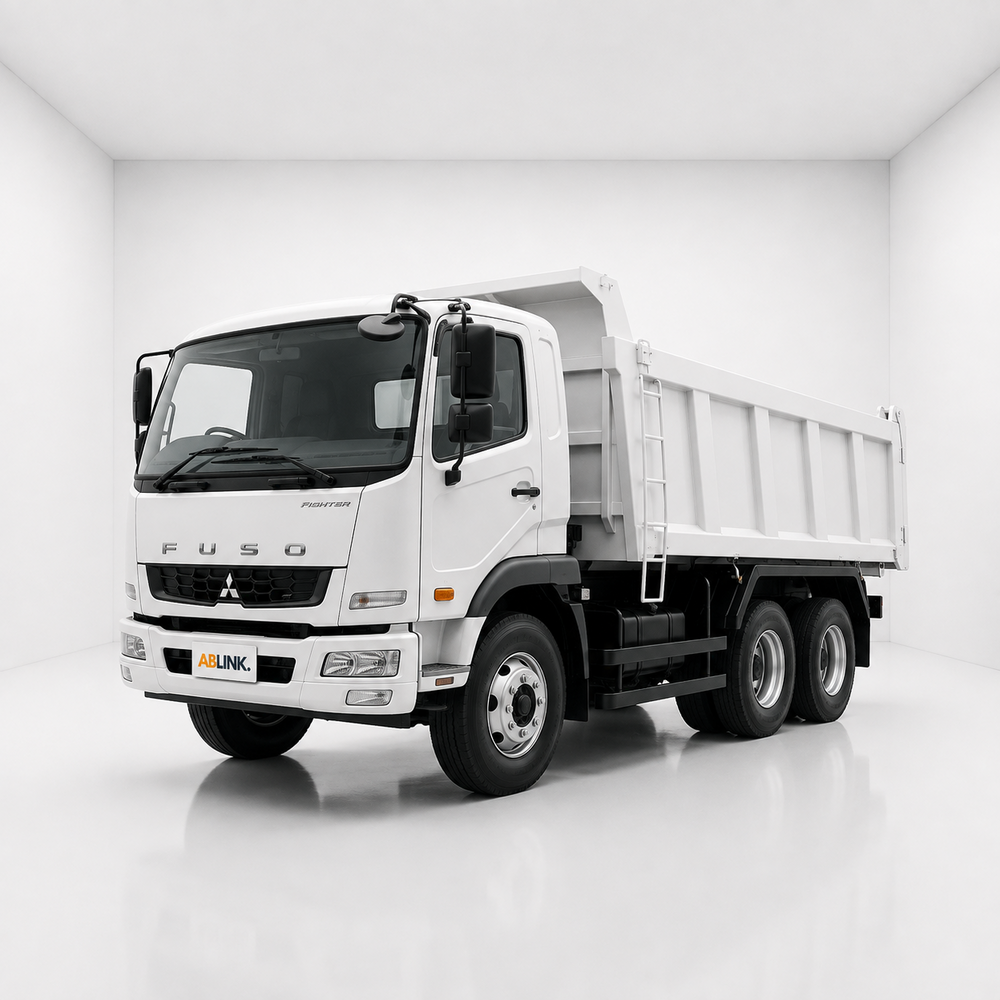
- Heavy-duty trucks — the upper weight classes
- Electric commercial vehicles — where grant support also comes into play
Current availability and pricing sit on the new commercial vehicle listings, with pre-owned units on the marketplace. For the tax position specific to your business, take the figures in this guide to your accountant before you commit — the treatment depends on facts this article cannot see.