The painful truth hits at 11 PM.
Your logistics manager just called. The rented lorry broke down again. It's the third time this month. Your delivery client is furious. You're losing money by the hour. And somewhere in the back of your mind, you're thinking the same thing:
"How much longer can I keep renting vehicles I don't even own?"
If you're running a delivery business, logistics operation, catering service, or construction company in Singapore, you've probably wrestled with this exact question: Should I rent vans and lorries? Lease them? Or buy outright?
The problem is, there's no simple answer. But the right decision can save your business thousands every year while freeing up capital for growth.
In this guide, we'll walk you through the real differences between rental, leasing, and buying—and show you a framework to decide what's best for your operation right now.
Understanding Your Three Options
Let's be clear about what each option actually means and how it works in Singapore's market.
1. Vehicle Rental – Flexibility on Demand
Rental is straightforward: you pay a daily or monthly fee to use a vehicle, but you never own it. Daily rates are flexible, but monthly arrangements typically offer better value.
The beauty of rental is flexibility. If your business is seasonal or demand is unpredictable, rental lets you scale up when you need extra capacity and scale down when you don't. There's no long-term commitment, no maintenance headaches, and no depreciation loss on your books.
The downside? Over time, especially if you're renting the same vehicle month after month, the costs add up. Many businesses find that what started as a temporary solution becomes their permanent fleet cost—eating into margins without building any equity.
Rental works best for:
One-off projects (3–6 months)
Seasonal spikes (Chinese New Year, holiday season)
Testing a new service line before committing capital
2. Commercial Vehicle Leasing – The Professional Middle Ground
Leasing is different from renting, and the distinction matters. When you lease a commercial vehicle, you're signing a structured agreement with a professional lessor. Lease terms are set per agreement — short-term and long-term packages are both offered.
With a lease arranged through Ablink's commercial vehicle leasing service, the published offer covers:
Flexible lease terms – short-term or long-term packages to fit the business
Servicing and insurance handled – vehicles are regularly serviced, insured and road-ready; confirm exactly which running costs your own quote includes
Immediate availability – no long waiting times to get a vehicle earning
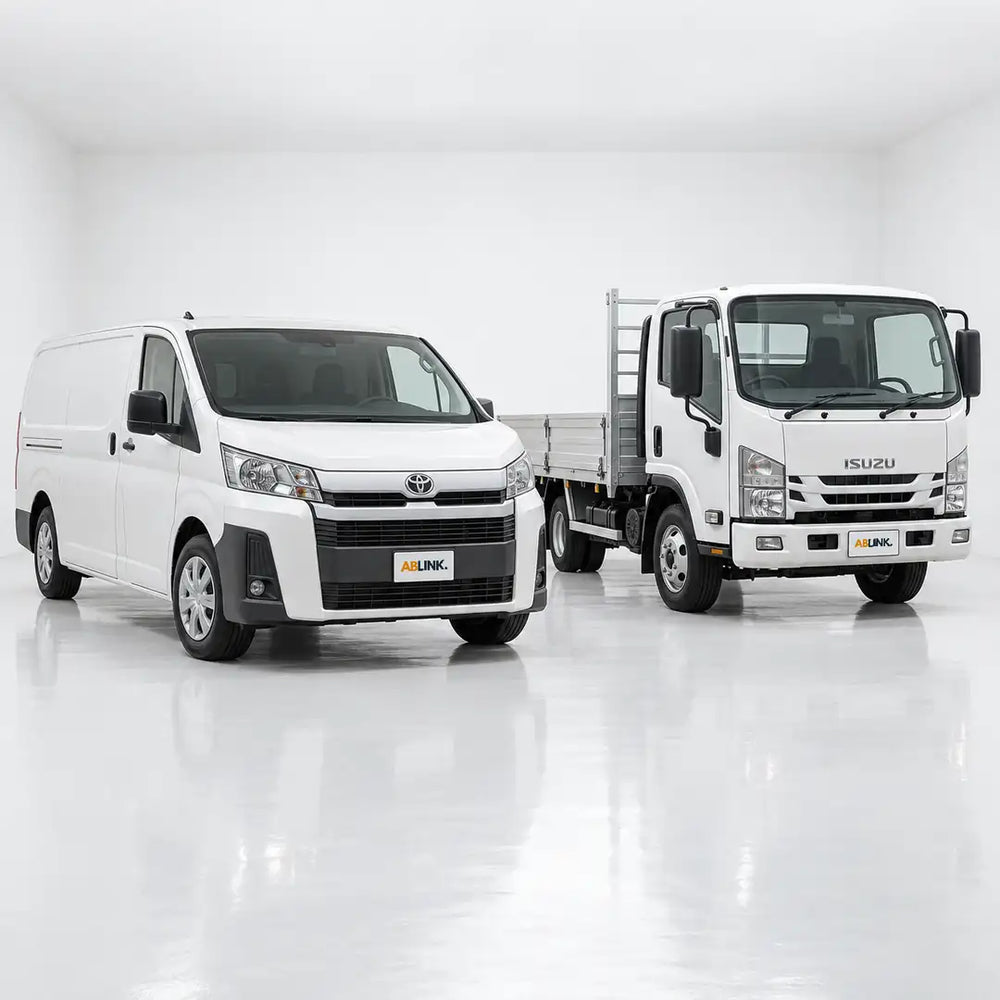
A wide range of vehicles – Toyota Hiace, Nissan NV200, Isuzu N-Series and electric vans among them
Transparent monthly rates – no hidden fees or balloon payments
This is the option many growing SMEs choose because it balances cost predictability with operational simplicity. You're not building equity in the vehicle, but you're also not absorbing the financial risks of ownership.
Leasing makes sense when:
You need vehicles for 1–5 years consistently
Cash flow matters more than ownership equity
Minimising downtime matters — ask what replacement-vehicle cover the lease includes
You would rather the lessor carried the servicing and insurance admin
3. Vehicle Purchase – The Long-Term Ownership Play
Buying means committing to ownership. You finance the vehicle (through cash, bank loan, or hire-purchase), register it under your business, and own it outright once paid off.
Ownership gives you complete control. You can customize the vehicle exactly as needed, put unlimited kilometers on it, and eventually build equity if you hold it long enough. There are tax deductions for depreciation and operating costs.
But ownership also means you absorb all the risks. If COE prices rise, you're not affected at purchase time—but your vehicle depreciates faster. If maintenance needs spike unexpectedly (major engine repairs, transmission issues), that's your burden. If your business slows and you need to exit quickly, selling a vehicle takes time and often costs money.
Buying only makes sense if:
You're running a mature, profitable business
You have strong cash reserves
Your vehicle needs are consistent for 10+ years
You understand and accept depreciation risk
How much does van leasing in Singapore actually cost?
There is no single monthly figure, and any guide that gives you one without knowing your vehicle, term and mileage is guessing. What you can do is understand the three variables that set the number, so the quote you receive makes sense.
The vehicle class
A small panel van and a 14ft lorry sit in different COE categories and carry different road tax and insurance bands. Commercial vehicles bid in COE Category C, which covers goods vehicles and buses — and Category C premiums have run above S$90,000 through 2026. The lessor carries that exposure on a lease; you carry it on a purchase.
The term
Short-term and long-term packages are both offered, and the monthly rate generally falls as the commitment lengthens. If your work is project-based, a shorter term costs more per month but avoids paying for months you do not need.
What the rate includes
This is where quotes stop being comparable. Ablink's published lease offer states that vehicles are regularly serviced, insured and road-ready, with transparent pricing and no hidden fees or balloon payments. Other providers bundle differently. Ask every one of them the same question in writing: which running costs are inside the monthly figure, and which are not?
Comparing the Three Options: Real-World Scenarios
Rather than abstract numbers, let's look at how these decisions play out for different business types. The capital figures below are illustrative ranges to show the shape of each decision, not quotations.
Scenario 1: The Project-Based Contractor
You're a construction or renovation firm bidding on an 8-month site project. You need a 14ft lorry for heavy material transport.
Rental route: Monthly rolling rental keeps you flexible. If the project extends, you continue. If it wraps early, you exit. No long-term obligation.
Leasing route: A short-term lease locks in a predictable rate and puts servicing on the lessor—useful when you're on-site and can't afford unexpected downtime. You exit at project end with no residual depreciation concerns.
Buying route: Doesn't make sense. You'd spend significant capital on an asset you'll use briefly, then need to sell. The carrying costs (insurance, maintenance, depreciation) during the project are pure overhead.
Verdict: Lease for the project duration. You get rate certainty without the ownership burden.
Scenario 2: The Growing SME (F&B Delivery, E-Commerce Fulfillment, Catering)
You've been operating 3–5 years. You have 2–3 vehicles that you consistently use. Demand is stable but growing. Your cash position is decent, but you prefer to keep capital for hiring, inventory, and technology rather than locking it into vehicles.
Rental route: Month-to-month rolling rental gives you flexibility to add vehicles during peak seasons (CNY, holiday season) without commitment. Effective for the overflow vehicles, but the core fleet is expensive at rolling-monthly rates.
Leasing route: Core fleet on longer-term leases at locked rates, with servicing and insurance handled. For peak seasons, you add 1–2 rental units for a few weeks—cheaper than renting the whole year. You also preserve capital: rather than committing a six-figure sum to vehicles, you have a predictable monthly cost.
Buying route: Possible, but ties up significant capital that could grow the business elsewhere. Regulatory changes also become your problem to manage rather than the lessor's.
Verdict: Lease the core fleet (around 80% of regular demand). Rent seasonal overflow. This hybrid gives you cost predictability where it matters most and flexibility for spikes.
Pro tip: If leasing, ask about the electric van options. Switching a vehicle to electric at a renewal cycle can lower running costs — ask which EV models are currently in the leasing programme.
Scenario 3: The Mature, Multi-Vehicle Fleet Operator
You've run a successful 10+ year logistics or distribution operation. You operate 8–15 vehicles. Your cash position is strong. Your routes and clients are stable and profitable.
Rental route: Not practical at this scale. Daily or monthly rental rates don't work for consistent, professional operations.
Leasing route: Lease the majority of your fleet on longer terms. This gives you:
Servicing and insurance administration handled by the lessor
Fleet upgrades possible at renewal — confirm the cycle in your agreement
Depreciation sitting with the lessor rather than on your balance sheet
Buying route: You have the capital and long-term visibility. Buying outright makes sense if you want control over specific assets (e.g. refrigerated vehicles for catering, custom racks for construction). You build equity over 10+ years.
Verdict: Hybrid approach. Lease the bulk of your fleet for operational simplicity. Buy the two or three strategic vehicles where customisation or control matters.
Key Decision Factors: Which Is Right for You?
Three variables should drive your decision.
Factor 1: How Long Do You Need the Vehicle?
1–3 months: Rent. Rental is built for short-term needs.
3–12 months: Lease. A short-term lease is usually cheaper than rolling monthly rental and gives you rate certainty.
1–5 years: Lease. Leasing compounds your savings over time, and you avoid large upfront capital.
10+ years: Buy. If your horizon is truly that long and your business is stable, ownership begins to make financial sense. You can amortize depreciation over a meaningful period.
Factor 2: How Predictable Is Your Demand?
Unpredictable, seasonal, or project-based: Rent or short-lease. You need flexibility to scale without penalty.
Stable and consistent: Lease. A longer lease gives you rate certainty and predictable monthly costs. Great for budgeting.
Stable but high-volume: Lease with extended terms, and be explicit about expected mileage — lessors price wear into the rate.
Factor 3: What's Your Cash Position?
Limited working capital, startup phase: Rent or short-lease. Preserve cash. Every dollar counts for operations, hiring, and growth.
Moderate capital, stable operations: Lease. It's the professional middle ground. Fixed monthly costs, no large upfront expense, and the servicing admin sits with the lessor.
Strong cash position, mature business: Lease most, buy selectively. Lease provides operational flexibility. Buy where you need control—custom refrigerated vehicles, branded trucks, or backup units.
The Case for Leasing: Why It's Winning for SMEs in 2026
If you're undecided, lean toward leasing. Here's why.
Capital efficiency: Instead of committing the full purchase price upfront, your cost is a fixed monthly amount. That capital stays in your business—funding hiring, tech, inventory, or marketing.
Cost predictability: Rental rates can move with demand. On a lease, your monthly cost is fixed for the term, so you can budget accurately.
Regulatory exposure: Whether a lessor absorbs a Vehicular Emissions Scheme change or passes it on is a contract term, not a given. Ask how your agreement treats it before you sign — and check the current scheme rules on LTA.
Servicing handled: Ablink's published offer states vehicles are regularly serviced, insured and road-ready. Downtime is expensive for delivery and logistics businesses — ask what replacement-vehicle cover the lease includes, and get the response time in writing.
Vehicle age: Lease fleets are generally newer than rental fleets, which usually means fewer surprises. Confirm the age and condition of the specific unit you are quoted on.
Tax treatment: Lease payments are generally treated as an operating expense, but deductibility depends on the vehicle and your circumstances. Check the current position with IRAS or your own accountant rather than assuming.
For these reasons, many growing SMEs in Singapore choose leasing over pure ownership. The operational simplicity and capital preservation are worth the lack of ownership equity.
What should the best van leasing deal in Singapore include?
Judge a lease on what is written into the agreement, not on the headline monthly figure. Five things separate a good commercial vehicle lease from a cheap one.
An itemised inclusion list. Servicing, insurance, road tax, tyres — which are in the monthly rate and which are billed separately? Get it in writing.
A stated mileage allowance and the charge if you exceed it.
The early-exit formula. Most commercial leases carry an early-exit charge. Ask for the exact calculation before signing, not after.
Downtime cover. What happens if the vehicle is off the road — is a replacement provided, and within what period?
No hidden fees or balloon payments — Ablink's lease offer states this explicitly; confirm the same of any provider you compare against.
Specific Vehicle Options at Ablink
When evaluating leasing options, your choice of vehicle matters. Ablink offers several commercial vehicle options suited to different businesses:
Small Commercial Vans
If you're doing last-mile delivery, courier services, or small parcel logistics, consider the Honda N-Van. It's affordable, fuel-efficient, and maneuverable in tight Singapore roads and carparks. The N-Van strikes a balance between cargo space and ease of parking.
Alternatively, the Nissan NV200 offers more payload capacity if you're consistently carrying heavier loads. It's slightly larger and more professional-looking—ideal if client impression matters.
Medium & Large Commercial Vans
For F&B delivery, catering, or small-to-medium logistics, the Toyota Hiace is the workhorse. It's reliable, has strong resale value (important if you eventually buy), and is recognized across Singapore's transport industry. Leasing a Hiace gives you a trusted, professional platform.
The Toyota Townace is another option—slightly smaller than the Hiace but still capable for most SME operations.
Lorries
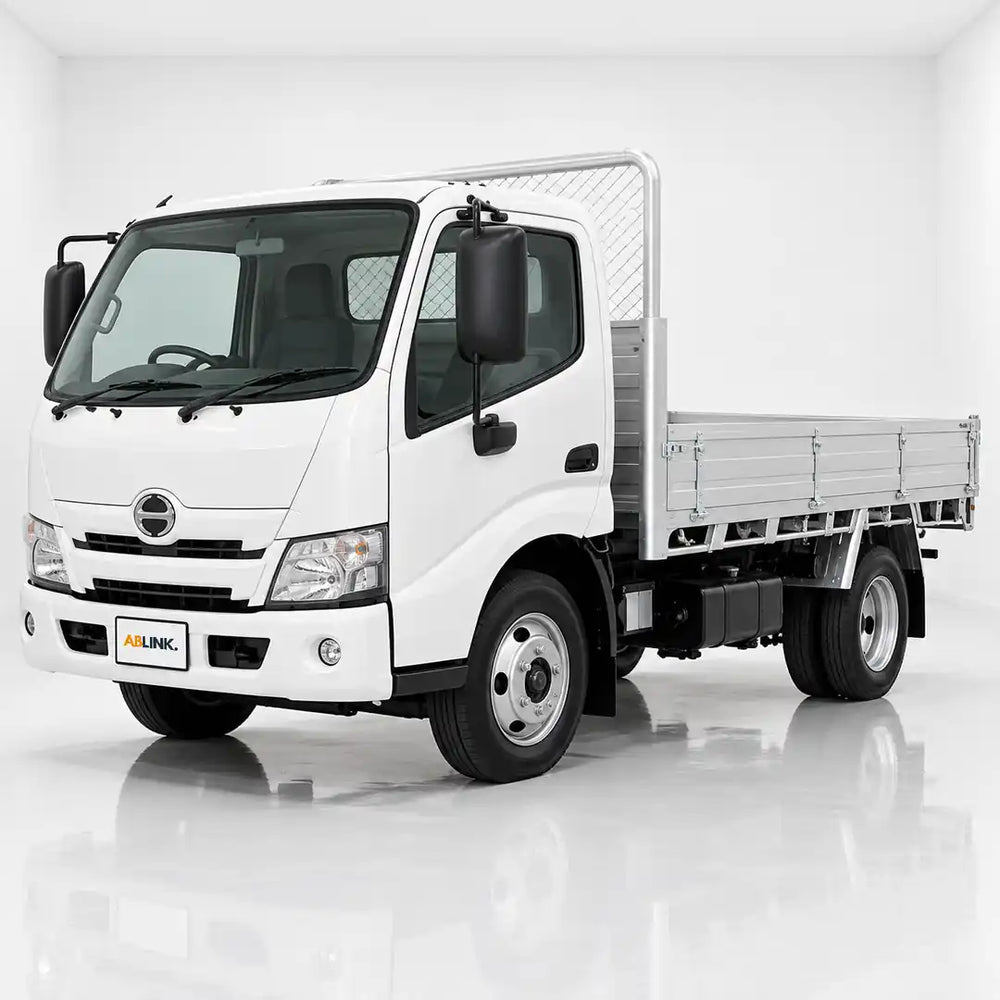
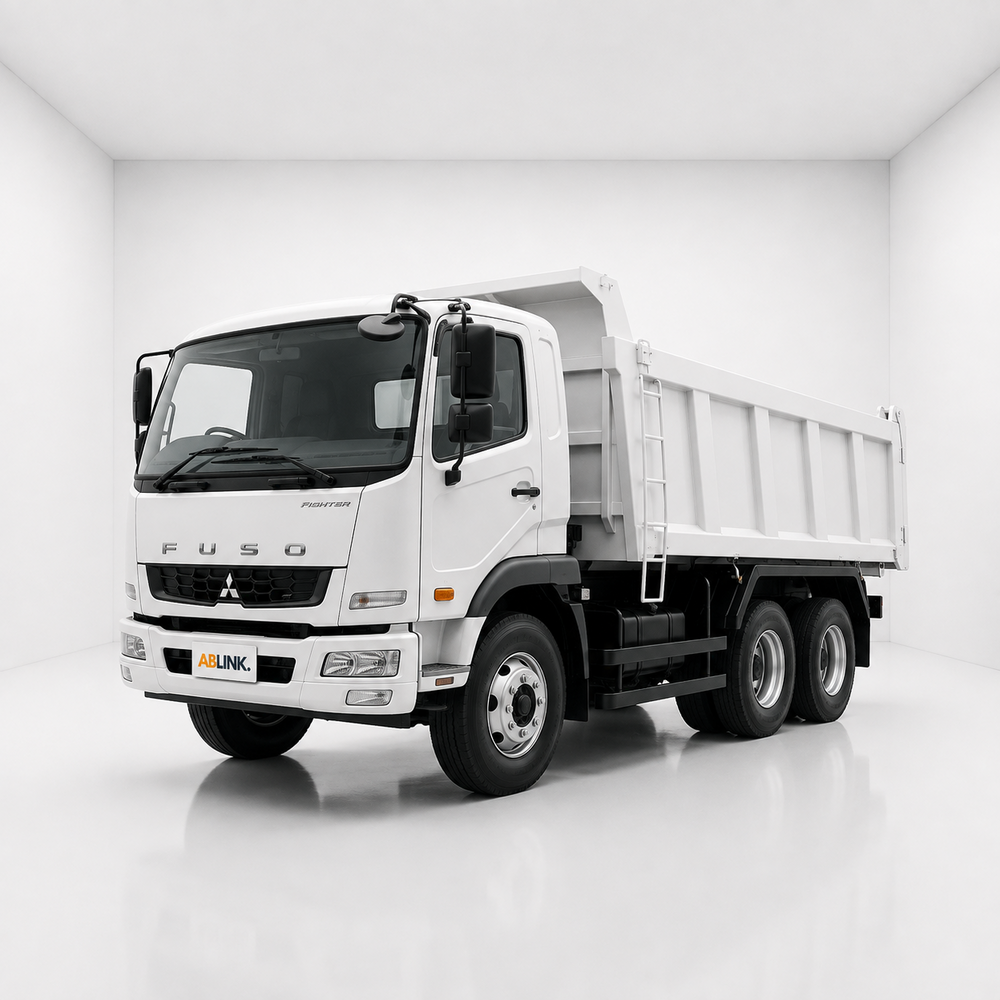
For construction, heavy logistics, or material transport, Ablink offers 10ft and 14ft lorries. These are essential for businesses that move heavy cargo regularly. Leasing eliminates the burden of maintaining specialized cargo vehicles while ensuring you always have reliable, road-ready units.
Electric Vehicles
Electric commercial vans are available to lease. Ask which EV models are currently in the leasing programme, and weigh them on:
Running costs, which are typically lower than diesel — the actual saving depends on your mileage and charging arrangement
Emissions-scheme treatment under the current LTA and NEA rules
Charging access on your routes and at your depot
Brand positioning where clients ask about sustainability
If your business does primarily urban or island-wide delivery, EV leasing is worth exploring.
Common Concerns and How to Address Them
"Isn't buying always cheaper in the long run?"
Not necessarily. Yes, if you hold a vehicle 15+ years, ownership eventually wins on total cost. But most businesses operate vehicles 5–10 years. In that window, leasing is often cheaper once you factor in depreciation, compliance, unexpected repairs, and insurance.
Leasing also lets you upgrade the fleet at renewal rather than running a vehicle to the end of its COE. That operational advantage often outweighs the theoretical long-term cost saving of ownership.
"What if demand drops and I'm stuck with a lease?"
Most commercial leases carry an early-exit charge. Ask for the exact formula before you sign. Whatever it is, it is usually more predictable than the depreciation hit you would take selling an owned vehicle quickly during a downturn.
If demand volatility is high for your business, ask about a shorter term. You will usually pay a higher monthly rate for it, and the flexibility can be worth the premium.
"We want the tax deduction of ownership (depreciation deduction)."
Leasing has its own tax treatment — lease payments are generally treated as an operating expense. But how much is deductible depends on the vehicle type and how it is used, so this is not a decision to make from a blog post.
Confirm the current position with IRAS or your accountant, and don't let a depreciation deduction be the deciding factor on its own.
For a fuller breakdown of what business owners can typically claim on a commercial vehicle, see our tax deduction guide.
"Can we negotiate the lease rate?"
It is worth asking. When you request a quote, say how many vehicles you need, how long you want the term, and whether you would bundle vans and lorries together. Whether volume or term changes the rate is a question for the quote — treat it as a conversation, not a guarantee.
Decision Framework: A Simple Checklist
Answer yes/no to these questions:
Choose LEASING if:
☐ You need vehicles consistently for months rather than weeks
☐ Cash flow matters more than asset ownership
☐ You want predictable, budgetable costs
☐ You would rather the servicing and insurance admin sat with the lessor
☐ You want the option to upgrade the fleet at renewal
☐ You'd rather invest capital in business growth than vehicles
If you answered "yes" to 4+ of these, leasing is your best path.
Choose RENTAL if:
☐ You need vehicles for less than 3 months
☐ Demand is highly unpredictable (varies >50% month-to-month)
☐ You're testing a new service or market
☐ Convenience matters more than cost optimization
If you answered "yes" to 3+ of these, rental is reasonable for your use case.
Choose BUYING if:
☐ You have 10+ year visibility of consistent vehicle need
☐ You have cash reserves you can commit without straining operations
☐ You need full vehicle customization for specific operations
☐ You understand and accept depreciation risk
☐ Your business is mature and highly profitable
If you answered "yes" to 4+ of these, buying is viable.
What to Check Before You Sign a Commercial Vehicle Lease
If leasing is your decision, here is what to establish before committing — with Ablink or anyone else.
Who you are contracting with. At Ablink, leasing is arranged with our leasing partner, Rentgo Pte. Ltd. Knowing who holds the agreement matters when you need something varied later.
Commercial vehicle expertise. Ablink is not a personal car rental company — the range is vans, lorries and trucks, and the team works with payload, Class 3 versus Class 4 licensing, and Singapore's regulatory environment daily.
What the monthly rate covers. The published offer states transparent pricing with no hidden fees or balloon payments, and vehicles that are regularly serviced, insured and road-ready. Ask for the itemised list on your specific quote so you can compare it like for like.
Availability. The offer states immediate availability with no long waiting times — worth confirming for the specific vehicle class you need, since stock moves.
How the fleet can change. Ask what happens if you need to add a unit mid-term, or reduce at renewal. Fleet upgrades are offered — confirm the mechanism in your own agreement.
The route to ownership. If your business matures and buying becomes the better call, Ablink carries new commercial vehicles and used stock, so the conversation can move without changing supplier.
How to Get Started
If leasing aligns with your business, the next step is simple:
Contact Ablink and request a lease quote.
When you reach out, specify:
Vehicle type (small van, Hiace, 10ft lorry, 14ft lorry, EV, etc.)
How many units you need
Desired lease term
Expected monthly kilometers
Any special requirements (GPS tracking, custom racks, etc.)
Ask for the quote itemised, so you can see exactly which running costs sit inside the monthly figure.
Visit Ablink's commercial vehicle leasing page to learn more or request a quote.
Frequently Asked Questions
Is commercial vehicle leasing in Singapore worth it for a small fleet?
For two or three vehicles used consistently, leasing usually wins on cash flow. You avoid committing capital to a depreciating asset and the servicing admin sits with the lessor. Buying starts to make sense when your horizon is ten years or more and your cash position is strong.
How do you buy a commercial vehicle in Singapore?
Confirm the licence class your drivers hold, shortlist against payload rather than gross weight, budget the COE as a separate line from the body price, and arrange parking before you register. Ask the dealer for the all-in figure inclusive of COE and GST so you can compare offers on the same basis.
What counts as a commercial vehicle in Singapore?
Broadly, a vehicle constructed to carry goods rather than passengers — vans, lorries, trucks and pickups. They register under COE Category C, which covers goods vehicles and buses, and they carry different road tax and licensing rules from a private car.
Where can you sell a commercial vehicle in Singapore?
Through a commercial vehicle dealer, a trade-in against your next unit, or a private sale. A dealer handles the LTA paperwork and transfer; a private sale usually takes longer but can fetch more. Ablink buys commercial vehicles and can quote against a trade-in.
How do you transfer commercial vehicle ownership?
Transfer is done through LTA, with a transfer fee payable and both parties' details required. Any outstanding finance must be settled first. Confirm the current process and fee on LTA before you agree a completion date.
Which commercial vehicle is best on total cost of ownership?
There is no single winner — it depends on payload, mileage and how long you keep the vehicle. Compare on total cost across your actual holding period (purchase or lease, fuel or electricity, servicing, road tax, insurance), not on the headline price. A cheaper vehicle that carries less can cost more per delivery.
Making Your Decision: Summary
| Your Business Type | Best Fit | Why |
|---|---|---|
| Project-based (construction, events) | Lease for core, rent overflow | Lock rates for project duration, flexibility for spikes |
| Growing SME (F&B, logistics, e-commerce) | Lease core fleet, rent seasonal | Cost predictability + flexibility for peaks |
| Mature logistics operator | Lease most, buy select | Hedge regulatory risk, control where it matters |
The bottom line:
In Singapore's 2026 environment—with regulatory change, COE uncertainty, and rising operating costs—leasing suits most SMEs better than pure ownership. It's the predictable, capital-efficient way to run a commercial vehicle fleet.
Rental works for short-term needs. Buying makes sense when your horizon is 10+ years and your cash position is strong.
But for growing businesses that need vehicles for 1–5 years, want cost predictability, and need to preserve capital? Leasing is usually the answer.
Related Articles:
Class 3 vs Class 4 Licence Singapore: What Your Business Needs
Commercial Vans Singapore: Choosing Between Hiace, NV200 & More
Ready to explore leasing options? Reach out to Ablink today.
About this guide: Leasing at ABLINK is arranged with our leasing partner, Rentgo Pte. Ltd. Lease terms, inclusions, support arrangements and early-exit conditions are set in the individual agreement and can change — the descriptions here are general guidance, not an offer or a quotation. Any figures and ranges are illustrative and depend on the vehicle, the term and your usage. Tax treatment of lease payments depends on the vehicle and your circumstances; please confirm with IRAS or your own accountant. Vehicle prices are quoted separately from COE unless expressly stated, and COE premiums move at every bidding exercise. Please confirm current terms with the ABLINK team before you commit.
Related rental guides
- Monthly lorry rental vs lease
- Lorry rental rates: daily and weekly
- Lorry sizes compared: 10ft vs 14ft vs 24ft