Updated 22 September 2026
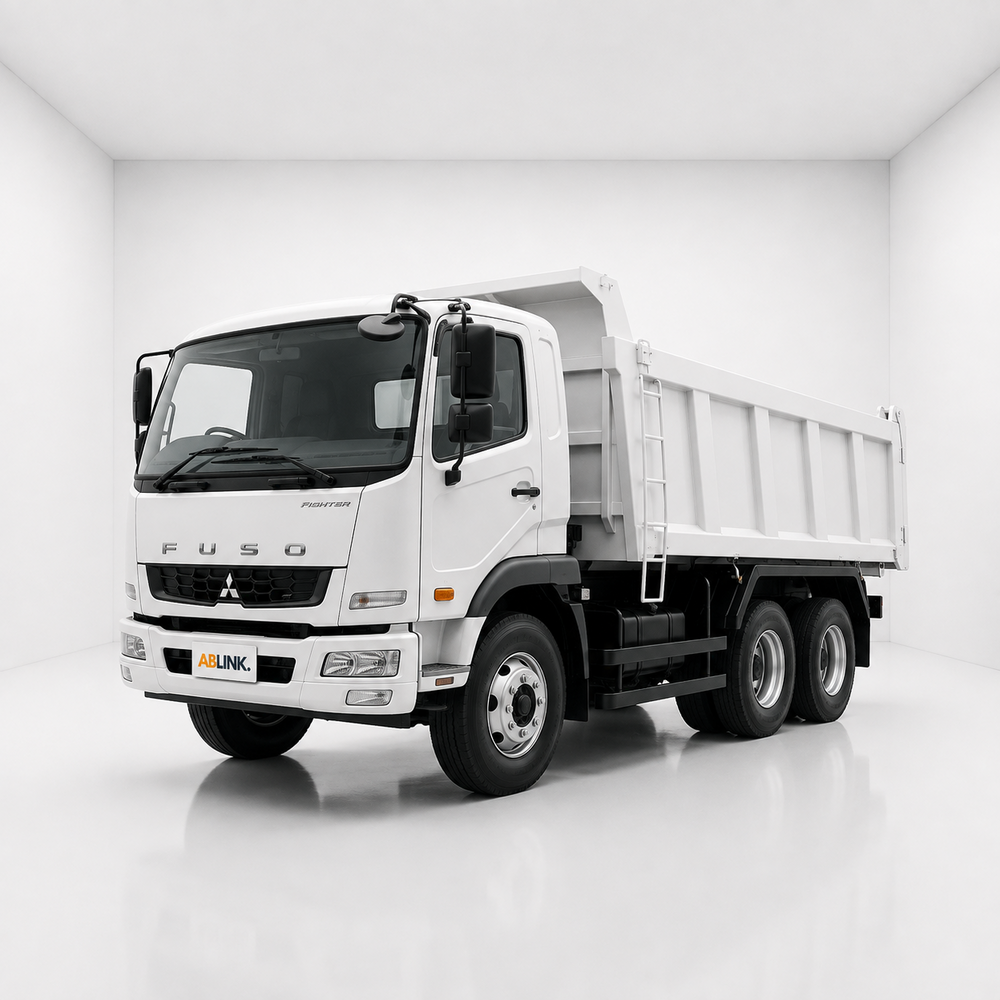
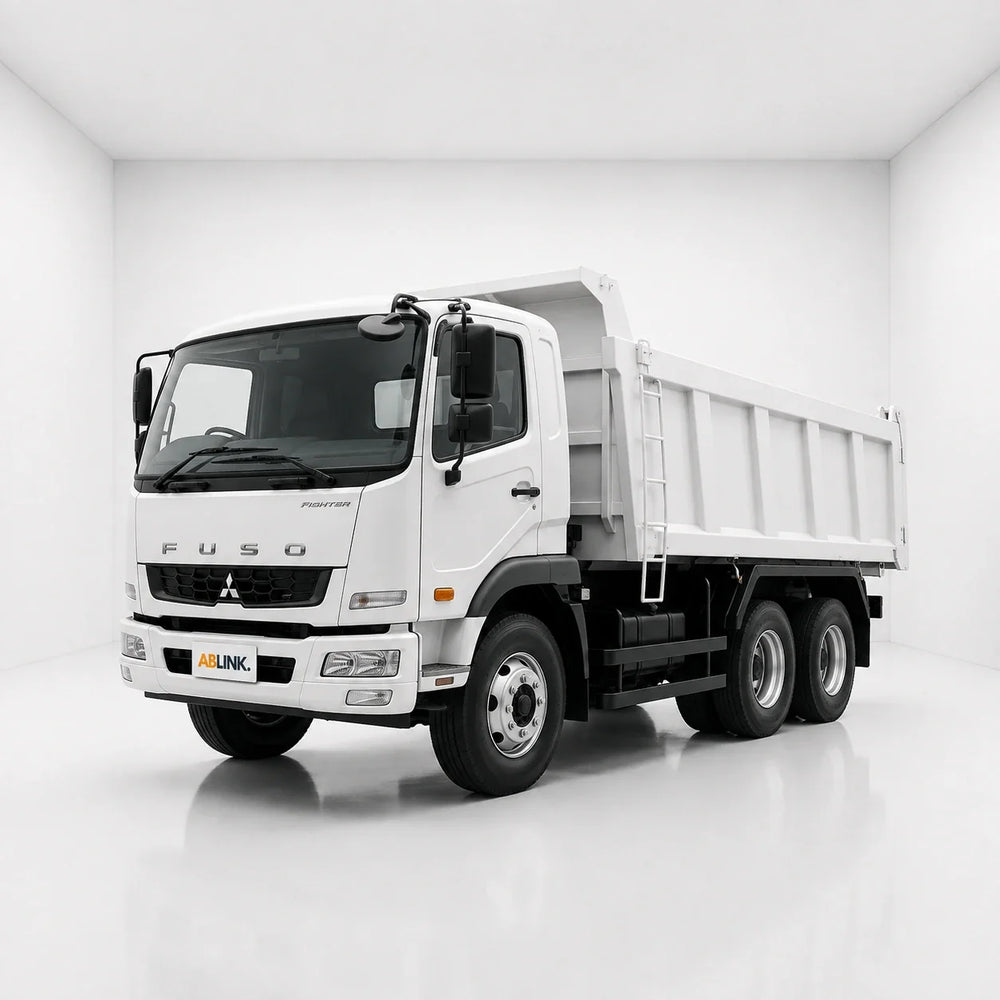
Every electric 10ft lorry Singapore businesses can order from ABLINK, a commercial vehicle dealer at 421 Tagore Industrial Avenue, is one of five models: the BYD T35, Foton eMiler, SRM T3EV, SRM T3EV+ and Forland S1. Since 3 September 2026 a new-COE unit earns S$15k whether G-plate or Y-plate, and all five sit inside a Class 3 licence.
That second sentence changes the maths. Before 3 September, the heavier plate earned more than twice the grant, so it looked like the better buy. On a new COE it isn't any more.
So we've compared all five on what still differs: payload, weight class, licence, charging and running costs.
Key takeaways
- ABLINK's live 10ft range has 5 electric trucks and 3 diesel ones, so you can weigh an EV lorry against diesel in one place.
- LTA cut the HVZES incentive from S$40k to S$15k for electric heavy vehicles of 3,501 to 7,000 kg MLW on COEs from the first September 2026 bidding exercise (LTA, 2026).
- A G-plate electric truck of up to 3,500 kg MLW gets S$15k under Band A of the Commercial Vehicle Emissions Scheme (CVES) until 31 March 2027 (LTA and NEA, 2024).
- All five weigh 1,880 kg or less unladen, which is under the 2,500 kg line for a Class 3 licence.
- If a heavy unit is registered on a COE from before the first September 2026 exercise, it still carries S$40k (LTA, 2026). Ask which exercise the COE came from.
Electric 10ft lorry Singapore models in ABLINK's 2026 range
As at 22 September 2026, there are five electric trucks in the 10 feet lorry class in ABLINK's live range. Three diesel ones sit next to them: the Hino Dutro, the Isuzu NJR88 and the Mitsubishi FEA21. Prices move with the COE, so each model name below links to its listing for the latest price.
| Model | Gross weight | Unladen | Payload | Battery (listing) | Range (listing) |
|---|---|---|---|---|---|
| BYD T35 (Y-plate) | 3,700 kg | below 1,760 kg | not published | 62.36 kWh | 367 km |
| Foton eMiler | 4,500 kg | 1,880 kg | 2,620 kg | 77 kWh | 375 km |
| SRM T3EV (G-plate) | 3,155 kg | 1,560 kg | 1,595 kg | 53.58 kWh | 300 km |
| SRM T3EV+ (Y-plate) | 3,505 kg | 1,660 kg | 1,845 kg | 53.58 kWh | 301 km |
| Forland S1 | not published | 1,800 kg | up to 2.7 t | 63.75 kWh | 300 km |
The battery and range columns are copied from our live listings as they stood on 22 September 2026. For weights, we went to the makers first: BYD Singapore for the T35's unladen weight and Inchcape Plus for its gross weight. Where a maker doesn't publish them, we used EVhubs for the eMiler, EVhubs for the SRM pair and Segment Y for the S1.
Two cells are blank on purpose: BYD doesn't publish the T35's payload, and we couldn't find the Forland S1's gross weight anywhere we could open. We'd rather leave a gap than guess.
If you're still deciding between a 10ft deck and something longer, our guide to lorry sizes from 10ft to 24ft explained covers the body side of it, and 10ft against 14ft on the compliance side covers the rules.
What changed on 3 September 2026?
On 2 September 2026, LTA said that from the next day, the Heavy Vehicle Zero Emissions Scheme would pay S$15k rather than S$40k if a zero-tailpipe heavy vehicle's maximum laden weight (MLW) sits between 3,501 kg and 7,000 kg (LTA, 2026). You'll often hear it called the HVZES rebate; LTA calls it an incentive.
| Electric heavy vehicle | HVZES | Applies to |
|---|---|---|
| MLW above 3,500 kg, up to 7,000 kg | S$15k | COEs from the first September 2026 exercise on |
| MLW above 7,000 kg | S$40k | All vehicles |
| Any MLW, older COE | S$40k | COEs from before that exercise |
The S$15k isn't paid in one go. It comes in three tranches over two years: S$5k when the truck is registered, S$5k at the first anniversary and S$5k at the second. The scheme itself runs until 31 December 2028 (LTA, 2026).
Why did LTA cut it? Because it worked.
In 2025, zero-tailpipe vehicles were under 1% of new heavy vehicle registrations. By July 2026 their share was about 30%, and 55% among the lighter heavy vehicles (LTA, 2026).
That lighter group is where the Y-plate 10ft trucks sit, so this class feels the cut most. As one distributor's chief executive put it to The Business Times: "The adoption of EHVs will be reduced, possibly even quite drastically, as the majority of EHVs now are in the 3,501 to 7,000 kg range" (The Business Times, 2026).
Not everyone has caught up yet. When we searched "electric lorry singapore", Google's AI Overview was still quoting the old S$40k, and EVhubs still had the Y-plate SRM T3 EV at S$40k too (EVhubs, 2026). So if you see S$40k for a mid-weight 10ft EV lorry, it's out of date.
Does a G-plate or Y-plate still change the grant?
On a new COE, it doesn't.
In listings, "G-plate" is used for the light version of a truck and "Y-plate" for the heavy one. The SRM T3EV shows it clearly. It's sold both ways: 3,155 kg gross as a G-plate and 3,505 kg as a Y-plate (EVhubs, 2026). What counts in the end is the MLW on the log card, not the letter.
- If it's a G-plate (MLW up to 3,500 kg), it's a light commercial vehicle and falls under CVES. Band A, the electric band, is worth S$15k until 31 March 2027 (LTA and NEA, 2024).
- If it's a Y-plate (MLW 3,501 to 7,000 kg), it's a heavy goods vehicle and falls under HVZES, which is also S$15k on a COE from the first September 2026 exercise (LTA, 2026).
Before 3 September, the first paid S$15k and the second S$40k. Industry observers told The Business Times that the new rule "equalises light and heavy commercial EV incentives" (The Business Times, 2026).
Our advice now that the grant is level: don't pick a Y-plate for the grant alone. Choose the plate for what you carry.
If your heaviest regular load fits in a G-plate's payload, the lighter truck is the simpler one to own. If it doesn't, the Y-plate is the honest choice. And if the Y-plate you're offered is being registered on an older COE, that S$25k difference is real money, so make sure it's on the quotation.
Two things do still differ. HVZES is paid out over two years, and a Y-plate comes with the rules for heavy vehicles, which we cover below.
Which licence does your driver need for an electric 10ft lorry?
It's the unladen weight that decides, not the maximum laden weight.
Under the Singapore Police Force's licence classes, Class 3 covers a motor vehicle, other than an electric light goods vehicle, with an unladen weight of up to 2,500 kg, and an electric light goods vehicle of up to 3,000 kg. Class 3A covers the same weights where there's no clutch pedal, and a vehicle built to carry a load moves up to Class 4 once its unladen weight is over 2,500 kg (SPF, 2026).
A Y-plate truck isn't a light goods vehicle, so it's the 2,500 kg line that applies to it. The heaviest of our five when empty is the Foton eMiler, at 1,880 kg. The G-plate SRM T3EV is an electric light goods vehicle and, at 1,560 kg, it's nowhere near its 3,000 kg line. Segment Y also reported the Forland S1 as a Class 3 vehicle at 1,800 kg unladen (Segment Y, 2026).
That means a Class 3 driver can drive any of the five, so the licence shouldn't be what tips your decision. Still, check. Read the unladen weight on the actual log card before you put a driver on it. If you'd like the fuller picture, our explainer on what a Class 3 licence covers against Class 4 looks at the bigger trucks where the line does come into play, and our check of which trucks stay legal for Class 3 drivers goes model by model.
Should you pick the BYD T35 or the Foton eMiler?
The BYD T35 and the Foton eMiler are the natural pair to compare in Singapore, because both are heavy-class by published weight.
BYD T35. BYD calls it a 3.7-tonne light-duty truck. It's under 1,995 mm tall and below 1.76 tonnes when it's empty, it goes up to 367 km on a charge, and it comes with a 10-year EV battery warranty and a 10-year servicing plan (BYD Singapore, 2026).
Inchcape Plus gives it a 3,700 kg gross weight and says it will go from 20% to 80% in about 36 minutes (Inchcape Plus, 2026). Our listing shows a battery warranty of 10 years or 800,000 km.
Foton eMiler. EVhubs lists it at 4,500 kg gross and 1,880 kg unladen, with a 2,620 kg payload, a 77 kWh LFP pack, 375 km of WLTP range and charging at AC 22 kW or DC 77 kW (EVhubs, 2026). On our listing, the battery is covered for 10 years or 400,000 km, the motor for 5 years or 200,000 km and the chassis for 3 years or 300,000 km.
Which would we start with? It depends on your day:
- If most of your stops are in estates and carparks, our pick is the T35. BYD publishes its height and unladen weight as HDB-friendly for exactly that reason.
- If you carry heavy, dense loads, go with the eMiler. It's the one of the two with a published payload, and at 2,620 kg it's well above either SRM.
- If your trucks charge overnight on AC, the eMiler's published 22 kW AC input helps. The T35's AC figure isn't published, so ask us for it.
Both sit in the 3,501 to 7,000 kg band by published gross weight, so on a new COE both earn S$15k. The grant won't split them; your loads will.
SRM T3EV and T3EV+, the same truck at two weights
This pair shows the change most clearly: one truck, one 53.58 kWh battery, about 300 km of range, registered two ways.
The G-plate T3EV is 3,155 kg gross, 1,560 kg unladen and carries 1,595 kg. The Y-plate T3EV+ is 3,505 kg gross, 1,660 kg unladen and carries 1,845 kg (EVhubs, 2026). Both take 11 kW on AC, and on our listing both have a 3-year or 100,000 km vehicle warranty, 5 years or 200,000 km on the motor and 8 years or 360,000 km on the battery.
Under the old rules, those extra 350 kg of gross weight were worth S$25k more in grant. Now they're worth 250 kg more payload, along with the obligations of a heavy vehicle. If your loads rarely pass 1.5 tonnes, the G-plate will do. If they're often near 1.8 tonnes, pick the Y-plate, for the payload rather than the grant.
Why the Forland S1 needs its MLW checked first
The Forland S1 comes with an independent road test and very little on paper. Here's what we know.
Our listing shows a 63.75 kWh battery and 300 km of range, while Forland says it can do up to 340 km. When Paddleshift tested one with a one-tonne block on the bed, it averaged 4.9 km per kWh (Paddleshift, 2026). At that rate, the battery works out to about 312 km with a tonne on board.
Its payload is rated at up to 2.7 tons, and it charges from 20% to 80% in about 35 minutes at up to 65 kW DC (Paddleshift, 2026). The August review suggested that the S$40k HVZES rebate may have helped its early sales and sent anyone wanting a G-plate Forland to the smaller ET5, so the S1 is sold as the heavier truck.
What we couldn't find is a published gross weight. We wouldn't compare grants on the S1 until its registered MLW is in writing. If it's between 3,501 and 7,000 kg, the grant on a new COE is S$15k, the same as the rest.
On warranty, our listing gives the S1 5 years or 200,000 km on both the vehicle and the motor, and 10 years or 500,000 km on the battery. That's the longest vehicle cover among the listings that state one, and the reason to shortlist it if uptime matters more than range.
What a Y-plate truck costs to keep: road tax, VPC and the charger grant
A level grant doesn't mean level ownership once a 10ft EV lorry goes over 3,500 kg MLW.
Road tax. On LTA's current rates, a G-plate electric truck pays S$170 every six months, with a S$95 Additional Flat Component on top. A Y-plate one in the 3.5 to 7 tonne band pays S$262, and its AFC is S$50 in 2026, then S$75 in 2027 and S$125 from 1 January 2028 (LTA, 2026). Over a year, that comes to:
| Yearly road tax | 2026 | 2027 | 2028 |
|---|---|---|---|
| G-plate electric | S$530 | S$530 at today's rate | S$530 at today's rate |
| Y-plate electric | S$624 | S$674 | S$774 |
In 2026 the gap is S$94 a year. Because the heavy-vehicle AFC steps up, it would reach S$244 by 2028 if the light goods rate stays where it is. For diesel figures, see our breakdown of road tax for vans and lorries, diesel against electric.
Parking certificate. You only need a Vehicle Parking Certificate if the vehicle is over 5,000 kg MLW (OneMotoring, 2026). None of the four trucks with a published gross weight goes past 4,500 kg. Our guide on when a lorry needs a Vehicle Parking Certificate has the rule in full.
Charger grant. This is where the Y-plate comes out ahead.
The Electric Heavy Vehicle Charger Grant will co-fund up to 50% of the cost of installing a charger, capped at S$30k per charger. For each charger, you have to register a new electric heavy vehicle between 1 January 2026 and 31 December 2028, and the charger can only go in after LTA's Letter of Offer (LTA, 2026). It also closes early once 500 chargers have been approved. The HVZES cut didn't touch it, The Business Times noted.
The EHVCG is written for heavy vehicles, and a G-plate truck is a light goods vehicle. If you're planning a depot charger, pick the Y-plate: only it can bring LTA co-funding, which can outweigh years of the road tax gap.
Where to buy an electric 10ft lorry in Singapore
There are two routes.
The brand's own channel. Every brand has its own distributor or appointed dealers. The BYD T35, for example, is backed by Inchcape Plus for aftersales (Inchcape Plus, 2026). It suits you once you've settled on one model.
A multi-brand dealer. We list all five of these electric trucks and three diesel ones, so you can compare an EV with a diesel in one visit.
You'll find ABLINK at 421 Tagore Industrial Avenue, Tagore 8 Building, #02-13, Singapore 787805, and we take enquiries to buy, sell, lease, refinance and insure (ABLINK contact page). This suits you if you're still choosing.
A six-step check before you order
- Weigh your heaviest regular load, not the average one. That's what decides between 1,595 kg, 1,845 kg, 2,620 kg and 2.7 tonnes of payload.
- Ask for the registered MLW of the exact unit. Up to 3,500 kg means CVES; 3,501 to 7,000 kg means HVZES.
- Ask which COE bidding exercise its COE comes from. If it's from before the first September 2026 exercise, a heavy unit keeps S$40k. From then on, it's S$15k.
- Read the unladen weight on the log card. Up to 2,500 kg keeps a heavy truck within Class 3 or 3A.
- Think through the charging. Compare the AC input and the DC charge time. If you want a depot charger for a Y-plate, apply for the EHVCG before anything is installed.
- Get it in writing. The grant, when it's paid, the road tax year you're budgeting for and the warranty terms should all be on the quotation.
Once you have those answers, you can compare every electric 10ft lorry Singapore buyers can order from us side by side in ABLINK's live 10ft range, where each one shows its latest price. Ask us for the registered MLW and the COE exercise of any unit you shortlist. Those two facts settle the grant. For the diesel 10ft trucks, see our 10ft lorry specs and licence for small businesses.
Frequently asked questions
Where can I buy a BYD T35 or Foton eMiler electric truck in Singapore?
You can go through each brand's own distributor channel, or to a multi-brand dealer. ABLINK, at 421 Tagore Industrial Avenue, lists both, as well as the SRM T3EV, SRM T3EV+ and Forland S1, so you can compare them side by side. Each listing shows the latest price, and we can confirm each unit's registered MLW.
What is the HVZES rebate for an electric lorry in 2026?
For an electric heavy vehicle of 3,501 to 7,000 kg MLW on a COE from the first September 2026 exercise onwards, HVZES pays S$15k in three S$5k tranches over two years. Above 7,000 kg it's still S$40k. An electric truck of up to 3,500 kg gets S$15k under CVES Band A until 31 March 2027.
Can a Class 3 licence drive an electric 10ft lorry?
Yes, as long as its unladen weight is 2,500 kg or less, or 3,000 kg or less if it's an electric light goods vehicle. The five electric 10ft trucks we list weigh between 1,560 kg and 1,880 kg unladen. A Class 3A licence covers the same weights where there's no clutch pedal. Check the log card first.
Is a Y-plate vehicle better than a G-plate in Singapore?
Not for the grant on a new COE, since both earn S$15k. A Y-plate vehicle in Singapore carries more and can get the heavy-vehicle charger grant, but it pays more road tax: S$624 a year in 2026 for an electric truck of 3.5 to 7 tonnes, against S$530 for an electric light goods vehicle.
Does an electric 10ft lorry need a VPC?
Only if its maximum laden weight is over 5,000 kg. Every truck here with a published gross weight is under that, at 4,500 kg or less. The Forland S1's isn't published, so ask us for its registered MLW.
What financing options are there for an electric lorry in Singapore?
You can pay outright, finance the purchase or lease the truck instead. ABLINK takes enquiries to buy, lease and refinance, so you can ask for each route on the unit you shortlist and compare them side by side. Our commercial vehicle leasing page covers the lease side.
Which electric 10ft lorry in Singapore has the longest range?
Of the five we list, it's the Foton eMiler at 375 km on the listed figures. The BYD T35 is close behind at 367 km. The SRM pair is listed at 300 and 301 km, and the Forland S1 at 300 km, though Forland claims 340 km. Real range drops with load: Paddleshift measured 4.9 km per kWh on a loaded S1.
Disclaimer: this electric 10ft lorry Singapore guide covers the models that ABLINK lists. It sums up the rules on HVZES, CVES, the EHVCG, licences and road tax as they were published by LTA, NEA and the Singapore Police Force on 22 September 2026.
Specifications come from the makers, their distributors and ABLINK's listings, and may differ by unit. Grants, eligibility and rates can change, so confirm the registered maximum laden weight, unladen weight and COE details of any vehicle before you buy. Vehicle prices appear on the live ABLINK listings.