What is SME Commercial Vehicle Financing?
SME commercial vehicle financing enables small and medium enterprises to acquire lorries, vans, and trucks through structured loans while preserving working capital. These specialized financing solutions cater to businesses with revenues under SGD 100 million, offering flexible approval criteria and payment structures designed for real business cash flow needs.
Over 12,000 registered SMEs in Singapore operate delivery, logistics, construction, F&B, and trade businesses requiring commercial vehicles. Unlike personal car loans requiring standard employment documentation, SME vehicle financing evaluates business viability, revenue patterns, and operational requirements to determine creditworthiness.
For first-time commercial vehicle buyers, understanding the complete buying process from needs assessment to delivery provides essential foundation before exploring financing options.
Why SMEs Need Specialized Vehicle Financing
Capital Preservation for Growing Businesses
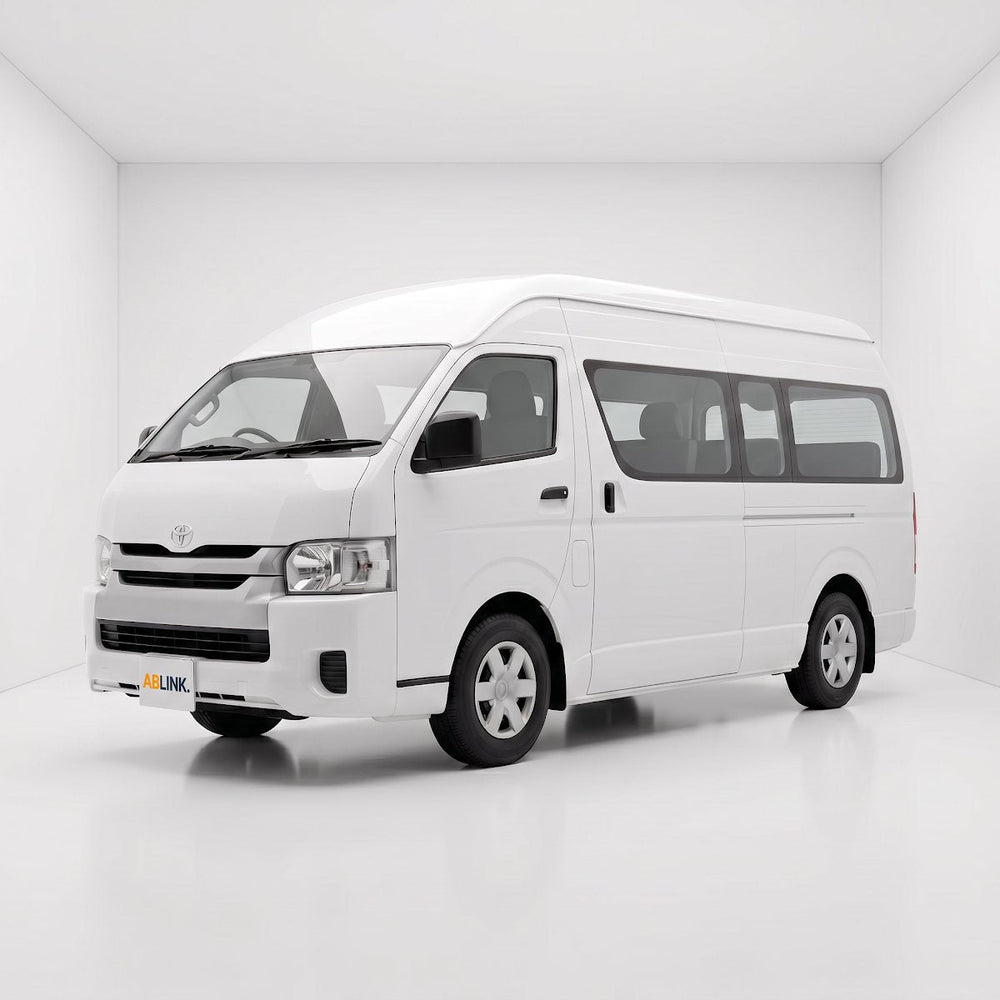
Small businesses typically operate with limited cash reserves between SGD 50,000 to SGD 300,000. Purchasing a commercial vehicle outright depletes 30-60% of working capital. A Toyota Hiace priced at SGD 145,000 total on-road cost represents significant capital commitment competing with inventory expansion, staff hiring, or marketing investments.
Commercial vehicle financing preserves cash reserves enabling fleet acquisition. With 80-90% loan-to-value ratios, SMEs maintain financial flexibility for operational needs and unexpected expenses. This capital efficiency becomes particularly critical during business expansion phases or seasonal demand fluctuations common in delivery, catering, and event logistics sectors.
Flexible Approval Criteria vs Corporate Loans
Major Singapore banks recognize SMEs present different risk profiles than established corporations. Specialized SME vehicle financing programs evaluate business potential beyond traditional credit scoring metrics disadvantaging younger companies.
Hong Leong Finance, DBS SME Solutions, OCBC Business Banking, and UOB evaluate customer contract value and duration, industry track record, director personal creditworthiness, business operational history even under one year, and asset utilization plans demonstrating revenue generation potential.
This evaluation approach provides financing access for startups and growth-stage businesses that might not qualify for standard corporate lending requiring three years of audited financial statements.
Tax Efficiency Through Structured Payments
SME vehicle financing offers meaningful tax advantages unavailable through outright purchases. Monthly loan interest payments qualify as fully deductible business expenses under IRAS guidelines, reducing effective financing costs by 17% for profitable businesses.
Depreciation schedules for financed vehicles follow Capital Allowance provisions, enabling businesses to claim accelerated write-offs in initial years. Understanding comprehensive business vehicle financing structures helps maximize these tax benefits while maintaining optimal cash flow.
How SME Financing Differs from Personal Car Loans
Personal Car Loans Evaluate:
-
Individual employment stability and salary levels
-
CPF statements, NOA forms, employer letters
-
Personal credit scores and payment history
SME Commercial Vehicle Financing Evaluates:
-
Business financial health through bank statements
-
Revenue patterns demonstrating sustainability
-
Customer contracts validating business model
-
Operational track records and growth trajectory
-
Director personal creditworthiness as guarantor
This fundamental distinction means SME owners cannot use personal income for commercial vehicle acquisition through consumer auto loans. Commercial vehicles require legitimate business entity registration and demonstrated business operations.
Top 5 Banks for SME Vehicle Loans 2026
1. Hong Leong Finance: Best for Startups
Best For: Businesses under 1 year operation seeking patient underwriting
Hong Leong Finance leads Singapore's startup-friendly commercial vehicle financing. The company's specialized SME evaluation criteria and patient underwriting process make it preferred option for businesses lacking extensive operating history.
Key Advantages:
-
Accepts businesses under 6 months operation (with conditions)
-
Higher evaluation weight on director personal credit strength
-
Flexible documentation for pre-revenue companies
-
Customer contract leveraging for approval decisions
-
2-4 business days approval timeline (fastest among major lenders)
Interest Rate Range: 2.98% - 3.45% per annum
Maximum Financing: 80% LTV (higher for established businesses)
Why Choose Hong Leong: Startup evaluates business potential and operational viability rather than purely historical financial performance. A 9-month-old F&B catering company with SGD 180,000 in signed customer contracts may qualify despite limited operating history when traditional banks require 18-24 months operation.
2. DBS SME Equipment & Vehicle Loan: Digital Integration Leader
Best For: Businesses seeking streamlined digital applications
DBS positions as Singapore's most technologically advanced SME banking provider offering fully digital commercial vehicle financing with decision timelines as short as 3-5 business days.
Key Advantages:
-
Maximum 90% loan-to-value (industry-leading)
-
Online application via MyInfo Business integration
-
Dedicated relationship manager support
-
Green vehicle preferential rates for electric vehicles
-
Integrated ecosystem connecting multiple banking services
Interest Rate Range: 3.00% - 3.50% per annum
Maximum Financing: 90% LTV
Special Programs:
-
DBS Fast Track for established businesses (2+ years)
-
Startup-friendly assessment for 6-24 months operation
-
Volume fleet discounts for 3+ vehicles
3. OCBC Business: Integrated Banking Solutions
Best For: SMEs combining vehicle financing with working capital facilities
OCBC differentiates through integrated banking enabling businesses to combine vehicle financing with working capital loans, trade finance, and business overdraft under unified assessment.
Key Advantages:
-
Up to 85% financing of vehicle purchase price
-
Flexible repayment tenures 1-7 years
-
Fixed and floating rate options
-
Relationship manager for personalized service
-
Preferential rates for existing account holders (0.15-0.25% reduction)
Interest Rate Range: 3.25% - 3.75% per annum
Maximum Financing: 85% LTV
Strategic Use: Construction companies acquiring two lorries while securing SGD 200,000 working capital for materials benefit from unified credit assessment and consolidated relationship management.
4. UOB Business: Fleet Financing Specialist
Best For: SMEs acquiring 3+ vehicles simultaneously
UOB provides Singapore's most competitive fleet financing terms for businesses requiring multiple commercial vehicles simultaneously.
Key Advantages:
-
85% maximum financing
-
Fleet discount structure: 3-5 vehicles (0.15% off), 6-10 vehicles (0.25% off)
-
Expedited approval for existing account holders
-
Specialized fleet assessment teams
-
Dedicated business banking support
Interest Rate Range: 3.15% - 3.60% per annum (before fleet discounts)
Maximum Financing: 85% LTV
Industry Focus: Particularly strong in logistics, construction, and F&B sectors with specialized assessment teams understanding industry-specific operational patterns.
5. Maybank SME Asset Financing: Regional Network Advantage
Best For: SMEs with regional ASEAN operations
Maybank leverages extensive ASEAN banking network providing unique advantage for Singapore SMEs operating across Southeast Asian markets.
Key Advantages:
-
Up to 80% financing of asset value
-
Flexible tenure 2-7 years
-
ASEAN business network coordination
-
Regional fleet coordination across Singapore, Malaysia, Thailand, Indonesia
-
Competitive SME rates
Interest Rate Range: 3.20% - 3.70% per annum
Maximum Financing: 80% LTV
Regional Advantage: Logistics companies operating cross-border routes or planning regional expansion can secure unified fleet financing covering vehicles in multiple countries under single credit facility.
SME Vehicle Financing Comparison Table
| Lender | Max LTV | Best Rate | Approval Speed | Startup Friendly | Fleet Discount | Best For |
|---|---|---|---|---|---|---|
| Hong Leong | 80% | 2.98% | 2-4 days | ⭐⭐⭐⭐⭐ Excellent | No | Startups <1 year |
| DBS SME | 90% | 3.00% | 3-5 days | ⭐⭐⭐ Good | Yes (3+ vehicles) | Digital adoption |
| OCBC | 85% | 3.25% | 5-7 days | ⭐⭐⭐ Good | Limited | Integrated banking |
| UOB | 85% | 3.15% | 4-6 days | ⭐⭐⭐ Good | Excellent (up to 0.25%) | Fleet expansion |
| Maybank | 80% | 3.20% | 3-5 days | ⭐⭐⭐ Good | Yes | Regional operations |
Financing Options for Startups Under 1 Year
Strategy 1: Enhanced Capital Contribution
Increase down payment from standard 10-20% to 30-40% demonstrating financial commitment while reducing lender risk.
Example Calculation:
-
Vehicle: Toyota Townace van SGD 125,000 total on-road
-
Standard down payment (20%): SGD 25,000 → Financed: SGD 100,000
-
Enhanced down payment (40%): SGD 50,000 → Financed: SGD 75,000
-
Monthly payment reduction: SGD 370-420
-
Total 5-year interest savings: SGD 4,800-6,200
Higher down payment often secures preferential interest rates viewing enhanced equity as risk mitigation.
Strategy 2: Director Personal Credit Optimization
Most SME financing requires director personal guarantee making director personal creditworthiness critical evaluation criterion.
Lenders Assess:
-
Personal credit bureau score (minimum 1800+ required, 2000+ strongly recommended)
-
Personal income stability
-
Personal debt servicing ratio under 60% of monthly income
-
Personal asset ownership (property particularly favorable)
-
No recent bankruptcy, defaults, or legal proceedings
Optimization Actions: Check credit bureau reports 3-6 months before application allowing time to address issues, pay off small outstanding balances, dispute inaccuracies, and demonstrate stable payment patterns.
Strategy 3: Customer Contract Leverage
New businesses with signed customer contracts demonstrating revenue visibility can leverage agreements during financing applications.
Documentation Strengthening Applications:
-
Signed service agreements specifying contract values and durations
-
Purchase orders from reputable customers
-
Letters of intent from corporate clients
-
Proof of existing business relationships through email correspondence
-
Platform acceptance letters (for Grab, Deliveroo, Foodpanda services)
Example: 8-month-old e-commerce delivery startup secured Hong Leong Finance approval by presenting 6-month service agreement (SGD 12,000 monthly revenue) plus 3-month pilot contract (SGD 8,000 monthly revenue) plus proof of 180 successful deliveries.
Strategy 4: Dealer Coordination Through ABLINK
ABLINK partners with multiple financial institutions providing coordinated financing for businesses across all operational stages.
Benefits for Startups:
-
Single application accessing multiple lender options simultaneously
-
Professional application presentation optimized for approval
-
Document preparation guidance ensuring complete submissions
-
Industry-specific expertise in logistics, F&B, construction, trade sectors
-
Patient guidance through financing process
How It Works:
-
Consult with ABLINK financing specialists assessing business profile
-
Complete single comprehensive application covering multiple lender requirements
-
ABLINK coordinates simultaneous submission to appropriate lenders
-
Receive multiple financing offers enabling comparison
-
Select optimal terms proceeding with chosen lender
-
ABLINK manages entire approval, documentation, and disbursement coordination
Vehicle Leasing vs Financing: ROI Analysis
Financing Structure (Loan with Ownership)
5-Year Total Cost Example (Toyota Hiace SGD 145,000):
-
Down payment: SGD 29,000 (20%)
-
Financed amount: SGD 116,000 at 3.25% over 5 years
-
Monthly payment: SGD 2,102
-
Total interest paid: SGD 10,120
-
Total 5-year cost: SGD 155,120
-
Vehicle residual value: SGD 65,000-75,000
-
Net cost after resale: SGD 80,120-90,120
Advantages:
✅ Vehicle equity builds progressively
✅ Resale enables residual value recovery
✅ Lower long-term total cost vs leasing
✅ No mileage restrictions
✅ Vehicle modification freedom
Disadvantages:
❌ Higher initial capital requirement
❌ Maintenance and repairs become business responsibility
❌ Vehicle disposal responsibility at end-of-life
❌ Depreciation affects balance sheet asset value
Commercial Leasing Structure
5-Year Total Cost Example (Toyota Hiace Equivalent):
-
Monthly lease: SGD 1,800-2,200 all-inclusive
-
Security deposit: SGD 1,800-2,200 (recoverable)
-
Total 5-year cost: SGD 108,000-132,000
-
Vehicle retained: None
-
Net cost: SGD 108,000-132,000
Advantages:
✅ Minimal initial capital requirement
✅ Maintenance and insurance included
✅ Operational flexibility for fleet adjustments
✅ Access to latest vehicle models
✅ Cash flow predictability
Disadvantages:
❌ No asset ownership or equity
❌ Higher total cost over extended periods
❌ Full lease term contractual obligations
❌ Usage restrictions and mileage caps
❌ Modification limitations
Decision Framework
Choose Financing When:
-
Business plans vehicle usage beyond 5-7 years
-
Sufficient capital available for down payment
-
Vehicle equity important for balance sheet
-
Specific vehicle modifications required
-
Total cost minimization prioritized
Choose Leasing When:
-
Capital preservation critical for operations
-
Predictable monthly expenses preferred
-
Fleet size flexibility needed
-
Latest vehicle models important
-
Maintenance management outsourcing preferred
Understanding comprehensive leasing versus buying comparison helps optimize financing structure matching business strategy.
Government Grants & Incentives 2026
Commercial Vehicle Emissions Scheme (CVES) Rebates
NEA administers CVES, which sets a banded incentive or surcharge at registration for commercial vehicles with maximum laden weight up to 3,500kg. Anything heavier is outside CVES and falls under the Heavy Vehicle Zero Emissions Scheme (HVZES) instead, which carries a separate incentive: for electric heavy vehicles registered with a COE from September 2026, S$15k in three S$5k tranches at 3,501–7,000 kg MLW and S$40k above 7,000 kg (LTA). Do not mix the two figures.
CVES Rebate Tiers:
-
Band A (fully electric and cleanest, MLW up to 3,500kg): S$15,000 incentive
-
Band B (mid-tier emissions): S$5,000 incentive
-
Band C (most pollutive): S$20,000 surcharge, not a rebate
Electric Van Example with Maximum Incentive:
-
Maxus eDeliver 3 base price: SGD 85,800
-
CVES Band A incentive: -S$15,000
-
Net price: SGD 70,800 (17.5% off the body price)
-
Financing at 80% LTV: Down payment SGD 14,160
Electric vehicles deliver compelling economics through combined incentive stacking and operational savings. Understanding complete electric lorry incentive breakdown helps businesses maximize available grants.
Operational Savings Compounding:
-
Electricity: SGD 420/month vs diesel SGD 1,100/month (SGD 680 savings)
-
Maintenance: 40-50% lower than diesel
-
Road tax: slightly higher for electric (S$530 a year against S$426 for diesel, up to 3.5 t MLW; LTA)
-
Total monthly advantage: SGD 750-900
Fleet Modernisation After the Early Turnover Scheme (ETS) Closed
ETS is closed and cannot be used. It ended for light commercial vehicles in March 2025, and the final deregistration date for heavy commercial vehicles was 31 December 2025. From 1 January 2026 the Heavy Vehicle Zero Emissions Scheme (HVZES) replaced it for heavy commercial vehicles. SMEs replacing an aging commercial vehicle still recover a COE rebate on deregistration, but that is the ordinary pro-rata rebate, not an ETS benefit.
How the COE Rebate Works on Deregistration:
-
Deregister the existing vehicle before its COE expires
-
Receive COE rebate proportional to remaining validity period
-
Apply the rebate toward the COE premium on the replacement vehicle
-
This reduces acquisition cost directly, and is separate from any emissions incentive
Detailed Calculation:
-
Current vehicle COE remaining: 24 months
-
Original COE paid: SGD 76,000
-
COE rebate: (24/120) × SGD 76,000 = SGD 15,200
-
Apply rebate to new vehicle COE cost
-
Direct savings: SGD 15,200 (19.4% COE reduction)
Real Case Studies: 3 SME Success Stories
Case Study 1: F&B Catering Startup → Ownership in 8 Months
Background:
-
Cloud Kitchen Catering (pseudonym)
-
Industry: F&B catering and meal delivery
-
Operating history: 8 months at application
-
Annual revenue: SGD 280,000 projected
-
Employees: 4 full-time
Challenge: Rented van cost SGD 2,400 monthly (SGD 28,800 annually = 10.3% revenue). Needed ownership but limited operating history.
Solution: Hong Leong Finance SME Program
-
Vehicle: Toyota Hiace 2.0 Commuter
-
Total on-road: SGD 145,000
-
Down payment: 35% (SGD 50,750) — enhanced strategy
-
Financed: SGD 94,250 at 3.15% over 6 years
-
Monthly payment: SGD 1,449
Success Factors:
-
Strong director personal credit score 2,100+
-
Signed customer contracts SGD 180,000 annual value
-
Detailed business plan with 18-month profitability projection
-
Enhanced down payment demonstrating commitment
-
ABLINK dealer coordination presenting optimized application
Outcome:
-
Approved within 4 business days
-
Monthly savings: SGD 951 vs rental
-
8-month accumulated cash flow improvement: SGD 7,608
-
Business revenue increased 42% in second half enabling additional driver hire
Similar food delivery and catering vehicle businesses can replicate this financing approach emphasizing customer contract validation.
Case Study 2: Construction SME Fleet Expansion
Background:
-
Renovation & Builder Specialist (pseudonym)
-
Industry: HDB and commercial renovation
-
Operating history: 3.5 years
-
Annual revenue: SGD 1.8 million with 23% YoY growth
-
Employees: 18 full-time
Challenge: Rapid growth required fleet expansion from 2 to 7 vehicles. Needed SGD 600,000+ capital while preserving cash reserves for materials and payroll.
Solution: UOB Business Fleet Program
-
Vehicles: 3× 10ft Mitsubishi Canter + 2× 14ft Canter
-
Total fleet cost: SGD 680,000
-
Down payment: 20% (SGD 136,000 aggregated)
-
Financed: SGD 544,000 at 2.90% over 7 years (0.25% fleet discount applied)
-
Aggregated monthly: SGD 7,142 (average SGD 1,428/vehicle)
Success Factors:
-
Established business with 3.5 years strong track record
-
Existing UOB banking relationship
-
Fleet application enabling volume discount
-
Staggered delivery schedule (weeks 1, 3, 5) maintaining cash flow
-
Detailed operational plan demonstrating genuine fleet need
Outcome:
-
All 5 vehicles approved within 6 business days
-
Staggered delivery aligned with project ramp-up
-
Fleet expansion enabled 3 simultaneous projects previously declined
-
Year-over-year revenue increased 34% (SGD 1.8M to SGD 2.41M)
-
Incremental gross profit SGD 410,000
-
Fleet financing costs SGD 85,704 annually = 20.9% of incremental profit (strong ROI)
Understanding lorry size selection between 10ft and 14ft options helps construction businesses optimize fleet composition.
Case Study 3: Logistics Startup with Electric Vehicle Incentive Stacking
Background: