An advertising truck in Singapore is an ordinary registered commercial vehicle — a lorry or van — carrying advertising on its body. There is no special "advertising truck" vehicle class: you buy or run a normal goods vehicle, keep the advertisement within the rules on visibility and decency, and the road does the rest. This guide covers the rules, the costs, and which vehicles suit the job.
Key takeaways
- An advertising truck is a standard goods vehicle with advertising applied — same COE, same licence, same road rules as any lorry or van.
- LTA has no objection to sticker advertisements and decals on vehicles, provided they never obstruct the driver's view, cover lights, number plates, windows or required markings, and are not obscene.
- Two business models: advertise your own business on your own fleet (free media space you already own), or run vehicles carrying advertising as the business itself.
- The vehicle economics are ordinary commercial-vehicle economics: COE Category C, Class 3 or Class 4 licence by unladen weight, and a Vehicle Parking Certificate above 5,000kg laden.
- Box-body lorries give the largest flat advertising surface; vans wrap more cheaply and go anywhere a car goes.
What is an advertising truck in Singapore?
It is a marketing term, not a vehicle category. In practice it means one of three things: a box lorry with large flat panels used as a moving billboard, a wrapped van carrying a brand across the island every day, or a company fleet whose sides carry its own name and number. All three are registered as normal goods vehicles.
That matters because it sets everything downstream: the purchase route, the licence your driver needs, and the running costs are all standard commercial-vehicle territory — the advertising layer sits on top.
Is truck advertising legal in Singapore?
Yes, within clear limits. LTA's position on sticker advertisements and decals on vehicles is that it has no objection, so long as the advertisement never obstructs the driver's view or endangers other road users, and never covers or masks the lighting system, number plates, windows, windscreens or other required vehicle markings. The graphics and words must not be pornographic, obscene or vulgar.
Two practical cautions on top of that baseline. First, anything beyond flat stickers and wraps — illuminated panels, digital LED screens, structures that change the vehicle's dimensions — moves into modification territory: check with LTA before you build, because an unapproved structural change can void the vehicle's roadworthiness. Second, buses follow their own advertising framework with its own approval rules, so do not borrow bus-wrap practice onto a goods vehicle or vice versa. Verify the current position on LTA OneMotoring before committing to a build.
Two ways to run advertising on a truck
1. Your own brand on your own fleet
The cheapest advertising space your business will ever own is the side of the van it already runs. A delivery vehicle covers the same estates your customers live in, every day, for years — and the media cost after the one-time wrap is zero. For most SMEs this is the sensible starting point: the vehicle earns its keep on deliveries, and the advertising is free reach on top.
2. Advertising as the business
The second model runs vehicles whose cargo is the advertisement — box lorries with flat panel sides driven on planned routes for paying advertisers. Here the vehicle choice is the business decision: panel area, route flexibility and running cost decide your margin. The vehicle is still a normal goods vehicle with normal obligations; your revenue model is what changed.
Which vehicle suits advertising work?
Box-body lorries — the biggest canvas
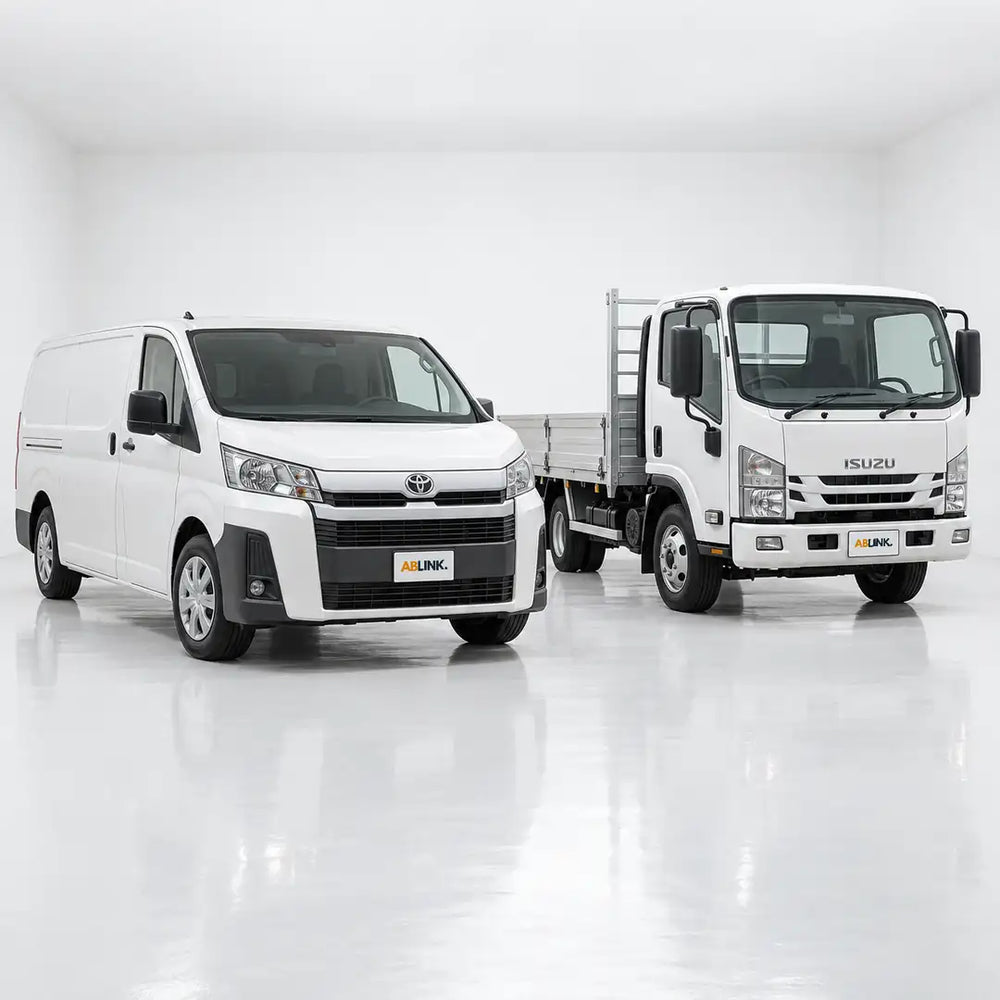
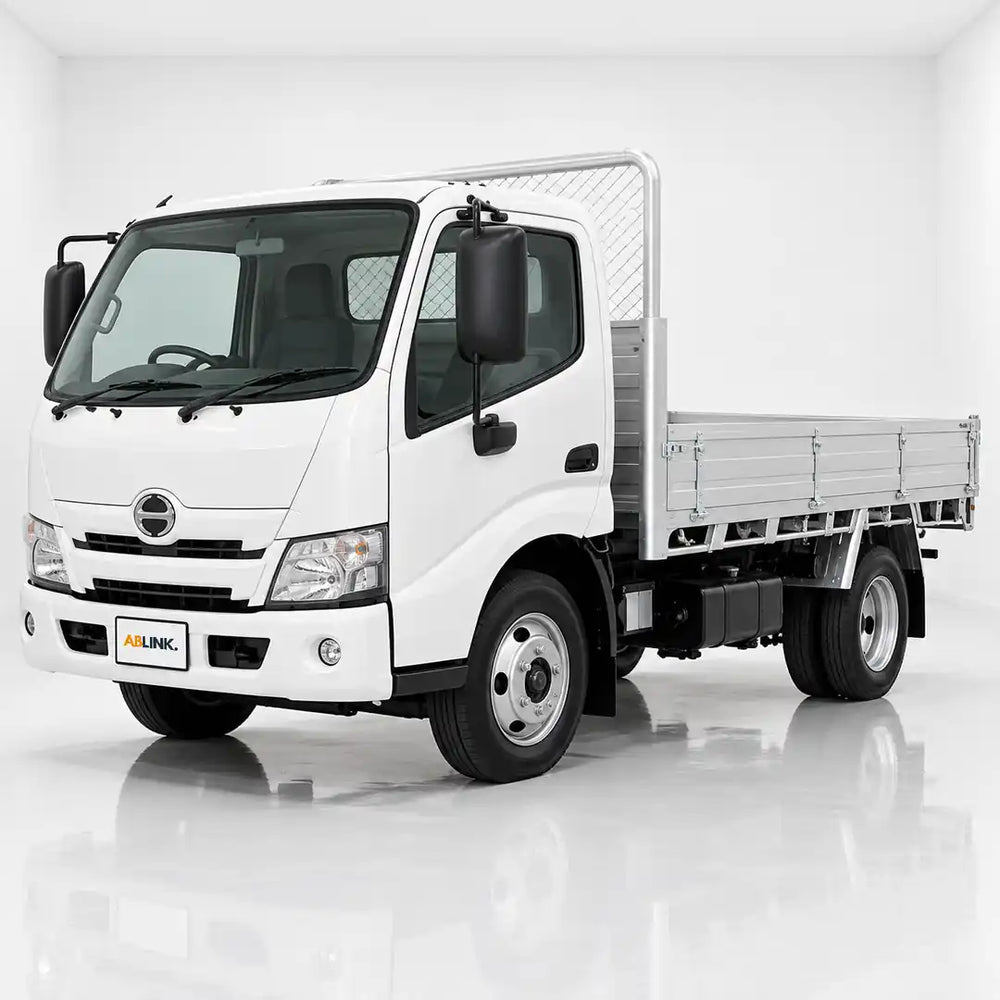
A box-body lorry offers the largest flat, high surfaces — the closest thing to a rolling billboard. A 10ft lorry is the manoeuvrable entry point that still fits tight carparks; a 14ft lorry trades some agility for materially more panel area. Browse the current 10ft and 14ft truck listings for what is available now, with prices inclusive of COE and GST shown on each unit.
Vans — cheaper wraps, go anywhere
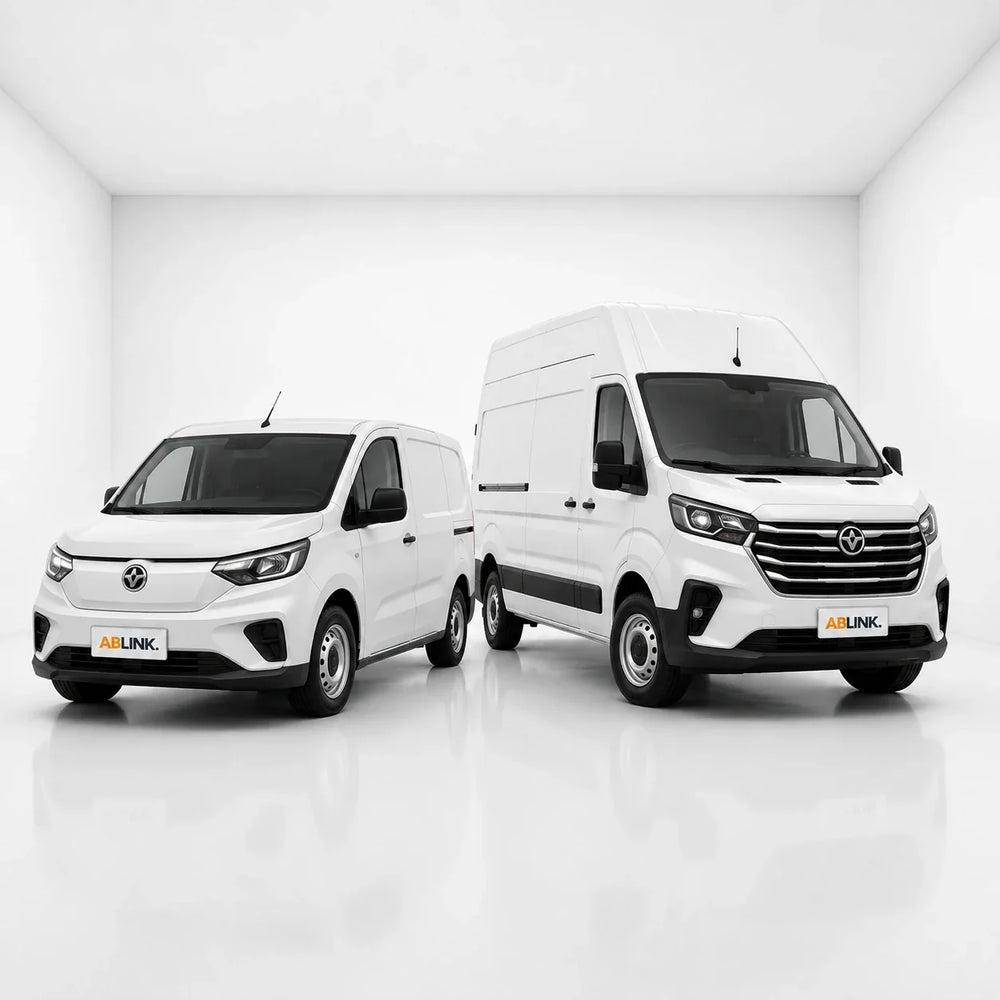
A goods van has less flat area but wraps more cheaply, parks anywhere, and doubles as a working delivery vehicle. For an own-brand fleet this is usually the right call. The goods van range covers compact to high-roof options — and a high-roof van's tall sides carry branding surprisingly well. Our van height guide explains why the tall 2.4m class doubles the visible panel while changing where the vehicle can go.
Electric — the quiet advantage for ad routes
Advertising routes are slow, urban and repetitive — exactly the duty cycle where an electric vehicle's running costs shine and a diesel's do not. An electric van or the SANY FR601 14ft electric lorry also lets the advertiser's sustainability story match the vehicle carrying it. See our electric van guide for the current line-up.
Wrap, sticker or magnetic: which format should you use?
Three formats dominate, and they suit different commitments.
Full or partial wraps are printed vinyl applied across body panels. They deliver the strongest visual impact, and a professionally applied and removed wrap also shields the paint underneath — a quiet benefit at resale time. They are the highest one-time cost of the three and are effectively permanent until professionally removed.
Cut stickers and decals are the workhorse format: company name, number, services, applied panel by panel. Cheaper than a wrap, easy to refresh when a phone number or logo changes, and squarely within the sticker position LTA has stated no objection to.
Magnetic panels attach and remove in seconds, which suits a vehicle that switches between business and neutral duties. The trade-off is durability and security — magnets can lift at speed or walk away in a carpark — so most fleets treat them as a temporary measure, not the plan.
Whichever format you choose, the LTA baseline is the same: nothing over windows, lights, plates or required markings, and nothing that obstructs the driver's view.
How much does truck advertising cost in Singapore?
Two separate budgets, and mixing them up is the most common planning error.
The application cost — wrap, stickers or panels — is a one-time signage expense priced by vehicle size, coverage area and material grade. A full wrap on a 14ft box body costs a multiple of a simple decal set on a van door. Get quotes from signage firms against your specific vehicle; prices vary widely enough that a generic figure would mislead.
The vehicle cost is the real commitment: the unit itself, its COE, insurance, road tax and running costs. Goods vehicles bid in COE Category C — S$91,545 at the first August 2026 exercise, and it moves every bidding round. On our inventory pages, listed prices are inclusive of COE and GST, so the comparison across units is like for like.
The useful mental model: the advertising layer is typically a single-digit percentage of what the vehicle costs over its life. If the vehicle also does productive delivery work, the advertising is close to free reach. If the vehicle exists only to advertise, the whole vehicle cost is your media cost — which is why route quality matters so much in that model.
Routes and timing: where a moving billboard earns its keep
A moving advertisement is paid in eyeballs, and eyeballs concentrate. Slow, dense, repeated exposure beats fast expressway miles: town centres, industrial estate lunch crowds, school and event peaks. That is also why the duty cycle suits electric drivetrains — low speed, frequent stops, predictable daily distance.
Plan the parking as seriously as the driving. A branded vehicle parked legally at a busy kerbside is still advertising; the same vehicle collecting a summons is advertising something else. Heavy vehicles above 5,000kg laden also carry the overnight rule — designated heavy-vehicle lots between midnight and 6am — so an advertising lorry needs a legal home like any other lorry.
Does vehicle advertising affect insurance or resale?
Insurance: tell your insurer. A wrap or livery does not automatically change a commercial policy, but the vehicle's use — especially if advertising for third parties becomes the business — is exactly the kind of detail an insurer expects to know. Declare the use honestly when you take or renew the policy; our motor insurance team can quote with the actual use on the table.
Resale: a professionally applied and removed wrap generally leaves paint in good condition, and often better protected than bare paint would have been. What hurts resale is amateur application, aged vinyl baked on for years, or adhesive damage from cheap material. If resale value matters to your exit plan, budget for professional removal — and when the time comes, our sell-vehicle team will value the unit as it presents.
What does an advertising truck cost to run?
The advertising layer is the cheap part; the vehicle is the real cost. Budget like any commercial vehicle purchase:
- The vehicle and its COE. Goods vehicles bid in COE Category C. Listings on our inventory pages show prices inclusive of COE and GST, so you compare like for like.
- The wrap or panels. Priced by the signage industry per vehicle size and material — get quotes against your specific vehicle.
- Running costs. Fuel or electricity, road tax, insurance, servicing — an advertising route racks up urban mileage like any delivery route.
- Compliance. A Vehicle Parking Certificate if the vehicle exceeds 5,000kg maximum laden weight, and overnight parking in designated heavy-vehicle lots between midnight and 6am for heavy vehicles.
What licence does the driver need?
Licence class follows the vehicle's unladen weight, not its use. Most goods vans and light lorries sit within Class 3; heavier lorries above 2,500kg unladen need Class 4. The advertising on the side changes nothing. Our Class 3 versus Class 4 guide covers the split in detail, with the official definitions from the Singapore Police Force.
Buy, lease or hire the vehicle?
If the advertising contract is short, hiring avoids the COE entirely. If you are building an advertising fleet, leasing keeps the capital in the business while the lessor carries the servicing admin. If the vehicle doubles as your own delivery fleet for years, buying — new from the new vehicle inventory or from the used range — amortises the COE across its working life. Our rent-lease-buy framework walks through the decision.
Frequently asked questions
Do I need LTA approval to put advertising stickers on my lorry or van?
For ordinary sticker advertisements and decals, LTA's stated position is no objection — provided nothing obstructs the driver's view, covers lights, plates, windows or required markings, and the content is not obscene. For anything illuminated, digital or structural, check with LTA before building, as that can constitute a vehicle modification.
Can I advertise another company's brand on my vehicle?
The sticker rules above do not distinguish whose brand is displayed. The practical constraints are contractual and content-based: keep the material within the decency rules, and put the commercial arrangement with the advertiser in writing. If in doubt on a specific format, confirm with LTA first.
What is the best vehicle for mobile billboard advertising in Singapore?
A box-body lorry gives the largest flat panels — a 14ft body offers substantially more area than a 10ft. If the vehicle must also work as a delivery unit, a high-roof goods van is the better dual-purpose choice. Match the size to the routes: tight estate carparks favour the 10ft and van formats.
Does an advertising truck need a special COE or registration?
No. It registers as a normal goods vehicle under COE Category C, with the same road tax, inspection and parking rules as any lorry or van of its weight. The advertising changes the bodywork's appearance, not its registration class.
Can a Class 3 driver drive an advertising truck?
If the vehicle's unladen weight is within the Class 3 limit, yes — most goods vans and light lorries qualify. Heavier lorries above 2,500kg unladen need Class 4. Check the specific vehicle's unladen weight rather than assuming from its size.
Is an electric vehicle worth it for advertising routes?
Often, yes. Advertising routes are slow, urban and repetitive — the duty cycle where electric running costs are strongest and where the CVES incentive for electric light commercial vehicles applies at registration. Weigh charging access on your planned routes before committing.
Put your message on the road
The vehicle is the hard part of an advertising truck — the wrap is easy. If you are weighing a 10ft lorry against a 14ft, or a van against both, browse the current inventory with prices inclusive of COE and GST, or speak to our team about which format fits your routes and your budget.
Sources: Commercial vehicle rules — LTA OneMotoring. Driving licence classes — Singapore Police Force.
Disclaimer: Advertisement display rules, vehicle modification requirements and approval processes are set by LTA and can change — confirm the current position with LTA before building or applying any advertising format, particularly illuminated or structural formats. Signage costs are set by third-party providers and vary by vehicle and material. Insurance terms depend on your declared use — disclose it to your insurer. Vehicle prices are shown on live listings; COE premiums move at every bidding exercise. Licence class depends on the specific vehicle's unladen weight. This guide is general information, not legal advice.