Updated 23 September 2026 · By SingRank Singapore
Yes, you can lease an electric van or lorry in Singapore without buying it outright. EV van leasing through ABLINK runs with its leasing partner, Rentgo Pte. Ltd., and the lease page promises no large downpayments. One catch nobody mentions: the CVES or HVZES grant goes to the vehicle's registered owner, not automatically to you.
So you are really asking two things: how to get the van or lorry without tying up capital, and where the government money goes once someone else owns the vehicle you drive every day. This guide answers both from LTA, NEA and Singapore Police Force sources, then shows you what to put in writing before you sign.
Key takeaways
- ABLINK's commercial vehicle leasing page lists electric commercial vehicles next to panel vans, box lorries and pickups, with partner Rentgo Pte. Ltd.
- LTA pays the HVZES grant to the registered owner, and NEA pays CVES through LTA to the registered owner too (HVZES terms, 2026).
- On a COE won in or after the first September 2026 exercise, an electric lorry of 3,501 kg to 7,000 kg maximum laden weight earns S$15k under HVZES, not S$40k (LTA, 2026).
- A Class 3 licence covers electric light goods vehicles up to 3,000 kg unladen weight, per the Singapore Police Force page updated 15 June 2026.
- Judge a lease by the written quote: who is the registered owner, and is the grant in the monthly rate?
Can you lease an electric van or lorry in Singapore without a big upfront payment?
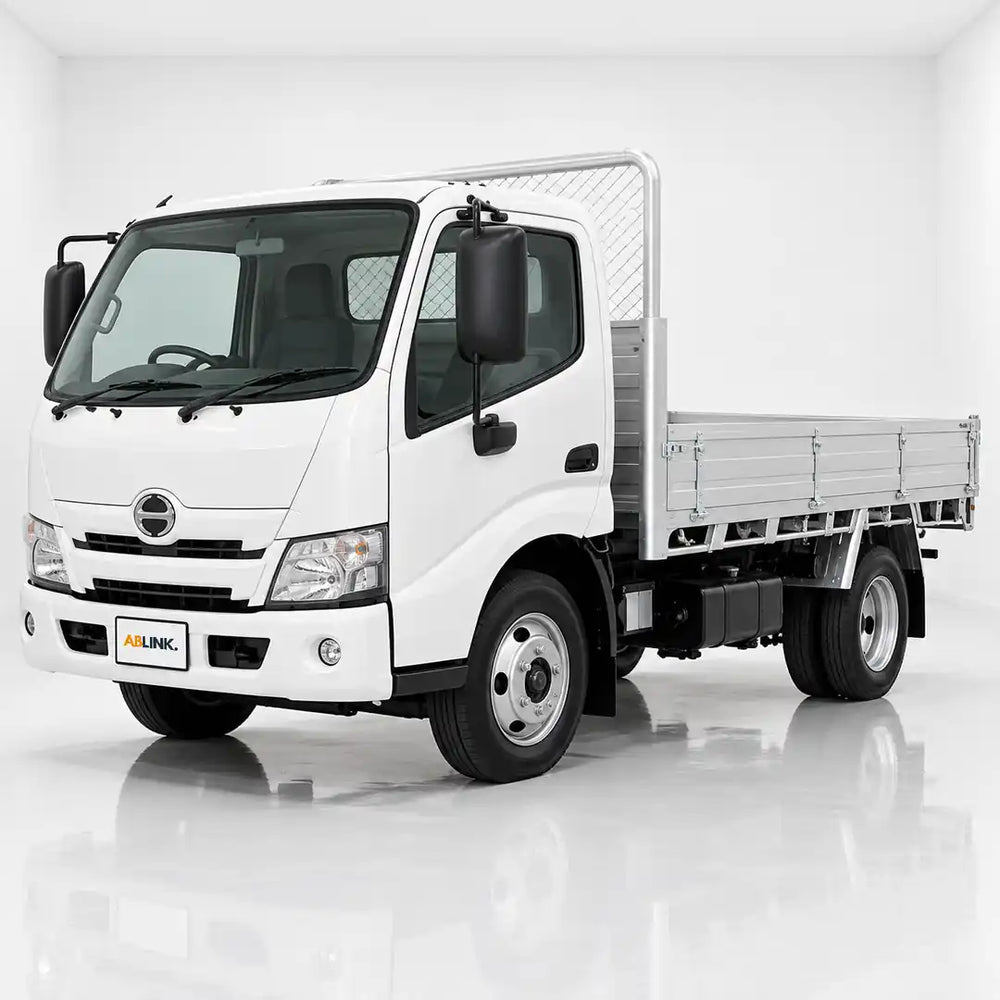
You can, and several companies offer it. At ABLINK the service runs with a named partner. The lease page states "Our leasing partner Rentgo Pte. Ltd." and lists four vehicle types: panel vans, box trucks or lorries, pickup trucks and electric commercial vehicles.
On the money side, read the page's own words with care. It promises "no large downpayments, no depreciation worries, and easy fleet upgrades anytime". It adds transparent pricing with no hidden fees or balloon payments.
The page does not say "no payment upfront", so ask what deposit, if any, your quote carries. We would rather you hear that from us now than find out at signing.
The page also offers short-term or long-term lease packages. It says every vehicle is regularly serviced, insured and road-ready. That is the whole promise. Anything else you've read about leases in general, such as a fixed tenure, a mileage cap or a spare vehicle, belongs in your written quote.
Need an electric van for a few weeks rather than a year? A rental may fit better, and our commercial vans compared guide sets electric models beside diesel ones.
Our long term van rental Singapore guide covers that route, and we compare all three options in renting, leasing or buying a van compared.
Who receives the EV grant when a van or lorry is leased?
The registered owner receives it. That one phrase decides everything for a lessee, and it sits in the terms of both schemes.
For heavy vehicles, LTA's HVZES terms (last updated 3 September 2026) say LTA pays the incentive in cash to the vehicle's "registered owner" once the scheme's conditions are met (LTA, 2026). For light commercial vehicles, the CVES terms say the grant "will be paid as a cash grant from the National Environment Agency (NEA) through the Land Transport Authority (LTA) to the registered owner of a vehicle" (NEA and LTA, 2025).
Neither document mentions a lessee, a hirer or a driver. The money follows the name on the vehicle registration:
- If the leasing company registers the electric van in its own name, the leasing company receives the CVES grant.
- If a lessor registers an electric lorry, HVZES tranches go to the lessor on each qualifying date.
- If your company buys and registers the vehicle, your company receives the grant.
Here is the practice we push back on. EV leasing pages talk up grants next to a monthly rate. Yet none of the ten pages we checked for "ev van leasing singapore" on 23 September 2026 named CVES or HVZES, or said who gets the money. A lessee who reads a S$15k grant as cash coming to them is comparing the wrong numbers.
Our view is simple. The grant is not yours to claim in a lease, so it should show up somewhere else: a lower monthly figure or better terms. Whether it does is the lessor's business decision, not a rule. You find out by asking in writing and comparing quotes on that basis.
How much is the grant on an electric van versus an electric lorry in 2026?
It depends on one number on the vehicle's registration: the maximum laden weight (MLW). OneMotoring classes a Light Goods Vehicle as "≤ 3,500 kg" MLW and a Heavy Goods Vehicle as "3,501 to 16,000 kg" (OneMotoring, 2026). Each class falls under a different grant.
| Vehicle (by MLW) | Scheme | Grant | How it is paid | Paid to |
|---|---|---|---|---|
| Electric van or light lorry, MLW up to 3,500 kg | CVES, Band A | S$15k | Once, at first registration | Registered owner |
| Electric lorry, MLW 3,501 to 7,000 kg, COE from the first September 2026 exercise onwards | HVZES | S$15k | S$5k at registration, then S$5k at each of the first two anniversaries | Registered owner on each date |
| Electric lorry, MLW above 7,000 kg | HVZES | S$40k | Three tranches over two years | Registered owner on each date |
| Electric heavy vehicle on a COE obtained before the first September 2026 exercise | HVZES | S$40k, whatever the MLW | Three tranches over two years | Registered owner on each date |
The lorry change is recent. On 2 September 2026, LTA said it would cut the incentive from S$40k to S$15k "for lighter zero-tailpipe emission heavy vehicles", those above 3,500 kg and up to 7,000 kg MLW, from 3 September 2026. The scheme stays open until 31 December 2028 (LTA, 2026).
The van side has not moved. The joint LTA and NEA release of 30 December 2024 kept the Band A incentive for electric vehicles at S$15k and raised the Band C surcharge on mainly diesel vehicles from S$15k to S$20k. CVES covers vehicles registered between 1 April 2025 and 31 March 2027 (LTA and NEA, 2024).
Why should a lessee care? Because the grant on a lighter electric lorry on a new COE fell by S$25k overnight, from S$40k to S$15k (LTA, 2026). One fleet operator told The Business Times the cut would bite:
"The adoption of EHVs will be reduced, possibly even quite drastically, as the majority of EHVs now are in the 3,501 to 7,000 kg range." (The Business Times, 2 September 2026)
A lease quoted in August on an electric lorry in that band may have been priced against the bigger grant. If you hold one, ask whether it still stands. For the full electric lorry Singapore grant picture, see our explainer on HVZES and the heavy-vehicle charger grant.
Why do the grant's three tranches matter in a lease?
HVZES does not pay in one lump. The terms say the S$15k is paid "in three tranches to the person who is the registered owner of the vehicle at the material time". The vehicle must still be registered on its first and second anniversaries for the later tranches (HVZES terms, 2026).
Three things follow for anyone leasing an electric lorry:
- The first tranche goes to registration costs first. The terms say the first S$5k "will first be used to offset the total vehicle taxes and fees" due at registration. Only any excess is paid out.
- Two-thirds of the grant arrives on the anniversaries. If a lessor transfers or deregisters the lorry early, the later tranches go to whoever is the registered owner on each date, or to nobody.
- The declared weight has to hold. If the MLW changes after registration, any unpaid tranches shrink or stop where the new weight earns less.
There is a liability side too. If LTA pays out wrongly, the terms make the registering agent and the registered owner jointly liable to repay it. As a lessee you aren't the registered owner, so that risk sits with the lessor. It's one place where leasing really does take a burden off your desk.
EV van leasing or buying: which puts the grant in your hands?
Buying does. A lease where the lessor is the registered owner trades the grant, and the paperwork, for less capital tied up. Neither suits every business. Here is how the two routes compare on the points that decide it.
| Question | Lease (ABLINK with Rentgo) | Buy and register in your company's name |
|---|---|---|
| Who is the registered owner? | Set by the lease; ask before signing | Your company |
| Who receives CVES or HVZES? | The registered owner | Your company |
| Capital tied up | "No large downpayments" per the lease page | Vehicle price and COE, less the grant where it applies |
| Servicing and insurance | "Regularly serviced, insured, and road-ready" | Arranged and paid by you |
| Depreciation and resale | "No depreciation worries" per the lease page | Yours to carry and to recover |
| Fleet changes | "Easy fleet upgrades anytime" | Sell or trade in |
| Charger grant (EHVCG) for a heavy EV | Tied to whoever registers the eHV | Open to you if you register a new eHV |
Our calls, by type of business:
- A courier or catering firm replacing one or two vans, unsure of daily mileage: lease first. You keep capital free while you learn whether an electric van fits your routes.
- A fleet that will run the same electric lorry for its whole working life: buying tends to keep more value, because the grant, the resale and the charger grant stay with you.
- A start-up with no fleet history: skip the grant maths and compare lease quotes on the all-in monthly figure and what it covers.
If you are weighing the best van leasing Singapore offers against a purchase, look at the new range too. Browse ABLINK's new electric goods vans and view the latest price on each listing. We don't quote prices here, because COE and model pricing move too often for an article to stay right.
Can your drivers take a leased electric van on a Class 3 licence?
Usually, yes, and electric vans get more room than diesel ones. The Singapore Police Force licence page, updated 15 June 2026, puts electric vans and other electric light goods vehicles weighing up to 3,000 kg unladen within Class 3 (SPF, 2026).
For every other goods vehicle, the Class 3 limit stays at 2,500 kg unladen. Above that, a load-carrying vehicle moves to Class 4. The same page reminds foreign licence holders who convert that vans and pick-ups need a Class 3 or 3A licence.
Notice the two weights doing different jobs. Unladen weight decides the licence. Maximum laden weight decides the grant.
An electric lorry registered above 3,500 kg MLW is a heavy goods vehicle for HVZES. It can still be a Class 3 vehicle if its unladen weight is 2,500 kg or less, the limit for goods vehicles that are not electric light goods vehicles. Ask the lessor for both figures from the registration details, not the brochure.
This matters more in a lease than a purchase, since you often don't pick the exact unit until delivery. Put "Class 3 drivable" in the quote as a condition if your drivers only hold Class 3. Our guide on what a Class 3 licence covers against Class 4 goes deeper.
Does the charger grant work if you lease an electric lorry?
Read the condition closely before you plan a depot charger around it. LTA's Electric Heavy Vehicle Charger Grant (EHVCG) pays up to half of what a charger costs to install, with a cap of S$30k for each one. Its first rule is that "The applicant must register a new eHV between 1 Jan 2026 and 31 Dec 2028 for each co-funded charger" (LTA, 2026).
As written, the grant is tied to whoever registers the electric heavy vehicle. If your leasing company registers the lorry, you may not meet that condition in your own name. The terms do allow the charger itself to belong to someone other than the applicant.
Our advice: ask the lessor how charging works before you commit to a depot installation. A lessee who counts on up to S$30k of co-funding per charger, then finds the condition later, pays for the charger alone (LTA, 2026).
Which electric vans and lorries can you choose from in Singapore?
Start from the vehicle, then decide how to pay for it. ABLINK's live new-vehicle range, checked on 23 September 2026, lists 23 electric models: 14 goods vans, five 10ft trucks, two 14ft trucks and two pickup trucks.
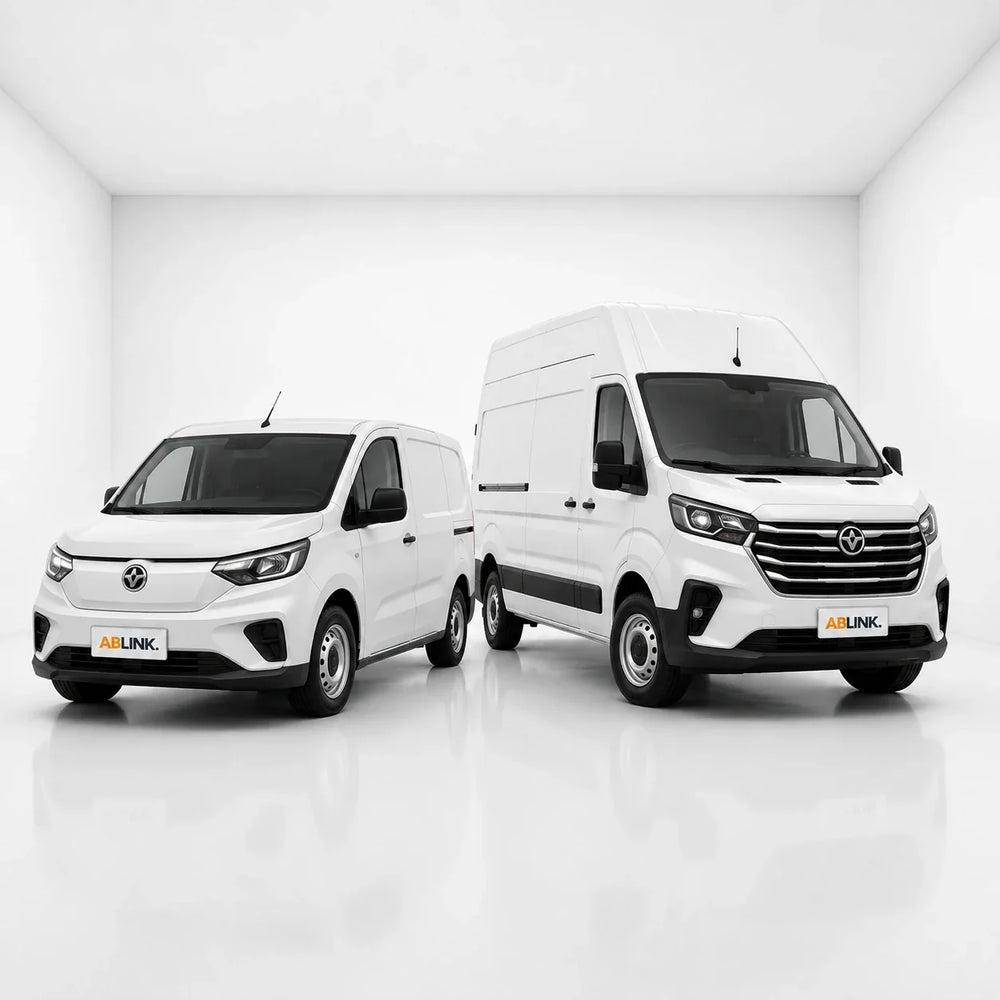
- For parcel and courier routes, compare each electric cargo van in the electric goods vans range by battery size and range. Our Maxus or BYD electric van comparison and three electric vans compared help you shortlist, and vans for Shopee and Lazada delivery covers parcel work.
- For pallet and bulk loads, the electric 10ft trucks sit near the 3,500 kg line where the grant changes, as we explain in electric 10ft lorries compared.
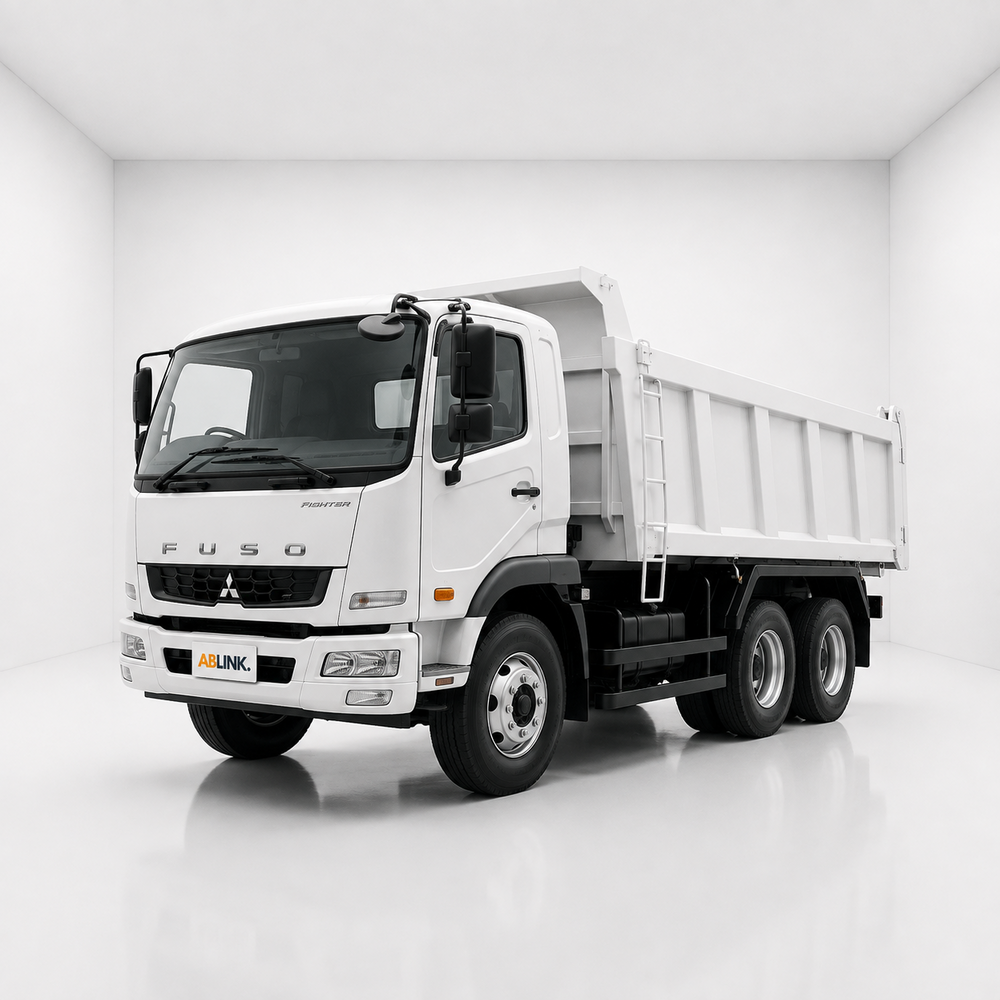
- For heavier work, check the registered MLW of the electric 14ft trucks. Above 3,500 kg puts a truck under HVZES rather than CVES.
- For used options, the electric van listings on ABLINK's marketplace come from several dealers; check each listing's details directly.
One honest caveat. That range is what you can buy. The lease page describes its electric fleet only as electric vans and electric commercial vehicles, so ask which models are in the lease programme when you request a quote. Knowing the range first still helps, because you'll spot a good match when it's offered.
Running costs differ by weight class too, and road tax is one of them. See our guide to road tax for electric vans and lorries, then ask whether your lease covers it.
Eight questions to ask before you sign an EV lease
Each of these fits on one line of a written quote. If an answer isn't in writing, treat it as not agreed.
- Who will be the registered owner? That party receives CVES or HVZES.
- Is the grant reflected in my monthly rate? Ask for the rate with and without it, if the lessor will show both.
- What is the maximum laden weight? Up to 3,500 kg means CVES. From 3,501 kg to 7,000 kg on a COE from the first September 2026 exercise means the S$15k HVZES band (LTA, 2026).
- What is the unladen weight? Class 3 drivers need an electric light goods vehicle at or below 3,000 kg.
- What deposit or advance payment applies? The page promises no large downpayments; get the exact figure.
- What does "serviced, insured, and road-ready" include? Ask for the insurance cover, servicing intervals and who pays road tax.
- How is charging handled? Home, depot or public charging, and whether any charger grant applies.
- What happens if I end early or upgrade? The page mentions easy fleet upgrades; get the conditions and any charge in writing.
Allow a week to collect two or three quotes on these eight lines. That short delay costs far less than a lease signed on the wrong assumption.
When does renting or buying beat leasing?
Leasing isn't the answer for everyone, and we'd rather say so than sell you the wrong contract.
Rent when the need lasts weeks: a seasonal peak, a single project, or a trial of whether an electric van copes with your routes. EV van rental in Singapore avoids a longer commitment while you gather real mileage figures.
Buy when you'll keep the vehicle for years, have a depot where you can charge, and want the S$15k or S$40k grant on your own books. Buying also puts EHVCG co-funding within reach, because you would be the one registering the new electric heavy vehicle (LTA, 2026).
Lease when capital matters more than the grant, when you want servicing and insurance handled, and when your fleet size may change. That profile fits many growing delivery, catering and trade firms. For them, EV van leasing is often the calmer choice.
How to get an EV lease quote through ABLINK
You know what to ask now, so the quote you get will be worth comparing. Tell us the job: what you carry, how far you drive each day, and whether your drivers hold Class 3 or Class 4. The team will prepare a customised leasing quote, arranged with our partner Rentgo Pte. Ltd.
Ask for it in writing, then test it against the eight questions above.
Request it on our commercial vehicle leasing Singapore page, or visit us at 421 Tagore Industrial Avenue. If buying fits better, the same team can walk you through the new electric range instead.
Frequently asked questions
Can I lease an electric van in Singapore without paying upfront?
ABLINK's lease page, run with partner Rentgo Pte. Ltd., promises "no large downpayments", not zero payment. Ask whether a deposit or advance rental applies, and get the exact amount in your written quote. Compare quotes on the full monthly figure plus any upfront sum, not the monthly rate alone.
Who gets the CVES grant on a leased electric van?
The registered owner. The CVES terms say NEA pays the S$15k Band A grant through LTA "to the registered owner of a vehicle", once, at first registration (CVES terms). If the leasing company registers the van, it gets the grant. Ask whether your rate reflects it.
Do I get the HVZES grant if I lease an electric lorry?
Not directly. HVZES goes "to the person who is the registered owner of the vehicle at the material time", in three tranches over two years. A lessee who isn't the registered owner receives nothing from LTA. For 3,501 kg to 7,000 kg MLW on a new COE, the grant is S$15k (HVZES terms, 2026).
Can a Class 3 licence holder drive an electric van?
Yes, if the van's unladen weight is 3,000 kg or less. The Singapore Police Force licence classes, updated 15 June 2026, place electric light goods vehicles up to 3,000 kg unladen under Class 3. Other goods vehicles stop at 2,500 kg. Check the unladen weight on the registration details before your drivers take the keys.
EV van rental Singapore: is it different from EV van leasing?
Rental suits short needs of days or weeks. Leasing suits longer commitments with servicing and insurance built in. ABLINK's lease page offers both short-term and long-term packages, so the line can blur. Compare what each quote covers rather than the label on it, and check who the registered owner is either way.
Which electric vans can I lease through ABLINK?
The lease page lists electric commercial vehicles as a category without naming models. ABLINK's new-vehicle range listed 23 electric models on 23 September 2026, including 14 goods vans. Ask which of them are in the lease programme when you request a quote.
Disclaimer: This guide on EV van leasing is general information, not financial, tax or legal advice. Leasing at ABLINK is arranged with our leasing partner, Rentgo Pte. Ltd.; lease terms, deposits, inclusions and early-exit conditions are set in each agreement and are not an offer.
Grant amounts and eligibility are decided by LTA and NEA under their published terms, which can change. Vehicle prices are quoted separately from COE, and COE premiums move at every bidding exercise. Please confirm current terms with the ABLINK team before you commit.