To buy a Hino Dutro in Singapore, you choose between a brand-new unit registered under COE Category C or a used example from an agent dealer. The Dutro is a Japanese light-duty truck, usually sold here as a 10ft lorry, with a 2.8L or 3.0L diesel engine and a payload of up to 1,920 kg. Both routes suit food, pharmaceutical and last-mile fleets.
Most first-time buyers fixate on the headline figure and miss the one call that shapes five years of running cost: new versus used. We settle that lower down, in plain numbers. First, the specifications, the licence you need, the COE and emissions rules, the deck options, and how the two buying routes actually compare.
Key Takeaway
The Hino Dutro and the Toyota Dyna are the same 10ft truck, rebadged on one platform. Engine choice runs 2.8L to 3.0L, payload reaches 1,920 kg, and every unit bids for COE under Category C. New buys peak reliability; used buys shorten payback. View the latest new Hino Dutro price or browse used Hino Dutro stock.
What is the Hino Dutro?
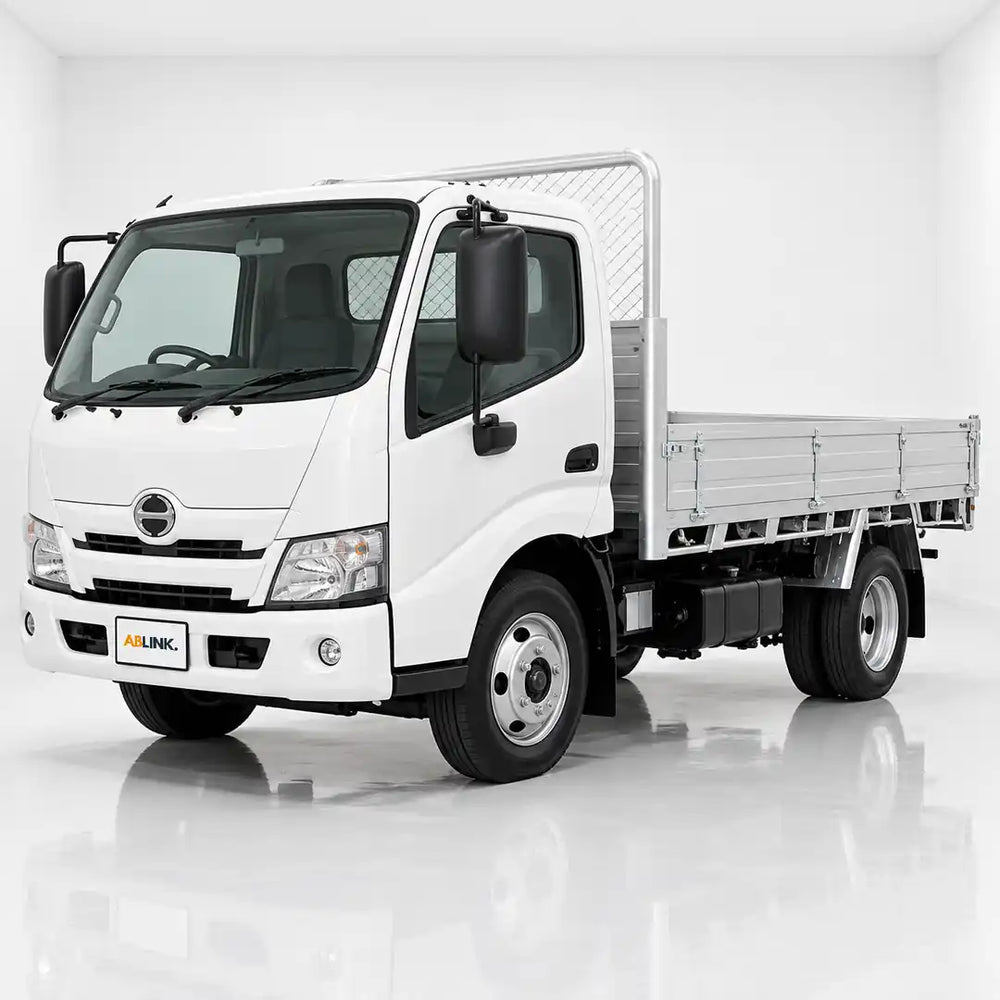
The Hino Dutro is a Japanese light-duty, cab-over-engine truck built by Hino Motors, a subsidiary of the Toyota Group. It sits in the 1-tonne to 2-tonne payload class and is one of the most common 10ft lorries on Singapore roads.
The cab-over layout puts the driver above the front axle, which shortens the 4,685 mm body and tightens the turning circle for tight loading bays. Overall width measures 1,695 mm and height 1,980 mm, on a 2,545 mm wheelbase. Maximum payload runs up to 1,920 kg, which means a single Dutro can carry roughly two Euro-pallet stacks (each pallet 1,200 mm by 800 mm) without exceeding its rating.
Trim and deck choices shift the kerb weight, so the usable payload on your unit depends on the body fitted.
Is the Hino Dutro the same as the Toyota Dyna?
Yes. The Hino Dutro and the Toyota Dyna are the same vehicle, rebadged. They share one platform, one cab and identical specifications, because Hino builds both inside the Toyota Group.
That badge-engineering matters for buyers. Parts, service intervals and body-builder fittings cross over between the two names, which means a wider pool of workshops and spares than a single-badge truck would offer. If you are weighing the two nameplates in detail, our Toyota Dyna 2.8L vs 3.0L engine guide breaks down where the two engine options differ.
The practical takeaway: shop on condition, deck and price, not on the badge. A Dutro and a Dyna of the same age are mechanically twins.
Hino Dutro specifications at a glance
The Hino Dutro pairs a 2.8L or 3.0L four-cylinder diesel with a 5-speed manual or 6-speed automatic gearbox. Peak output is about 106 kW, or roughly 142 bhp, at 3,400 rpm.
Maximum torque reaches 300 Nm, held across a wide 1,200 to 3,200 rpm band, which means strong pull from low revs when the deck is loaded. Injection is direct, common-rail, and the rear runs a tapered leaf-spring suspension tuned for load stability rather than ride comfort.
| Specification | Figure |
|---|---|
| Diesel engine options | 2.8L (2,755 cc) / 3.0L (2,982 cc) |
| Maximum power | ~106 kW (~142 bhp) at 3,400 rpm |
| Maximum torque | 300 Nm at 1,200-3,200 rpm |
| Fuel system | Direct injection, common-rail |
| Transmission | 5-speed manual or 6-speed automatic |
| Length | 4,685 mm |
| Width | 1,695 mm |
| Height | 1,980 mm |
| Wheelbase | 2,545 mm |
| Rear suspension | Tapered leaf-spring type |
| Maximum payload | Up to 1,920 kg |
These figures describe the base platform. A canopy, box or refrigerated body adds weight and trims the net payload you can legally carry.
Should you pick the 2.8L or the 3.0L Hino Dutro?
Pick the 2.8L Hino Dutro for lighter, stop-start urban rounds, and the 3.0L when you routinely run near the 1,920 kg payload ceiling. Both share the same 300 Nm torque figure across the 1,200 to 3,200 rpm band, so the daily difference is subtle rather than dramatic.
The 2.8L displaces 2,755 cc against the 3.0L's 2,982 cc, a gap of 227 cc. That extra capacity gives the 3.0L a little more low-end muscle when the deck is fully loaded up gradients, which means fewer downshifts on a laden run. For the full engine breakdown, our Toyota Dyna 2.8L vs 3.0L engine guide compares them side by side.
For most 10ft distribution work, the 2.8L is enough. Choose the 3.0L only if your loads sit consistently near maximum.
Manual or automatic: which Hino Dutro gearbox?
Choose the 6-speed automatic for dense, multi-drop city routes, and the 5-speed manual when drivers prefer direct control or you want a simpler, lower-maintenance driveline. The Hino Dutro offers both on the same platform.
An automatic removes clutch fatigue across 40 to 80 stops a day, which matters most for last-mile and food-delivery fleets grinding through estate traffic. The 5-speed manual keeps the driveline mechanically simpler and gives an experienced driver finer control on a fully laden 1,920 kg run. Both bolt to the same 2.8L or 3.0L diesel, so the gearbox is a working-pattern decision, not an engine one.
Match the gearbox to the route and the driver, not to habit. A wrong pick here shows up as fatigue, not failure.
Is the Hino Dutro a 10ft lorry?
The Hino Dutro is most often sold in Singapore as a 10ft lorry, the workhorse size for urban distribution. A 10ft cargo deck measures roughly 3.05 m long by 1.98 m wide, about 10 ft by 6.5 ft.
Gross vehicle weight for a 10ft lorry typically lands between 4,500 kg and 5,000 kg, with usable payload of roughly 1,500 kg to 2,000 kg once the body is fitted. That range covers most last-mile rounds, wet-market runs and light industrial deliveries across estates like Woodlands, Jurong and Changi. For the full dimensional breakdown, see our guide to 10ft lorry dimensions and payload.
If your loads run longer than a 3.05 m deck allows, a 14ft body is the next step up, and the Dutro platform is not your truck.
How much can a Hino Dutro really carry?
The Hino Dutro's platform is rated up to 1,920 kg, but the number you can legally load is lower once a body is bolted on. As a fitted 10ft lorry, real usable payload usually sits between 1,500 kg and 2,000 kg.
The gap tells the whole story: every kilogram of canopy, box or refrigeration unit steals a kilogram from the 1,920 kg ceiling. A heavier temperature-controlled body for pharmaceutical work eats more of that allowance than a light canopy, which means a chilled Dutro carries less net cargo than a flat-deck one on the same chassis. Gross vehicle weight lands around 4,500 kg to 5,000 kg, so overloading pushes you past both the rating and the law.
Weigh the empty body before you plan the load. Assuming the full 1,920 kg is a costly mistake.
Who actually drives a Hino Dutro?
Food distributors, pharmaceutical couriers and last-mile operators make up the bulk of Hino Dutro buyers in Singapore. The truck earns that loyalty through one detail most spec sheets bury: a low step height.
A low floor and the cab-over layout cut the climb in and out on every stop, which matters when a driver makes 40 to 80 drops a day. That ergonomic edge is why chilled-food and medical last-mile fleets favour the Dutro over higher-set rivals. The 1,920 kg payload ceiling also fits palletised grocery and pharma loads without tipping into a heavier vehicle class.
For very light parcel work under 1,000 kg a day, a van may serve you better and cost less to run.
Why the cab-over layout suits Singapore routes
The cab-over-engine layout is the Hino Dutro's quiet advantage on Singapore roads. Seating the driver above the front axle keeps the body to 4,685 mm long, so the truck threads multi-storey carparks and tight loading bays a bonneted rival cannot.
That short 4,685 mm length pairs with a 2,545 mm wheelbase to tighten the turning circle, which means fewer shunts when reversing onto an HDB loading deck in Tampines or a wet-market bay in Jurong. The low step height compounds the benefit on high-frequency rounds, cutting driver strain across dozens of daily stops. For distribution work weaving through dense estates, those millimetres translate directly into time saved.
On open highway runs the layout matters less. Its payoff is the last mile, not the trunk route.
Buying a new Hino Dutro in Singapore
A new Hino Dutro gives you a full manufacturer warranty, a fresh 10-year COE cycle under Category C, and zero inherited wear. You order the deck configuration you need from new rather than working around a previous owner's fit-out.
New units also arrive built to the latest emissions and safety specification, which lowers your exposure to the Commercial Vehicle Emissions Scheme banding and to the 2027 caged-lorry ban covering rear passenger transport. That means fewer compliance surprises across a 10-year ownership run. You can browse current stock on our new commercial vehicles page, and view the latest Hino Dutro price before you commit.
The trade-off is capital. A new truck ties up more cash up front, so the payback runs longer than a well-kept used unit.
Buying a used Hino Dutro in Singapore
A used Hino Dutro shortens your payback and gets a working truck on the road faster. Agent-dealer used units commonly carry a 3-year or 100,000 km warranty with free servicing, so a used buy need not mean an uncovered buy.
Because the Dutro and Dyna share a platform, the used pool is deep, and deck options already fitted range from canopy to box, metal deck or wooden deck. That lets you match a ready-built truck to your trade without waiting on a new-body lead time. Browse ABLINK's live used stock on the used Hino Dutro marketplace and enquire on any unit that fits. For the buying logic on a comparable used platform, our Toyota Dyna vs Canter 10ft comparison is a useful companion read.
Check the remaining COE term first. A used truck with only a few years of COE left changes the sum completely, and may need a COE renewal to earn its keep.
New vs used Hino Dutro: which should you choose?
Choose new when you want maximum reliability, a full 10-year COE runway and the latest emissions specification. Choose used when you want a shorter payback and a truck earning revenue within days, not weeks.
The deciding number is holding period. Over a full 10-year cycle, a new Dutro spreads its higher entry cost thin and rewards long-haul fleet operators. Over a 3-year to 5-year horizon, a used unit with a 3-year or 100,000 km warranty usually wins on cost-per-kilometre. For a like-for-like engine and rival comparison, read our Hino Dutro 2.8 vs XZU710 comparison.
| Factor | New Hino Dutro | Used Hino Dutro |
|---|---|---|
| COE runway | Full 10-year cycle | Remaining term only |
| Warranty | Full manufacturer warranty | Commonly 3 years / 100,000 km |
| Payback period | Longer | Shorter |
| Emissions spec | Latest CVES banding | As originally registered |
| Deck options | Built to order | Already fitted |
| Lead time | Longer | Days |
Neither route is wrong. The right answer follows your holding period and cash position, not a rule of thumb.
How much does a Hino Dutro cost in Singapore?
The cost of a Hino Dutro in Singapore is built from four moving parts, not one sticker: the body price of the truck, the Certificate of Entitlement bid under Category C, registration and road tax, and the deck or fit-out you specify. Because the COE result changes at every bidding exercise, the on-the-road figure shifts from month to month.
That is why a used Hino Dutro can land lower on entry cost yet carry a shorter COE runway, while a new unit costs more up front but resets the full 10-year cycle. Financing spreads either figure across the ownership term, and a trade-in on your current lorry offsets it further. For the current, COE-adjusted figure on a new unit, view the latest Hino Dutro price; for used, check live marketplace stock.
Budget for the total on-road cost, not the body price alone. The four extras, not the truck, decide your real outlay.
What licence do you need to drive a Hino Dutro?
The driving licence class you need for a Hino Dutro depends on the vehicle's maximum laden weight, which decides whether you fall under Class 3 or Class 4. A standard Class 3 car licence does not automatically cover every goods vehicle.
The split turns on weight thresholds set by the authorities, so confirm the laden weight on the specific unit before you assign a driver. Get it wrong and the trip is uninsured. Our Class 3 vs Class 4 licence guide walks through which commercial vehicle each class can legally drive.
For a mixed fleet, match the truck to the licences your drivers already hold, or budget for the upgrade.
COE, CVES and the 2027 caged-lorry rule
A Hino Dutro is a goods vehicle, so it bids for its Certificate of Entitlement under Category C, the band shared by goods vehicles and buses. The COE result sets a large part of your entry and renewal cost.
Beyond COE, a commercial truck is shaped by the Commercial Vehicle Emissions Scheme, by speed-limiter rules, and by the caged-lorry ban taking effect in 2027 that restricts carrying passengers on the rear deck. Each rule affects total cost and how you deploy the vehicle, which means a compliance check belongs in your buying decision, not after it. Regulatory detail sits with the Land Transport Authority and the National Environment Agency, so verify the current banding for your unit at source.
These schemes change over time. Treat any figure you were quoted last year as needing a fresh check today.
Hino Dutro deck configurations
The Hino Dutro accepts four common deck bodies: canopy, box, metal deck and wooden deck. Your trade decides which one earns its keep.
A box or refrigerated body suits food and pharmaceutical distribution, where a sealed, temperature-controlled space protects the load. A canopy shields general cargo from weather while staying quick to load. Metal and wooden flat decks favour construction supplies and bulky, irregular items. Each body adds weight, which trims the net payload below the 1,920 kg platform ceiling, so weigh the body choice against the load you actually carry.
Buying used often means the deck is already fitted. That saves lead time, but only if the existing body matches your trade.
How the Hino Dutro compares in the Hino light-truck range
The Hino Dutro sits in the light-duty end of the Hino 300 family, the series most Singapore distribution fleets draw from. Positioning it correctly stops you overbuying capacity you never use.
The Dutro's 2.8L and 3.0L engines and 1,920 kg payload ceiling place it firmly in 10ft-lorry territory, below heavier 14ft and 24ft configurations. For fleets running mixed loads, that means the Dutro handles daily urban distribution while a larger chassis covers occasional heavy runs. Our Hino 300 vs Dutro light-truck overview maps the full range so you match the truck to the route.
Buy one size too big and you pay for capacity, COE band and fuel you never recover.
Financing, trade-in, insurance and COE renewal
ABLINK sells the Hino Dutro new and used, with financing, trade-in, insurance and COE-renewal support handled in one place. That single point of contact removes the usual scramble across separate brokers.
Financing spreads the entry cost so working capital stays in the business. A trade-in on your existing lorry offsets the new purchase. Insurance and COE-renewal support keep an ageing unit compliant and on the road when a full replacement is not yet due. Bundling these services under one dealer means one paper trail and one team accountable for the handover. To open a quote, view the latest Hino Dutro price and send your requirement through.
Where a competitor lists only a used unit with no after-sale support, that gap is the real cost difference, not the sticker.
Used-truck buyer's checklist
Before you commit to any used Hino Dutro, run five checks that most rushed buyers skip. Each one protects the sum you just calculated.
- COE term remaining: confirm the exact months left; it changes total cost more than the asking figure.
- Warranty cover: agent-dealer units commonly carry 3 years or 100,000 km with free servicing; ask what remains.
- Deck condition and type: canopy, box, metal or wooden, and whether it matches your trade without a refit.
- Laden weight and licence class: verify Class 3 or Class 4 against the drivers you employ.
- Emissions banding: check the CVES position and the unit's readiness for the 2027 caged-lorry rule.
Clear all five and a used Dutro is a sound buy. Fail one and the discount you were chasing quietly disappears.
Frequently Asked Questions
How do I buy a Hino Dutro in Singapore?
Buying a Hino Dutro in Singapore starts with choosing new or used, then matching the deck to your trade. ABLINK sells both, with financing, trade-in, insurance and COE-renewal support in one place. New units carry a full 10-year COE cycle under Category C; used units commonly include a 3-year or 100,000 km warranty. View the latest Hino Dutro price to begin.
Is the Hino Dutro the same as the Toyota Dyna?
The Hino Dutro and the Toyota Dyna are the same truck, rebadged on one platform. Hino builds both inside the Toyota Group, so they share the cab, chassis and identical specifications, including the 2.8L and 3.0L diesel options. In practice, parts and servicing cross over between the two names, which widens your pool of workshops and spares.
What is the payload of a Hino Dutro?
The Hino Dutro carries a maximum payload of up to 1,920 kg on its base platform. As a 10ft lorry, usable payload after a body is fitted typically falls between 1,500 kg and 2,000 kg, with gross vehicle weight around 4,500 kg to 5,000 kg. A canopy, box or refrigerated deck adds weight and trims the net figure you can legally carry.
Is a used Hino Dutro worth buying?
A used Hino Dutro is worth buying when your holding period runs three to five years and you want a shorter payback. Agent-dealer units commonly carry a 3-year or 100,000 km warranty with free servicing, so cover need not lapse. Check the remaining COE term first, because a short runway changes the total cost more than the asking figure.
What licence do I need to drive a Hino Dutro?
You need either a Class 3 or a Class 4 licence, decided by the truck's maximum laden weight. A standard Class 3 car licence does not automatically cover every goods vehicle. Confirm the laden weight on the specific unit before assigning a driver, because an under-licensed trip is an uninsured one. Our Class 3 vs Class 4 guide sets out the split.
What engine does the Hino Dutro use?
The Hino Dutro uses a four-cylinder diesel in 2.8L (2,755 cc) or 3.0L (2,982 cc) form, paired with a 5-speed manual or 6-speed automatic gearbox. Peak power is about 106 kW, roughly 142 bhp, at 3,400 rpm, with 300 Nm of torque across 1,200 to 3,200 rpm. Fuelling is direct, common-rail injection.
Speak to ABLINK about your next Hino Dutro
Your next move is a straight conversation about the route your trucks actually run. Tell ABLINK your loads, your holding period and the licences your drivers hold, and our team matches you to the right new or used Hino Dutro, with financing, trade-in, insurance and COE-renewal support arranged together. Because prices move with COE and stock, the figure lives on the product page, not in this guide. See the current new Hino Dutro for sale, check used Hino Dutro stock, and send your requirement to our team today.