Every Singapore business owner with a van or lorry faces the same moment: the vehicle is approaching 10 years old, COE expiry is coming up, and you need to make a decision that will affect your operating costs for the next five to ten years.
Do you renew the COE and keep the vehicle you know? Or scrap it and buy new?
Most owners start this calculation with one number: the PQP. But the real answer involves road tax surcharges, inspection schedules, downtime risk, maintenance trajectory, and — increasingly — the EV grant opportunity that only becomes available when you buy new.
This guide walks through the full picture so you can make a clear-headed decision, not a guesswork one.
What Is Category C COE? (Quick Context)
COE Category C covers goods vehicles and buses — which means virtually every van, lorry, and truck used for commercial purposes in Singapore falls here.
When a Category C vehicle's COE expires at the 10-year mark, you have three paths:
-
Renew the COE — pay the Prevailing Quota Premium (PQP) and keep the vehicle running for another 5 or 10 years, within the vehicle's statutory lifespan.
-
Deregister and scrap — collect the COE rebate for any remaining unused COE period.
-
Trade in and buy new — deregister the old vehicle and replace it with a newer one.
Understanding which path makes financial sense for your business requires understanding the rules and costs of each option — and the compounding hidden costs that most owners underestimate.
For the most current and official rules, the authoritative reference is the LTA OneMotoring COE renewal page.
The 20-Year Statutory Lifespan: The Rule That Shapes Everything
Here is the most important rule that applies specifically to Category C goods vehicles, and it is one that many business owners do not fully factor in until it is too late.
Goods vehicles in Singapore have a statutory lifespan of 20 years. Once a vehicle reaches 20 years from its original registration date, it must be deregistered. No exceptions, no further renewals.
This changes the math in a specific way:
-
If you renew at 10 years for 10 years, your vehicle reaches 20 years at the end of that renewal period. It must then be scrapped.
-
If you renew at 10 years for 5 years, your vehicle reaches 15 years. You can then do one more 5-year renewal, bringing it to 20 years maximum.
-
After the first 5-year renewal (at 10 years), any subsequent renewals can only be for 5-year periods.
The takeaway: every renewal decision you make is made within a fixed 20-year window. Understanding where your vehicle sits in that window is the starting point for any honest cost comparison.
What COE Renewal Actually Costs
Renewal pricing is tied to the Prevailing Quota Premium (PQP) for Category C vehicles. The PQP changes monthly, calculated as a moving average of recent Category C COE bid prices.
-
5-year renewal = 50% of the current Category C PQP
-
10-year renewal = 100% of the current Category C PQP
Because the PQP changes, never rely on an old number. Always check the current figure before making a financial commitment. The live PQP and bidding data is available directly from LTA at the COE open bidding page.
If you are financing the renewal rather than paying cash, the total loan repayment (principal plus interest) is the more accurate figure to compare against buying new. For how financing structures work for commercial vehicles, read the ABLINK commercial vehicle financing guide.
The Hidden Costs That Most Owners Miss
Comparing "PQP vs new vehicle price" is incomplete. Three costs grow significantly with vehicle age, and they often change the conclusion of the comparison.
Road Tax Surcharges: The Annual Cost That Compounds
From the moment a vehicle exceeds 10 years old, Singapore applies road tax surcharges to signal that older vehicles cost more to keep on the road. The surcharge structure works like this:
-
The surcharge starts at 10% of the basic road tax from year 11.
-
It increases by 10% per year each subsequent year.
-
It caps at 50% of the basic road tax from year 15 onwards.
In practical terms: a diesel lorry over 3.5 t up to 7 t MLW has a basic road tax of S$656 a year (LTA), so you pay roughly an additional S$66 at year 11, S$131 at year 12, S$197 at year 13, S$262 at year 14, and S$328 every year from year 15 to the end of the vehicle's life (OneMotoring). Over a 10-year renewal (years 10 to 20), those surcharges are a real, recurring cash cost that does not appear in the PQP figure.
Inspection Frequency Doubles After 10 Years
LTA requires goods vehicles to be inspected annually for the first 10 years, and then every 6 months (half-yearly) after that.
This matters for business operations:
-
Twice-yearly inspections mean more scheduled workshop visits.
-
Older vehicles are more likely to have items flagged that require rectification before passing.
-
Each inspection and repair cycle means time off the road and potential operational disruption.
Building this into your cost calculation — both in direct repair costs and in downtime — gives a more realistic picture of what keeping an older vehicle actually costs. For practical ways to reduce unplanned lorry downtime, ABLINK's preventive maintenance guide for lorries covers a useful framework.
Maintenance Cost Escalation (The Variable Nobody Can Guarantee)
Goods vehicles typically clock significantly higher annual mileage than private cars. Higher mileage over the vehicle's life means more accumulated wear on every major system: engine, gearbox, suspension, brakes, and drive components.
The pattern most fleet operators recognise is that maintenance costs tend to be manageable and predictable in the early years, and then become increasingly unpredictable and expensive as the vehicle ages. A repair that cost $800 at year 6 might cost $2,500 for the same component at year 14, partly due to parts availability and partly due to related wear on surrounding systems.
You cannot put an exact number on this risk in advance. But an honest conversation with your regular workshop about what the next three to five years might look like for your specific vehicle is one of the most valuable inputs into this decision.
What Buying New Actually Costs
A new commercial vehicle's on-road price in Singapore is typically higher than the headline vehicle price, because it includes COE, ARF, and registration costs on top of the vehicle price itself.
For current pricing across ABLINK's range of new commercial vehicles — including diesel vans, lorries, and electric options — visit the ABLINK new commercial vehicles page.
The advantages that come with buying new are worth listing clearly because they are real financial benefits, not just marketing points:
No road tax surcharges. A new vehicle starts the road tax clock fresh. Zero surcharge for the first 10 years.
Annual inspections only. You get back to once-yearly inspection requirements — no half-yearly schedule until the vehicle itself reaches 10 years old.
Manufacturer warranty. Most new commercial vehicles come with a manufacturer warranty that significantly reduces repair uncertainty in the early years.
Predictable maintenance. Modern vehicles with consistent service schedules tend to have more predictable maintenance costs, especially in the first five to seven years.
Access to EV grants (if you choose an electric vehicle). This is a major factor in 2026, and covered below.
The Early Turnover Scheme (ETS) Has Closed: What Applies Instead
ETS is closed. If you are working from a cost model that still includes it, that model is out of date. The scheme ended for light commercial vehicles in March 2025, and the final deregistration date for heavy commercial vehicles was 31 December 2025. From 1 January 2026 the Heavy Vehicle Zero Emissions Scheme (HVZES) replaced ETS for heavy commercial vehicles.
For context, because it still appears in older guidance: ETS, administered by LTA, allowed eligible commercial vehicle owners to transfer the remaining COE period from an existing vehicle to a replacement, plus a bonus COE period proportional to the remaining statutory lifespan. That mechanism no longer exists.
The practical result today is different. There is no discounted PQP route for replacing early. A replacement is registered at the prevailing PQP or by bidding for a fresh COE, and the incentive question moves to whichever emissions scheme covers your vehicle.
Replacing early can still make economic sense for a business, but the case now rests on emissions incentives, running costs and maintenance risk rather than on a COE discount. Build the comparison from those, not from ETS.
For the current Category C PQP that actually applies to a renewal or a new registration, use LTA OneMotoring. The ETS-specific discounted PQP enquiry service no longer applies.
For the schemes that are live now, HVZES for heavy commercial vehicles and CVES for cleaner commercial vehicle registrations, check LTA OneMotoring and NEA for current eligibility rules and bands.
The EV Angle: Why Buying New Has Extra Upside in 2026
If your business is considering an electric van or lorry, the timing of your replacement decision can make a significant financial difference.
Singapore's Commercial Vehicle Emissions Scheme (CVES) provides incentives for businesses registering cleaner commercial vehicles, including fully electric models. These incentives are only available when you register a new eligible vehicle — they do not apply to COE renewal.
That means every year you renew an old diesel vehicle, you are deferring access to these grants. With ETS gone, CVES is the incentive that does the work on a new EV registration, so confirm the CVES band for your vehicle before assuming a figure.
For a detailed breakdown of how to stack EV grants in Singapore and what you can access in 2026, read: EV grants for commercial vehicles — CVES and HVZES explained.
For a total cost of ownership comparison between diesel and electric across the vehicle lifecycle — fuel, maintenance, grants, and depreciation — read: diesel vs electric van Singapore 2026 cost analysis.
PARF Rebate: Important Clarification
This is a common source of confusion worth clearing up.
PARF (Preferential Additional Registration Fee) rebates apply to cars and taxis only — not to goods vehicles. If you are deregistering a commercial van or lorry, you will not receive a PARF rebate.
What you do receive when deregistering any vehicle before COE expiry is a COE rebate, which is calculated on a pro-rated basis for the remaining unused COE period. That rebate can be used to offset the PQP when renewing another vehicle or purchasing a new one.
For the official rules and calculation methodology: LTA PARF and COE rebate page.
Renew vs Buy New: A Practical Decision Framework
Below is a structured way to work through the decision for your specific situation.
Question 1: What is your vehicle's remaining statutory runway?
Count from the original registration date to 20 years. If you are at 12 years with a 5-year renewal already done, you have one more 5-year renewal left — then the vehicle must be scrapped. That changes the "value" of a renewal compared to a vehicle at exactly 10 years with two full renewal cycles theoretically available.
Question 2: What is the true annual cost of renewal vs replacement?
Break both options into annual cost:
Renewal path:
-
PQP (5-year = 50%, 10-year = 100%) spread over the renewal period.
-
Loan interest if financing.
-
Escalating road tax surcharges each year.
-
Estimated maintenance increase year-on-year.
-
Inspection costs (half-yearly for goods vehicles over 10 years).
Replacement path:
-
On-road price (less any applicable grants, CVES or HVZES for heavy vehicles).
-
Loan repayment spread over loan term.
-
Standard road tax (no surcharge).
-
Warranty-covered maintenance in early years.
-
Lower inspection frequency.
ABLINK's commercial vehicle total cost of ownership guide provides a structured framework for running this calculation.
Question 3: What does your workshop honestly say?
Get your trusted workshop to do an honest assessment of what the next 3 to 5 years look like mechanically. Not "what needs fixing now" — but "what is likely to fail, and what is the risk exposure over the next few years?" That conversation is worth more than any spreadsheet.
Question 4: Which emissions scheme covers your replacement?
ETS is closed, so there is no discounted PQP to calculate. Establish the CVES band for the replacement you are considering, or HVZES eligibility if it is a heavy vehicle, and compare the resulting net cost against renewing your existing COE at the prevailing PQP.
Question 5: What is the business case for a newer vehicle?
Sometimes the replacement decision is not primarily financial — it is operational. Newer vehicles with better fuel economy, telematics compatibility, safety features, or electric drivetrains can directly improve your business in ways that are hard to capture in a spreadsheet. Do not ignore this side of the equation.
Three Scenarios (Applied Examples)
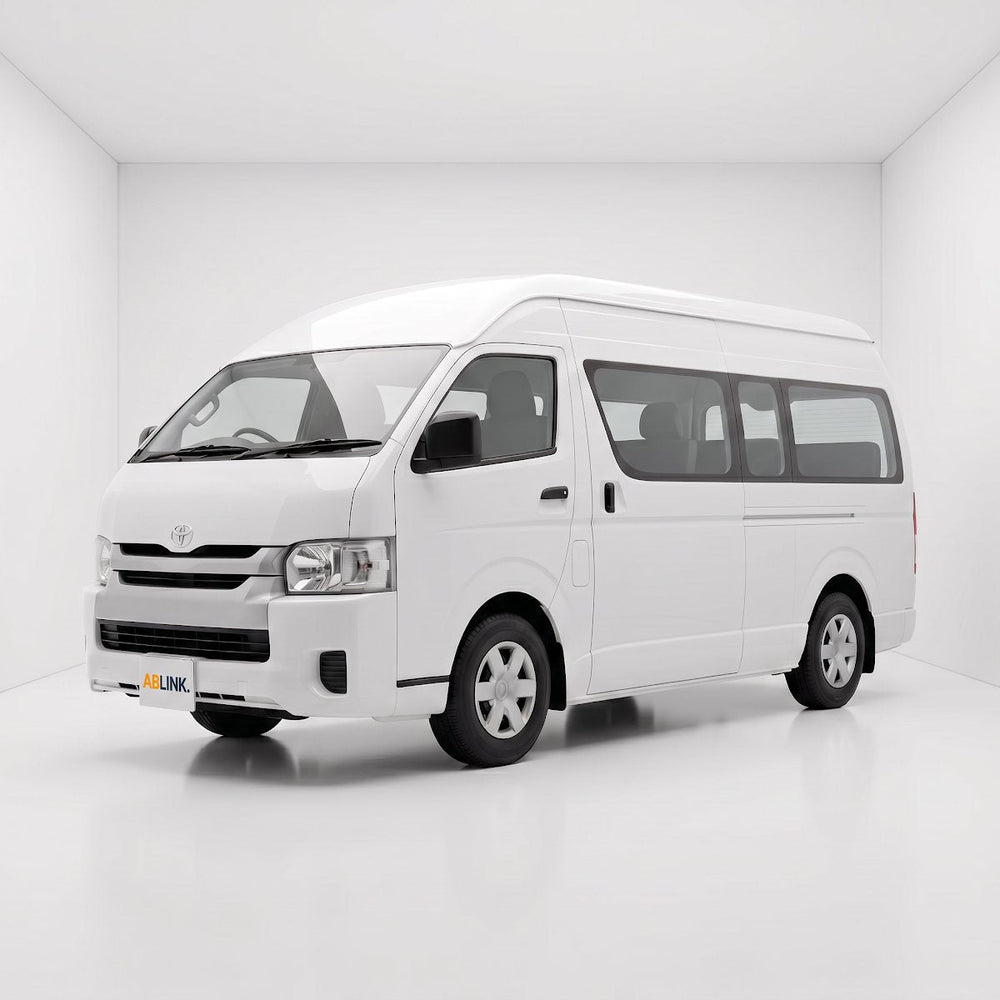
Scenario 1: 10-year-old Toyota Hiace, good condition, single-van F&B delivery business
Mechanical assessment is clean. Maintenance costs have been predictable. Business cashflow is tight but stable.
In this case, a 5-year renewal is likely the right call. It preserves cashflow, keeps a reliable vehicle running, and buys time to evaluate whether an electric transition makes sense at the next decision point (year 15). If the CVES grants improve further or charging infrastructure develops, buying electric at year 15 could be the optimal move.
Scenario 2: 11-year-old diesel lorry, increasing repair frequency, construction logistics
The vehicle has already completed its first inspection at the 6-monthly schedule and two significant repairs in the past 18 months. The workshop flags the gearbox as a risk in the next 12 to 24 months.
In this case, buying new likely produces a better three-to-five year total cost. The half-yearly inspections, road tax surcharge escalation, and the gearbox risk together represent a cashflow exposure that can easily exceed the annual cost difference between a loan on a new vehicle and a COE renewal on an aging one. If the business qualifies for CVES, the case for buying new is even stronger.
Scenario 3: Fleet of 8 vans at mixed ages — three at year 10, two at year 7, three at year 4
For the three oldest vans:
-
Do not budget these against ETS, it has closed. Price the replacement at the prevailing PQP, then apply the CVES band for each new EV registration to see whether replacing beats renewing.
-
CVES grants apply to each new EV registration, so three replacements means three opportunities to capture grants.
-
Standardising fleet vehicles simplifies driver training, parts inventory, and servicing.
For the mid-age and newer vans: standard renewal at their respective COE expiry points, reassessed at the time.
What Happens When a Commercial Vehicle Reaches 20 Years?
When a goods vehicle hits its 20-year statutory lifespan, it must be deregistered. If there is unused COE remaining (for example, you renewed at year 15 for 5 years and the vehicle is being deregistered at exactly year 20), you may receive a COE rebate for the unused period.
There is no further renewal option beyond the 20-year limit for goods vehicles.
Frequently Asked Questions
How much does it cost to renew a commercial vehicle COE in Singapore?
Renewal cost is based on the Category C PQP at the time of renewal. A 5-year renewal costs 50% of the PQP; a 10-year renewal costs the full PQP. Because PQP changes monthly, always verify the current rate at the LTA COE open bidding page before committing.
Can I renew my commercial vehicle COE more than once?
Yes, in 5-year increments, subject to the 20-year statutory lifespan. After the first renewal (which can be 5 or 10 years), all subsequent renewals are for 5-year periods only.
Does a commercial lorry or van get a PARF rebate when deregistered?
No. PARF rebates apply only to private cars and taxis. Commercial goods vehicles receive a COE rebate (pro-rated for remaining COE), not a PARF rebate.
Can I get EV grants if I renew my COE instead of buying new?
No. Government incentives such as CVES apply only to the registration of new eligible commercial vehicles. COE renewal does not qualify for any EV grants.
Does the Early Turnover Scheme still apply to commercial vehicles?
No. ETS closed for light commercial vehicles in March 2025, and the final deregistration date for heavy commercial vehicles was 31 December 2025. From 1 January 2026 the Heavy Vehicle Zero Emissions Scheme (HVZES) replaced it for heavy commercial vehicles. ETS transferred the remaining COE period to a replacement vehicle with a bonus COE period added, but that route is no longer open. For what applies now, check LTA OneMotoring and NEA.
Can I finance a COE renewal?
Yes. COE renewal loans are available for Category C vehicles. For how SME financing works for both renewal and vehicle replacement, read the SME vehicle loan guide. For how much you can borrow and for how long on a van or lorry, see the COE renewal loan guide for commercial vehicles.
Next Steps With ABLINK
If this guide has brought you to the point of serious consideration, here are the most useful next steps depending on where you land:
If you are leaning toward buying new:
-
Compare models at ABLINK new commercial vehicles.
-
Understand your financing options at the commercial vehicle financing guide.
-
Explore the EV grant stack at the CVES and HVZES EV grants guide.
If you want to sell or trade in your existing vehicle first:
-
Read the how to sell your commercial vehicle in Singapore guide for the step-by-step process and what affects resale value.
If you are managing a fleet and want to look at leasing instead of buying:
-
The fleet leasing Singapore guide covers how fleet leasing structures compare with outright purchase and COE renewal.
If you are not sure yet and want to run the total cost calculation properly:
-
Start with the commercial vehicle TCO calculator guide before making any financial commitment.
For direct enquiries, speak with the ABLINK team via the contact page.
This article is general information only. COE renewal costs, PQP rates, road tax surcharge structures, statutory lifespan rules, and grant eligibility are subject to LTA and government policy, which may change. Always verify current figures and rules directly with LTA or your authorised dealer before making financial commitments.
Related guides: settling 10ft or 14ft before you commit · what a 10ft purchase actually involves