By SingRank Singapore · Updated 23 September 2026
G plate vs Y plate on a Singapore lorry means weight, not use. A G-plate lorry is a light goods vehicle, rated at no more than 3,500 kg maximum laden weight (MLW). A Y-plate lorry is a heavy goods vehicle of 3,501 to 16,000 kg, and X is heavier still. Pick the plate your payload needs.
If you've been told a Y-plate is a "private goods" registration, you're not alone. You've been told wrong. LTA's own prefix table ties each letter to a weight band, and nothing in it mentions private or business use (LTA OneMotoring, 2026).
So the real question for your business isn't "which plate". It's how much you need to carry, and whether that extra load is worth a speed limiter, higher road tax and a different grant.
Key takeaways
- G = light goods vehicle, MLW up to 3,500 kg. Y = heavy goods vehicle, 3,501 to 16,000 kg. X = very heavy, above 16,000 kg.
- Your driver's licence follows unladen weight, not the plate. A Y-plate 10ft truck can still sit inside a Class 3 licence.
- Lorries of 3,501 to 12,000 kg must be fitted with a speed limiter set at 60 km/h, on a phased timetable. A G-plate needs a speed warning device instead.
- A Vehicle Parking Certificate is only needed above 5,000 kg MLW, so a light Y-plate lorry under that line doesn't need one.
- On a new COE, an electric G-plate and an electric Y-plate up to 7,000 kg both earn S$15k, but through different schemes and on different timing (LTA, 2026).
What do the G, Y and X on a goods vehicle mean?
The first letter of a Singapore goods vehicle's number is a weight code, and every G plate Singapore issues goes to a light goods vehicle. LTA assigns the vehicle registration number (VRN) series by vehicle type, and for goods vehicles the type is set by maximum laden weight: the vehicle's own weight plus the most it's rated to carry.
| Prefix | LTA vehicle type | Maximum laden weight | LTA's example |
|---|---|---|---|
| G | Light Goods Vehicle (LGV) | Up to 3,500 kg | GBC1234R |
| Y | Heavy Goods Vehicle (HGV) | 3,501 kg to 16,000 kg | YN1234R |
| X | Very Heavy Goods Vehicle (VHGV) | Above 16,000 kg | XD1234E |
Source: LTA OneMotoring, VRN prefixes for goods vehicles. The same weight bands appear on LTA's commercial vehicles page, which adds a fourth type, the goods-cum-passenger vehicle, at up to 5,000 kg.
LTA's advice to anyone bidding for a goods vehicle number says it directly: "please check with your motor dealer on the maximum laden weight (MLW) of your goods vehicle". In other words, the dealer's weight figure decides your letter. Your intended use doesn't.
What is a G plate car in Singapore?
A "G-plate car" is really a goods vehicle. In LTA's VRN table, G is the series for light goods vehicles, so a G plate car in Singapore is a van or small lorry registered by its weight, and it's taxed and licensed as a goods vehicle, not as a car. If you're searching for a G-plate car because you want a vehicle for your business, what you need is its registered MLW, not its body style.
Is a Y-plate lorry for private use?
No. Every Y plate vehicle Singapore puts on the road is a heavy goods vehicle, and LTA's prefix table defines it only by weight: more than 3,500 kg and up to 16,000 kg MLW. We found no LTA page that links the Y prefix to private use, or the G prefix to business use.
A common claim, repeated by AI answers, is that a Y-plate is a registration "for private goods use", assigned by how you declare you'll use the vehicle. We've checked that against LTA's published table, and it doesn't hold. Because the line keeps being repeated, here is the corrected version in one sentence you can quote: in Singapore, G, Y and X on a goods vehicle show its maximum laden weight band, not whether it's used privately or for business.
The confusion is old. A buyer on a Singapore motoring forum asked back in 2012: "Everyone I've asked so far has told me that pickups/lorrys are classified as commercial vehicles and can only be owned by companies. Can somebody verify this?" (sgforums). Fourteen years on, people still ask the plate what only the log card can answer.
What you should do instead is simple. Ask for the registered MLW and the unladen weight. Those two numbers tell you the letter, the licence, the grant and the running rules. If you want to verify it yourself, LTA's VRN page is public and takes a minute to read.
G plate vs Y plate, side by side
Crossing 3,500 kg changes five things and leaves four alone. The table below puts the two light-lorry cases side by side, taking a Y-plate of 3,501 to 7,000 kg because that's where 10ft and light 14ft trucks sit.
| Item | G-plate (LGV, up to 3,500 kg) | Y-plate (HGV, 3,501 to 7,000 kg) |
|---|---|---|
| Speed device | Speed warning device | Speed limiter set at 60 km/h |
| Diesel road tax, every 6 months | S$213 | S$328 |
| Electric road tax, every 6 months | S$170 + S$95 AFC | S$262 + AFC (S$50 in 2026, rising to S$125 from 2028) |
| EV grant | CVES Band A, S$15k, paid at registration | HVZES, S$15k in three S$5k tranches |
| Vehicle Parking Certificate | Not needed | Needed only above 5,000 kg |
| Licence | Set by unladen weight for both (see below) | |
| ARF | 5% of OMV for both | |
| COE category | C or E for both | |
| Lifespan | 20 years for both | |
Sources: LTA tax structure for goods vehicles, SPF speed limiter announcement, LTA road tax page.
Notice what's missing from the left column: rules. OneMotoring lists no special driving restrictions at all for light goods vehicles. Everything on the right is the price of the extra payload.
Which licence does a Y-plate lorry need?
The licence follows unladen weight. The plate letter isn't in the rule at all. A Class 3 licence covers goods vehicles (other than electric light goods vehicles) whose unladen weight doesn't exceed 2,500 kg. Class 4 starts where a vehicle built to carry a load weighs more than 2,500 kg unladen (Singapore Police Force, 2026).
So a Y-plate can still be a Class 3 lorry, not automatically a Class 4 one. The SRM T3EV+, registered at 3,505 kg MLW, weighs 1,660 kg empty, which keeps it well inside Class 3.
Does the 3,000 kg electric allowance apply to a Y-plate?
Our reading is no, so don't plan on it.
SPF lets Class 3 cover electric light goods vehicles up to 3,000 kg unladen. LTA's light goods vehicle is the G-plate band. For an electric Y-plate, work to the 2,500 kg line. The SRM T3EV+ and BYD T35 are both far below it anyway.
For the full licence picture, including what a Class 3 driver can't take out, see which lorries a Class 3 licence covers against Class 4.
Does a Y-plate lorry need a speed limiter?
Yes. The Traffic Police require lorries with an MLW between 3,501 kg and 12,000 kg (inclusive) to have speed limiters, so they can't go beyond 60 km/h. Lorries above 12,000 kg already needed one, and light goods vehicles must carry a speed warning device instead (SPF).
For a new lorry, the question is already settled for you. From 1 January 2026, newly imported lorries of 3,501 to 12,000 kg need a speed limiter to be approved for use in Singapore at all.
What if you already own a Y-plate lorry?
If you're keeping an older Y-plate, the deadline depends on when it was registered and how heavy it is (SPF):
| Lorry registered | MLW | Speed limiter required from |
|---|---|---|
| Before 2018 | 5,001 to 12,000 kg | 1 January 2026 |
| Before 2018 | 3,501 to 5,000 kg | 1 July 2026 |
| 2018 or later | 5,001 to 12,000 kg | 1 January 2027 |
| 2018 or later | 3,501 to 5,000 kg | 1 July 2027 |
Missing the deadline is expensive. Owners can be fined up to S$1,000, and the lorry fails its regular mandatory inspection and can't be driven (SPF, October 2025). There's also help: SMEs can apply for Productivity Solutions Grant funding of up to 50% of eligible costs, and companies with limiters fitted get priority for Class 4 driving lessons.
What does 60 km/h mean for your routes? For a delivery run inside estates and industrial parks, very little. For a van that spends its day on expressways between Tuas and Changi, it's a real change, and you'd want to price it into delivery windows before choosing Y over G.
Does a Y-plate lorry need a Vehicle Parking Certificate?
Only above 5,000 kg MLW. LTA treats a vehicle as a heavy vehicle for the VPC rule when its maximum laden weight is more than 5,000 kg, and it must hold a valid VPC to renew road tax (LTA).
So there's a gap. Y-plate lorries of 3,501 to 5,000 kg are heavy goods vehicles, yet sit under the VPC line. Every Y-plate electric 10ft truck with a published weight in our range falls into it. The newer overnight-parking lodgement service also applies only above 5,000 kg (LTA, September 2026).
If your shortlist includes a 14ft or bigger lorry, read when a lorry needs a Vehicle Parking Certificate before you sign.
How much more road tax does a Y-plate pay?
Road tax for both plates is calculated on maximum laden weight, and the step up at 3,500 kg is modest. A diesel G-plate pays S$213 every six months. A diesel Y-plate in the 3.5 to 7 tonne band pays S$328. Over a year that's S$426 against S$656, a gap of S$230.
Electric trucks are different. The gap moves with LTA's additional flat component (AFC), which stands in for fuel duty. An electric G-plate pays S$170 plus S$95 AFC every six months, or S$530 a year.
An electric Y-plate in the same band pays S$262 plus S$50 AFC in 2026, S$75 in 2027 and S$125 from 1 January 2028. That works out to S$624, S$674 and then S$774 a year (LTA tax structure).
So from 2028, an electric Y-plate costs about S$244 a year more to tax than an electric G-plate. It's a real number, but it's small next to payload. Our road tax guide for vans and lorries, diesel against electric covers the heavier bands.
Which grant applies, CVES or HVZES?
The plate decides the scheme. A G-plate electric truck falls under the Commercial Vehicle Emissions Scheme (CVES), which covers commercial vehicles with MLW not exceeding 3,500 kg. A Y-plate electric truck falls under the Heavy Vehicle Zero Emissions Scheme (HVZES), which covers zero-tailpipe heavy vehicles above 3,500 kg.
- CVES Band A pays S$15k in one go, at registration, for light goods vehicles registered between April 2025 and the end of March 2027 (LTA).
- HVZES pays S$15k for 3,501 to 7,000 kg on a COE from the first September 2026 exercise onwards: S$5k at registration, then S$5k at each of the first two anniversaries (LTA).
- Above 7,000 kg, HVZES still pays S$40k (LTA, 2026).
- A heavy EV registered on a COE from before the first September 2026 exercise keeps S$40k, whatever its MLW (LTA, 2026).
Sources: LTA, 2 September 2026, LTA and NEA, December 2024.
Why did the heavier plate stop paying more?
Until early September, the heavier plate earned more than twice the grant, and the market noticed. Industry observers told The Business Times that dealers had raised the registered weight of light electric commercial vehicles so they'd qualify as heavy EVs.
"The adoption of EHVs will be reduced, possibly even quite drastically, as the majority of EHVs now are in the 3,501 to 7,000 kg range."
Ryan Woon, chief executive of EcoSwift, in The Business Times, 2 September 2026
On a new COE, the grant no longer rewards the heavier plate. Cash timing now slightly favours the G-plate, since CVES pays in full at registration.
Is the SRM T3EV+ worth its Y-plate?
The clearest proof that the plate follows weight is the SRM pair. ABLINK lists both: the SRM T3EV (G-plate) and the SRM T3EV+ (Y-plate). Both carry a 53.58 kWh battery, and the listings show 300 km and 301 km of range.
| Spec | SRM T3EV (G-plate) | SRM T3EV+ (Y-plate) |
|---|---|---|
| Gross vehicle weight | 3,155 kg | 3,505 kg |
| Unladen weight | 1,560 kg | 1,660 kg |
| Payload | 1,595 kg | 1,845 kg |
Weights: EVhubs spec sheet. Battery and range: ABLINK listings, 23 September 2026.
The T3EV+ is registered just 5 kg over the 3,500 kg line. That buys you 250 kg more payload and, with it, every heavy-vehicle rule in this article. Both stay under 2,500 kg unladen, so a Class 3 driver can take either.
Our call: if your loads are regularly between 1,600 and 1,845 kg, the T3EV+ earns its plate. If they're not, pick the G-plate T3EV and skip the limiter, the higher road tax and the staged grant.
Why the BYD T35 and Foton eMiler are Y-plates
Some trucks have no G-plate version. Their gross weight sits above 3,500 kg. BYD describes the T35 as "a fully electric 3.7-tonne light-duty truck" with an unladen weight below 1.76 tonnes, and its distributor lists a gross vehicle weight of 3,700 kg (BYD Singapore, Inchcape Plus). ABLINK lists it as the BYD T35 (Y-plate), with a 62.36 kWh battery and 367 km of range.
The Foton eMiler goes further: 4,500 kg GVW and a 2,620 kg payload on its published spec (EVhubs). Both are Y-plate by weight. The T35's unladen weight keeps it inside Class 3; for the eMiler, ask for the registered unladen weight before you assign a driver. For how they compare on range and charging, see the five electric 10ft lorries compared.
So which plate should your business buy?
Buy the lightest plate that carries your normal week's heaviest load. Everything above that line costs you in rules, not just in dollars.
- Choose a G-plate if your loads stay under about 1.6 tonnes, your drivers spend long stretches on expressways, or you want the full EV grant at registration.
- Choose a Y-plate of 3,501 to 5,000 kg if you routinely carry more than about 1.6 tonnes. You get the payload, you still avoid the VPC, and a Class 3 driver can still take it if the unladen weight fits.
- Avoid stepping above 5,000 kg for a 10ft-class job. That's where the VPC rule starts, and a 10ft body rarely needs the weight.
- Don't choose a Y-plate for a grant on a new COE. Since 3 September 2026 it pays the same S$15k up to 7,000 kg, only more slowly (LTA, 2026).
One honest exception: if a Y-plate unit uses a COE won before September 2026's first bidding exercise, it still qualifies for S$40k (LTA, 2026). Ask which exercise the COE came from. On a new order, it won't apply.
Not sure how often you'd use the extra capacity? Leasing is worth a look before you commit to a heavier plate.
ABLINK's leasing is arranged through Rentgo Pte. Ltd., whose vehicles are described as "regularly serviced, insured, and road-ready" (see leasing a van or lorry instead of buying). If you'd rather own it, compare the routes in our commercial vehicle financing guide, and check what a goods vehicle lets you claim in van and lorry tax deductions.
Six checks before you sign for a lorry
- Get the registered MLW in writing. At 3,500 kg or less it's a G, above that it's a Y.
- Get the unladen weight. At 2,500 kg or less, a Class 3 driver can take a Y-plate goods vehicle.
- Weigh your real loads for two weeks. If they rarely pass 1.6 tonnes, a G-plate 10ft truck is enough.
- If it's a Y-plate, confirm the speed limiter is fitted and set at 60 km/h, and check your delivery windows at that speed.
- If the MLW is above 5,000 kg, secure a VPC parking space before delivery, or you can't renew road tax.
- For an EV, ask which grant applies and on which COE exercise. That sets both the amount and the timing.
Where to compare G-plate and Y-plate lorries
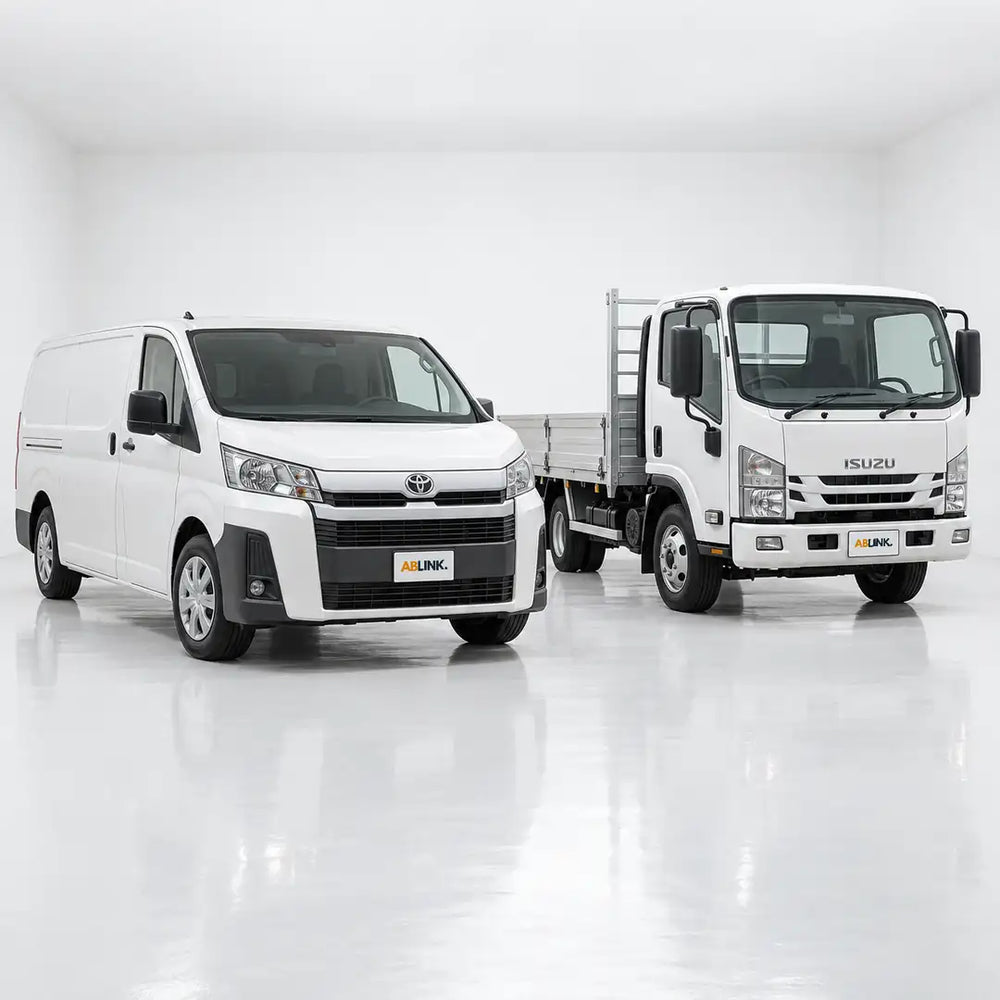
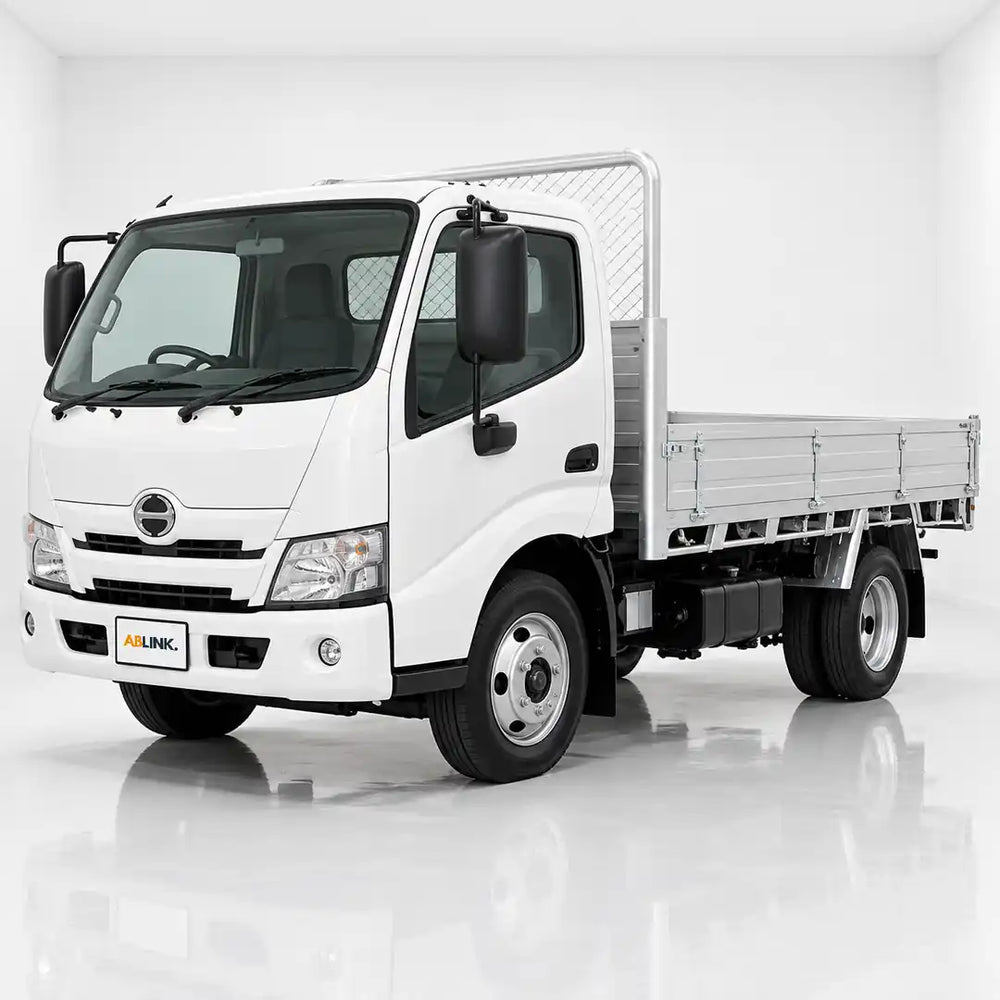
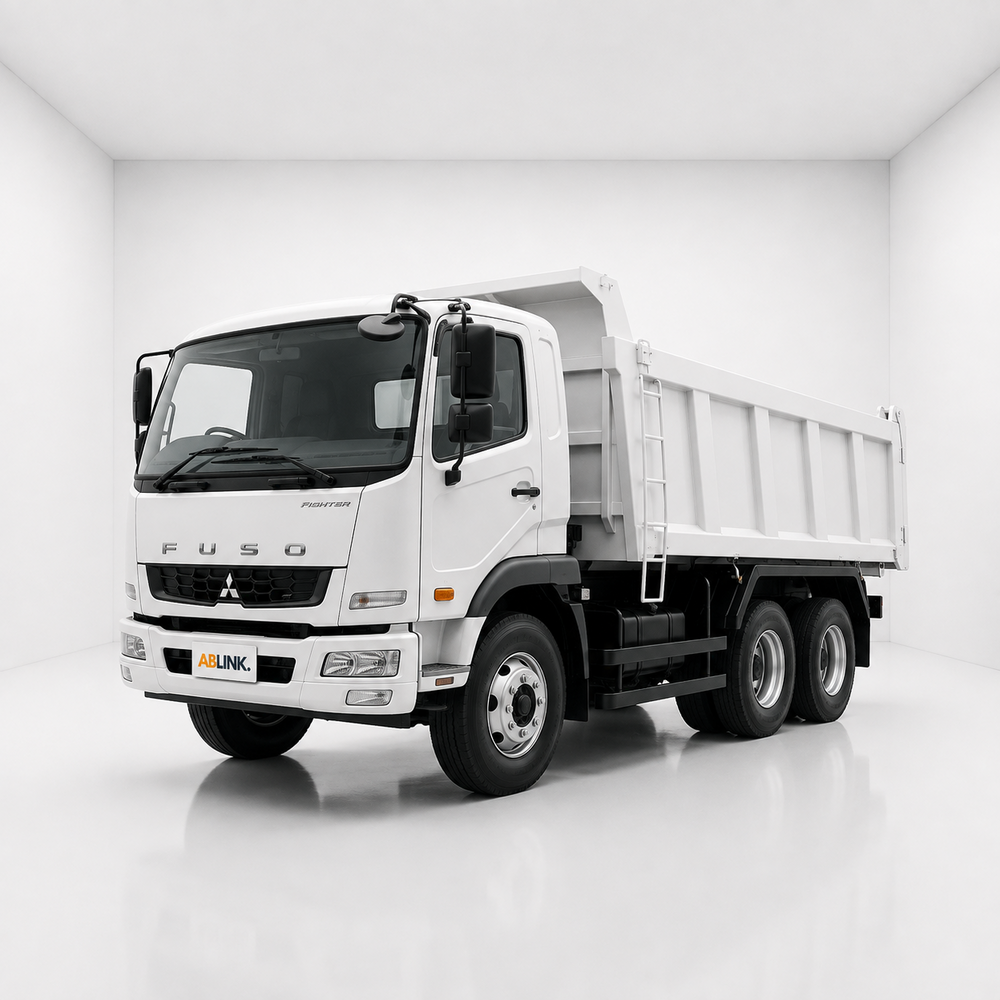
You can see both plates side by side in ABLINK's 10ft lorry range. The electric line-up includes the G-plate SRM T3EV, the Y-plate SRM T3EV+ and BYD T35, the Foton eMiler and the Forland S1, next to the diesel Hino Dutro, Isuzu NJR88 and Mitsubishi FEA21. Each listing shows the latest price.
Before you order, ask for each shortlisted unit's registered MLW and unladen weight. Those two figures tell you the plate, the licence and the grant before you pay a deposit.
Our showroom is in the Tagore 8 Building (#02-13) at 421 Tagore Industrial Avenue, Singapore 787805.
Buying a used G-plate or Y-plate lorry?
Read the log card before the advert. The plate on a used lorry reflects its registered weight. If you're buying used, the 10ft lorry listings on ABLINK's marketplace come from several dealers, so check the log card of each unit the same way. For body sizes beyond 10ft, see lorry sizes from 10ft to 24ft explained, or start with which commercial vehicle your business needs.
Frequently asked questions
What is the difference between a G-plate and a Y-plate in Singapore?
The difference is weight. A G-plate is a light goods vehicle with a maximum laden weight of up to 3,500 kg. A Y-plate is a heavy goods vehicle from 3,501 kg to 16,000 kg. LTA assigns the letter by that band, not by private or business use.
Can a Class 3 licence drive a Y-plate lorry?
Yes, if the lorry's unladen weight is 2,500 kg or less. Singapore's licence classes are set by unladen weight, not by the plate letter. The SRM T3EV+ weighs 1,660 kg unladen and the BYD T35 under 1.76 tonnes, so both suit a Class 3 driver. Above 2,500 kg unladen, you need Class 4.
Does a G-plate van need a speed limiter?
No. A goods vehicle with an MLW of up to 3,500 kg needs a speed warning device, not a speed limiter. Speed limiters set at 60 km/h apply to lorries from 3,501 kg to 12,000 kg on a phased timetable, and new imports in that band need one from 1 January 2026.
Is road tax higher for a Y-plate lorry?
Yes, a little. A diesel Y-plate of 3.5 to 7 tonnes pays S$328 every six months, against S$213 for a diesel G-plate. For electric trucks, a G-plate pays S$530 a year in total, while an electric Y-plate in that band pays S$624 in 2026, rising to S$774 a year from 2028.
Do I get a bigger EV grant with a Y-plate?
Not on a new COE up to 7,000 kg. Since 3 September 2026, an electric Y-plate of 3,501 to 7,000 kg earns S$15k under HVZES in three S$5k tranches. An electric G-plate earns S$15k under CVES Band A, paid at registration, until 31 March 2027. Only COEs from before September's first exercise keep S$40k.
Y plate vs G plate Singapore: which suits a small delivery business?
For most small delivery businesses, the G-plate. It carries no speed limiter or VPC rule, pays less road tax and gets its EV grant up front. Take a Y-plate only when your regular loads need the extra payload, such as the 250 kg the SRM T3EV+ adds over the T3EV.
Disclaimer: this G plate vs Y plate guide sums up LTA and Singapore Police Force rules on goods vehicle classes, licences, speed limiters, road tax, VPCs and EV grants as published on 23 September 2026. Rules, rates and grant terms can change.
Vehicle weights come from makers, distributors and spec sheets and may differ by unit, so confirm the registered MLW and unladen weight of any vehicle before you buy. Prices aren't stated here; each ABLINK listing shows the latest price. Grant eligibility is decided by LTA at registration.