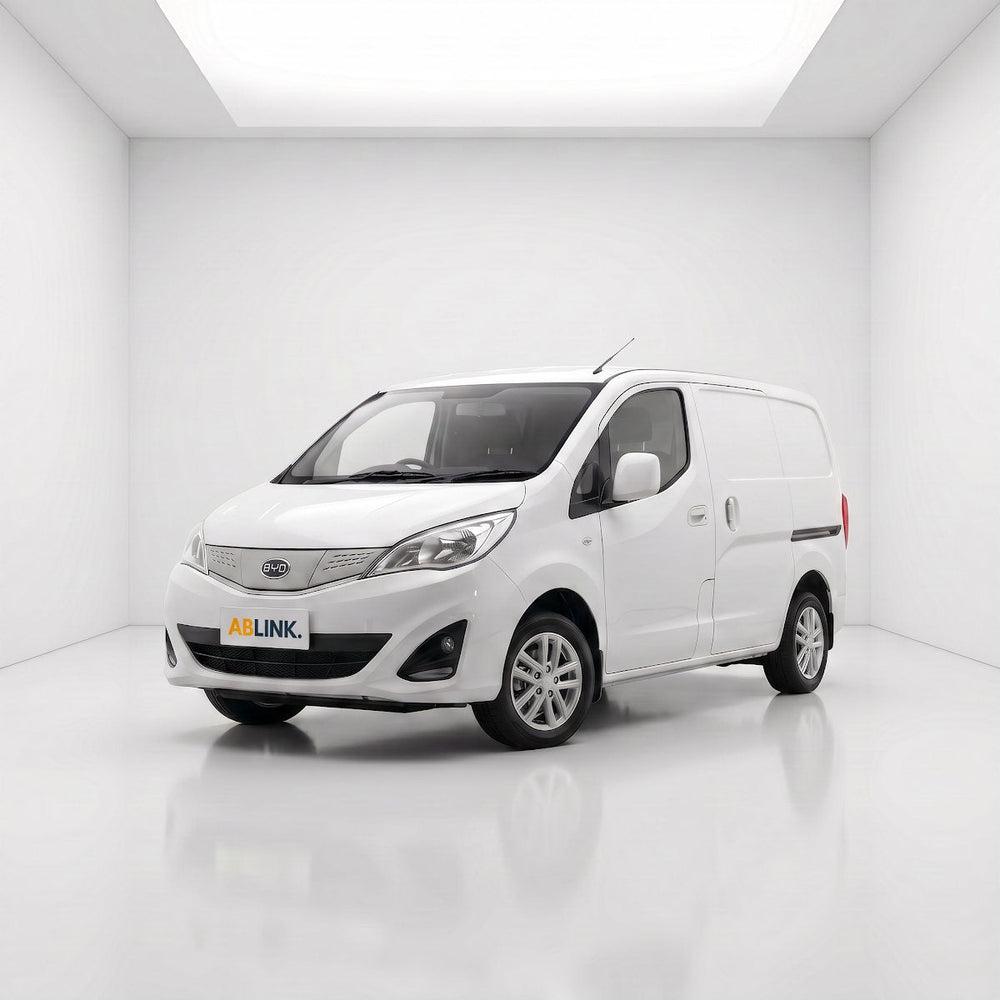
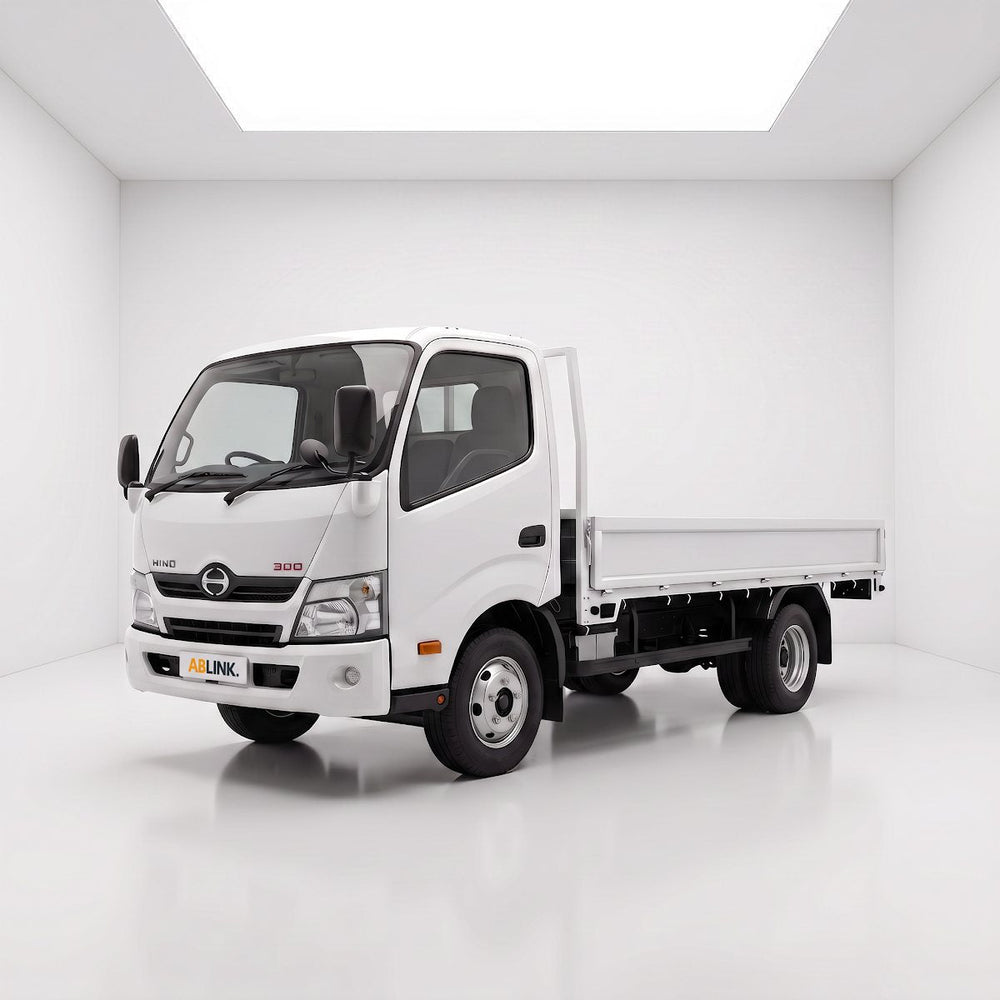
Before you buy a used refrigerated lorry in Singapore, check nine things. Start with the papers, the seller, the COE and 20-year clock, and the inspection cycle. Then check the unladen weight against your licence, the body's LTA status, SFA's recorder-and-lining conditions, the refrigeration unit, and insurance for the transfer. A cold blast during a viewing proves the least of the nine.
Sources last checked against LTA, OneMotoring, SFA and the Singapore Police Force on 23 September 2026. Written by SingRank Singapore.
You've found a reefer that looks right. The box is white, the unit hums, and the price sits well under a new build.
Here's the problem: a used refrigerated lorry is two machines sold as one. Each carries its own paperwork, clock and ways to fail. You can browse the refrigerated 10ft to 24ft listings on ABLINK's marketplace today. Here's what to check on any of them before you pay a deposit.
Key takeaways
- SFA's transport guidance sets frozen food at -18°C or below and chilled food at 4°C or below during transport.
- Buying from a direct owner or through a consignment dealer leaves you outside the Lemon Law, per OneMotoring.
- Goods vehicles have a 20-year lifespan. A COE renewal can't take a lorry past it.
- LTA inspects goods vehicles every year until they're 10, then every 6 months.
- The Road Traffic Act counts the body in unladen weight, and Class 3 stops at 2,500kg unladen for a lorry that isn't an electric light goods vehicle.
Why is a used refrigerated lorry two purchases, not one?
A used reefer is a chassis plus an insulated box plus a refrigeration unit. The chassis runs on a Certificate of Entitlement and a statutory lifespan. The box and unit run on insulation, seals and a compressor, and none of those appear on a log card.
Because of that split, the usual used-lorry checklist falls short. Our used lorry buying guide covers the chassis side for every body type. Here we go deeper on what the cold box adds: food-safety conditions, the weight the body puts on your licence, and a unit you can't judge by touching the air vent.
A reefer can be sound as a lorry and useless as a food vehicle. The reverse happens too. You need both halves to pass. Know which checks the seller can prove on paper and which you'll have to test yourself.
The 9 checks at a glance
| Check | What to look at | Source | Our call: walk away if |
|---|---|---|---|
| 1. Papers | Engine and chassis numbers, registration details, loans, road tax | OneMotoring | Numbers don't tally or a loan is outstanding |
| 2. Seller | Dealer, consignment dealer or direct owner | OneMotoring | Nobody will say who legally sells it |
| 3. COE and lifespan | COE expiry, registration date, 20-year limit | OneMotoring | The years left don't cover your payback |
| 4. Inspection | Age of vehicle, last inspection result | LTA | No valid inspection and no explanation |
| 5. Unladen weight | Log-card figure against your drivers' licences | Road Traffic Act, SPF | Your drivers only hold Class 3 and it's over 2,500kg |
| 6. Body legality | Body matches the registration; any modification approved | LTA | The body was changed and no approval exists |
| 7. SFA fit | Temperature recording device, impervious lining to roof | SFA | No recorder, or the lining is broken |
| 8. Refrigeration unit | Pull-down test, leaks, seals, drains, service records | Thermo King manual | It can't reach your set point from warm |
| 9. Insurance and transfer | Cover in your name, transfer inside 7 days | OneMotoring | An insurer won't cover the body as fitted |
1. Do the papers match the lorry in front of you?
Start with the paperwork. Every other check assumes the lorry is what the seller says it is. OneMotoring's transfer of ownership page tells buyers to tally the make, model, engine and chassis numbers with LTA's records. The engine and chassis numbers stamped on the lorry have to be legible and untampered, the same page adds.
You can read the vehicle's registration details before you commit. Ask the current owner for an Access Code, then run the Enquire Transfer Fees digital service. It shows the age of the vehicle, the COE expiry and PARF eligibility. OneMotoring also notes you can pay for a professional evaluation of the engine and chassis numbers at an LTA-Authorised Inspection Centre or the Automobile Association of Singapore.
Then ask about money owed. OneMotoring says a vehicle being transferred should not have any outstanding matters, such as financial loans or road tax arrears. A reefer still under hire purchase can't change hands until that's settled, so get the settlement in writing before you pay anything.
2. Who is actually selling it?
Ask this before anything else, because it decides what protection you have. OneMotoring is blunt about it. Buy from a direct owner or through a consignment dealer, and the Lemon Law won't protect you.
| Who sells it | Lemon Law cover (per OneMotoring) | What to ask |
|---|---|---|
| Motor dealer selling its own unit | Not named in the OneMotoring exclusion | Is the dealer CaseTrust-SVTA accredited? What after-sales terms are in writing? |
| Consignment dealer | Not covered | Who is the registered owner? Who signs the transfer? |
| Direct owner | Not covered | Can I see the service records and the log card before viewing? |
Does the Lemon Law protect a company buyer?
Company buyers face a further catch in the Consumer Protection (Fair Trading) Act, which gives consumers additional rights for goods that do not conform to contract. Its definition of a consumer is an individual, and it excludes someone acting purely in the course of business. So a company buying for its deliveries shouldn't count on the Lemon Law at all. Get any warranty or after-sales terms in writing instead.
For greater assurance, OneMotoring suggests choosing a motor dealer that is CaseTrust-SVTA accredited. A marketplace listing doesn't tell you the sale type on its own. So ask two things before you travel to a viewing: who the seller is, and whether it's a consignment sale. The answer changes how hard you should test everything below.
3. How much COE is left, and how far can it be renewed?
A used refrigerated lorry is priced on the years it has left. Two dates set those years: the COE expiry and the date of first registration.
Goods vehicles sit in COE Category C (goods vehicles and buses). According to OneMotoring's COE renewal page, a 10-year renewal costs the full Prevailing Quota Premium (PQP), and a 5-year renewal costs 50% of the PQP. Category C vehicles renewed for 5 years can keep renewing after that, but only in 5-year blocks. Renew before expiry, or within 1 month after it with a late renewal fee.
The harder limit is the lifespan. Every registered goods vehicle gets 20 years on the road, after which OneMotoring requires it to be deregistered. At the end of that lifespan, the COE can't be renewed. So a reefer first registered 12 years ago has at most 8 years of road life left, whatever COE you buy for it.
How should the COE shape what you offer?
Our view: work out your payback period first, then check the listing. If the COE runs out inside that period, price a renewal in from day one. ABLINK offers COE renewal financing with flexible plans, subject to the lender's credit assessment and approval.
4. How often will it go for LTA inspection?
LTA's periodic inspection table lists goods vehicles as annual below 3 years, annual from 3 to 10 years, and 6-monthly after 10 years. Past its 10th year, a reefer goes for inspection twice a year instead of once, and each visit takes it off your delivery rota.
LTA sends an inspection notice within 3 months before the due date. Inspectors look at the chassis frame's core structure, as well as wheels, brakes and more. Ask for the last inspection result. On a refrigerated body that has carried wet cargo for years, the chassis frame under the box deserves a look with a torch.
Watch one more line. LTA says a vehicle found with illegal modifications will be inspected more often under the Enhanced Inspection Regime. That links straight to check 6.
5. Can your driver's licence carry the reefer body's weight?
This check catches buyers out because it isn't about length. Under the Road Traffic Act, unladen weight includes the body and every part fitted, and where a vehicle can take alternative bodies, the heavier one counts. An insulated box and a refrigeration unit are part of that weight.
The Singapore Police Force licence classes then do the rest. Class 3 covers motor vehicles, other than electric light goods vehicles, with an unladen weight not exceeding 2,500kg. Class 4 covers vehicles built to carry a load whose unladen weight exceeds 2,500kg. So a 10ft reefer and a 10ft open deck on the same chassis can need different licences.
Some marketplace listings show the unladen weight; some leave it blank. Don't guess from the body length. Read the figure on the log card and compare it with the licences your drivers actually hold. Our Class 3 against Class 4 licence guide explains the classes in full.
What other rules does the lorry's weight trigger?
Maximum laden weight (MLW) sets three more rules. A light goods vehicle (up to 3,500kg maximum laden weight) transferred to an individual needs a hawker or farm licence. Above 5,000kg MLW, you need a Vehicle Parking Certificate in your name.
Lorries between 3,500kg and 12,000kg MLW must be fitted with a speed limiter that stops them going faster than 60 km/h. The Singapore Police Force is phasing this in: lorries registered before 1 January 2018 had until 1 January 2026 (heavier lorries) or 1 July 2026 (lighter lorries), and lorries registered from 1 January 2018 get one more year, to 1 January 2027 or 1 July 2027. On a used reefer, ask whether the limiter is already fitted, because if it isn't, fitting it becomes your cost.
6. Was the refrigerated body fitted legally?
Bodies get swapped. A lorry that left the factory as an open deck may be carrying a box it wasn't registered with. OneMotoring's modification page advises buyers of a used vehicle to check that any modifications made to it are allowed.
LTA's goods-vehicle guidelines tell owners to check with the vehicle maker and get LTA's approval before any modification goes ahead. The work has to be done by the manufacturer or its authorised agent. OneMotoring also expects qualified people to install every modification, following what the vehicle maker and the product maker recommend.
An individual caught with an illegal modification can be fined up to S$20k, jailed for up to two years, or both. OneMotoring also tells buyers to avoid vehicles with illegal modifications, because fixing them later costs money.
Our call: if the body on the lorry doesn't match the registration details and the seller can't show an approval, walk away. A cheap reefer that can't pass inspection isn't cheap.
7. Will the box pass SFA's food transport conditions?
Call it a reefer, a chiller truck or a cold truck. If you carry food, the box has to meet the Singapore Food Agency's conditions, not just stay cold. SFA's frozen and chilled food transport guidance sets two lines:
- Frozen food: kept at -18°C or colder in transit, and the food's core no warmer than -12°C.
- Chilled food: kept at 4°C or colder in transit, and the food's core no warmer than 7°C.
SFA's conditions of licensing for food establishments (updated on 1 Jan 2026) go further on the vehicle itself. A refrigerated vehicle needs a device that records the storage temperature. Its walls should carry stainless steel or another impervious lining all the way to the roof. A vehicle that moves cooked food should be kept for that job alone.
On a used box, that means three physical checks. Look for a working temperature recorder that keeps a record you can show. Check the lining is intact to the roof, with no cracked panels or patched holes.
Then ask what the previous owner carried. A box that hauled raw seafood isn't automatically a fit for your cooked-food run.
Chilled or frozen matters too. Our guide to chiller, frozen or dual-zone refrigerated trucks explains how the two set points change the box you need.
8. Is the refrigeration unit still healthy?
No Singapore regulator publishes a checklist for a used refrigeration unit, so we lean on the maker's own guidance. Thermo King's operator manual for its V-Series vehicle-powered units (TK 61651-18-OP) lays out the checks it recommends for its own units. They translate well into questions for any used reefer.
"Transport refrigeration units are not designed to reduce the load temperature." Thermo King, V-Series operator manual
That sentence matters at a viewing: the unit is built to hold a load at the temperature it was loaded, not to cool warm stock. So the useful test is a pull-down from warm with the box empty. The manual suggests 30 to 60 minutes of running before any load goes in. In Thermo King's words, that pre-cool clears residual heat and doubles as a test of the whole refrigeration system.
What does the maker's pre-trip checklist cover?
From the same manual's weekly pre-trip inspection, check or ask about:
- Refrigerant leaks and worn refrigerant lines, plus any coolant or oil leaks on the unit.
- Unusual noises or vibrations when it runs.
- Door and weather seals: the manual asks that they seal hermetically.
- Walls and insulation: any damage should be repaired.
- Defrost drain hoses and fittings, which shouldn't be blocked.
Ask what the lorry carried. Thermo King warns that hauling meat and fish waste again and again can badly corrode the evaporator coils and tubing. The cause is ammonia formation. A unit that spent years on seafood deserves a closer look at the coils.
If the seller runs the unit before you arrive, ask to see it switched off and the doors opened first. A box that's already cold proves nothing about the pull-down. Ask for the unit's service records too, and read them for dates, not just stamps.
9. Is it insurable and transferable on the day?
The last check happens at the handover. OneMotoring gives buyer and seller 7 days to complete the ownership transfer. Before it's yours, the lorry needs motor insurance in your name that runs for as long as its road tax does. For a heavy goods vehicle, the Vehicle Parking Certificate must also be in your name.
Tell your insurer exactly what the body is. OneMotoring tells owners to inform their insurer about every modification. Skip that, it warns, and an accident claim could be turned down, with the whole policy treated as void.
ABLINK is a LONPAC and Tokio Marine authorised agent offering motor insurance with tailored coverage for cars, vans, lorries and commercial fleets. Our commercial vehicle insurance guide covers what to declare.
What should you never skip on a used reefer?
If time is short, three checks carry the most risk, and we'd never skip them:
- The seller and sale type. It decides whether the Lemon Law applies before you've spent anything.
- Unladen weight against your drivers' licences. A reefer your team can't legally drive is a parked asset.
- The pull-down from warm. It's the only test at a viewing that says anything about the unit's health.
Everything else can be checked from documents after the viewing. These three can't.
Where can you find used refrigerated lorry listings in Singapore?
ABLINK's marketplace groups refrigerated 10ft to 24ft listings in one category. It carries listings from several sellers, not only ABLINK, and the page says it's updated daily with the latest prices. Listed prices include GST and COE and exclude insurance.
Open each listing's detail before you enquire. Each shows the COE expiry, COE balance, attachment, number of owners and unladen weight where the seller has supplied it. Read the attachment line on every unit, because body type is listed per vehicle. Then ask the two neutral questions from check 2: who the seller is, and whether it's a consignment sale.
Should you buy a used or new refrigerated lorry?
A used reefer makes sense when you need capacity quickly, your routes are chilled rather than deep-frozen, and the years left cover your payback. A new build makes more sense in two cases. One is when your drivers hold Class 3 and you need the unladen weight confirmed before you order. The other is when the used options would hit the 10-year inspection step soon after purchase.
ABLINK's new commercial vehicles list body options, including a freezer body, on each lorry listing. Replacing an older lorry at the same time? Our guide to selling a lorry in Singapore covers that side. For smaller loads, our chiller van buying guide covers vans with SFA-ready boxes.
Your viewing-day plan
- Before you go: ask who the seller is, whether it's a consignment sale, and for the Access Code.
- Run Enquire Transfer Fees for the COE expiry and vehicle age.
- At the lorry: tally the engine and chassis numbers, read the unladen weight on the log card.
- Ask to see the unit off and the box warm, then time a pull-down to your set point.
- Check the recorder, the lining to the roof, the door seals and the drains.
- Ask for inspection results, service records and proof the body is on the registration.
- Get a written loan-settlement position and an insurance quote before you pay a deposit.
Frequently asked questions
Is a second hand refrigerated lorry covered by the Lemon Law?
Not when the seller is a direct owner or a consignment dealer; OneMotoring says those sales fall outside Lemon Law protection. The law also protects consumers, defined as individuals not buying exclusively in the course of business, so a company purchase shouldn't rely on it. Get warranty terms in writing.
Can I drive a used refrigerated 10ft lorry with a Class 3 licence?
Only if its unladen weight is 2,500kg or less. The Road Traffic Act counts the body and all parts in unladen weight, so the insulated box and refrigeration unit add to it. Class 4 covers load-carrying vehicles above 2,500kg unladen. Read the figure on the log card, not the brochure.
How often does a used refrigerated lorry need LTA inspection?
LTA inspects goods vehicles annually below 3 years old and from 3 to 10 years, then every 6 months once the vehicle is over 10 years old. LTA sends a notice within 3 months before the due date. Illegally modified vehicles are inspected more often under the Enhanced Inspection Regime.
Can I renew the COE on a used reefer truck in Singapore?
Yes, until the lorry reaches its 20-year statutory lifespan. Per OneMotoring, a 10-year Category C renewal costs the full PQP, and a 5-year renewal costs 50% of it. Category C vehicles can keep renewing in 5-year blocks. Once the lifespan ends, the COE can't be renewed and the vehicle is deregistered.
What temperature must a freezer truck hold for frozen food?
Under SFA's transport guidance, frozen food travels at -18°C or colder, and its core must stay no warmer than -12°C. For chilled food the limits are 4°C or colder, with the core no warmer than 7°C. Check the unit can reach your set point from a warm box.
Does ABLINK own the refrigerated lorries on its marketplace?
Not necessarily. ABLINK's marketplace carries listings from several sellers, so each unit may belong to a dealer, a consignment seller or ABLINK itself. Ask who the seller is and whether it's a consignment sale before viewing, because that decides your Lemon Law position.
Disclaimer
This guide to buying a used refrigerated lorry is general information, not legal, financial or insurance advice.
Rules quoted are from LTA, OneMotoring, SFA and the Singapore Police Force as checked on 23 September 2026 and may change; confirm with the agency before you buy. Refrigeration-unit guidance is quoted from Thermo King's operator manual for its own units. COE renewal financing is subject to the lender's credit assessment and approval. Prices, COE balances and seller details are shown on each live listing.