Updated 23 September 2026 · By SingRank Singapore
Choosing between lorry body types in Singapore comes down to four options: an open deck for bulky or loose loads, a canopy (hood) for weather cover and worker transport, a box for secure dry cargo, and a freezer for chilled or frozen food. Choose with your driver's licence in view, because the body counts in unladen weight and Class 3 stops at 2,500 kg.
Most buyers learn that last part too late. The body you pick decides who may drive the lorry, whether LTA must approve a later change, and whether food inspectors will accept it. This guide answers each point from LTA, Singapore Police Force (SPF) and Singapore Food Agency (SFA) sources.
Key takeaways
- ABLINK lists open deck, hood, box and freezer bodies, plus a tailgate option, on all 21 new 10ft, 14ft and 24ft lorries in its range (live feed, 23 September 2026).
- The Road Traffic Act counts the body in a lorry's unladen weight, and takes the heavier one "where alternative bodies or parts are used".
- Class 3 covers goods vehicles up to 2,500 kg unladen, or 3,000 kg for electric light goods vehicles (SPF, updated 15 June 2026).
- From 1 January 2027, workers may no longer ride in caged lorry decks; a canopy with side railings is the route LTA names.
- SFA wants chilled food at 4°C or below and frozen food at -18°C or below in transit, which rules out open decks and canopies for that work.
What are the main lorry body types in Singapore?
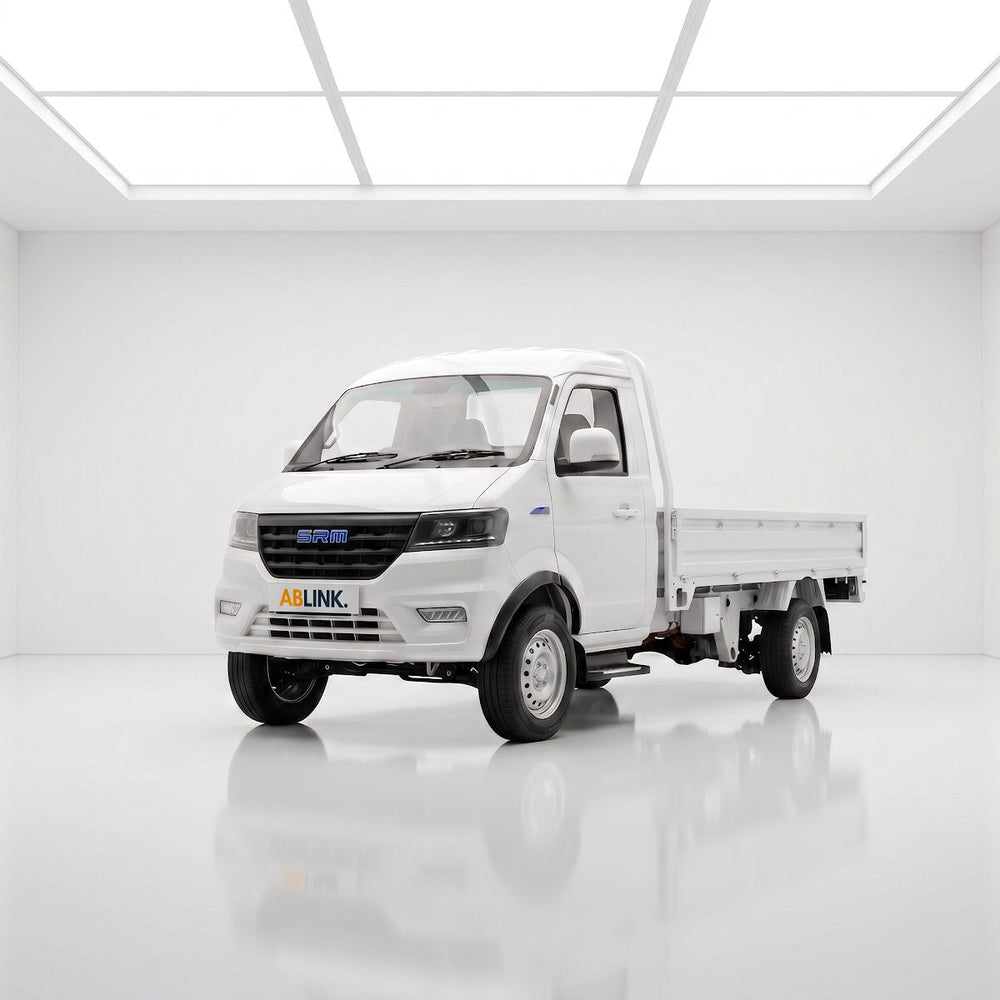
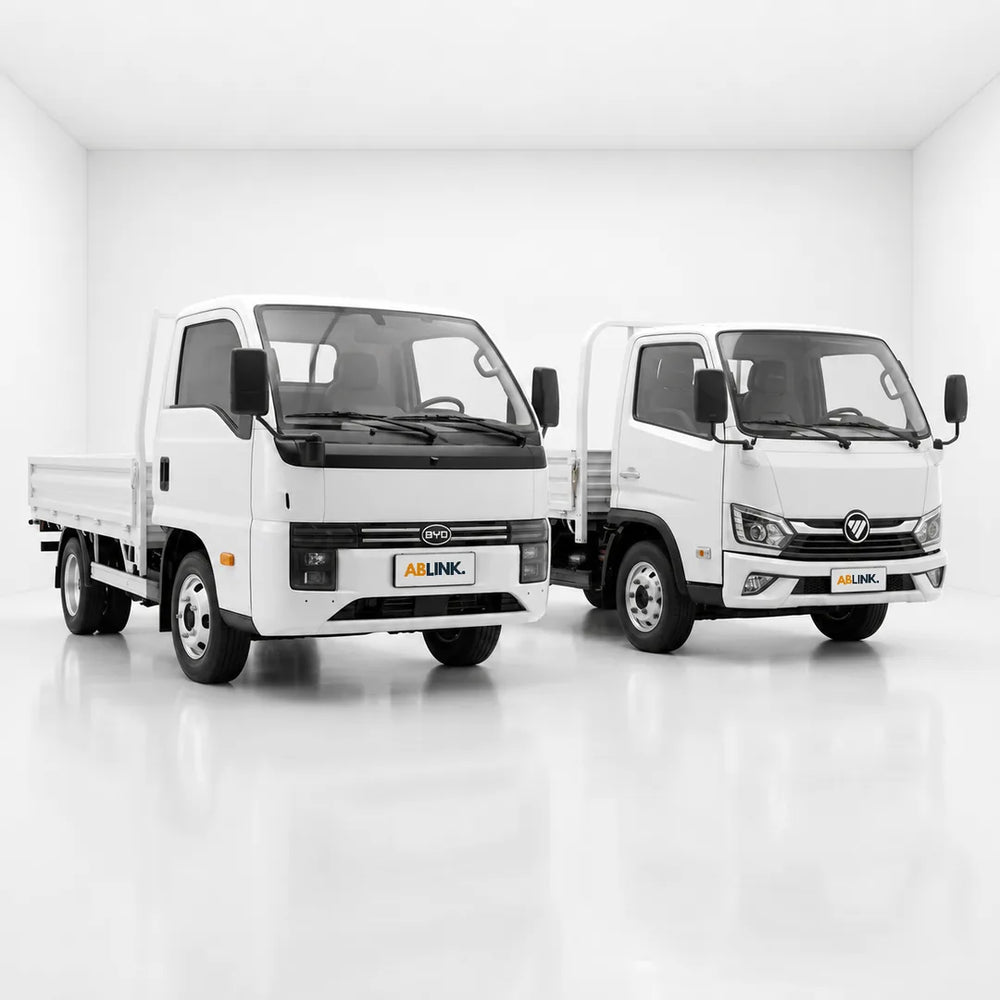
Four lorry body types cover almost every trade in Singapore: open deck, hood, box and freezer. "Hood" is the trade word for a canopy. The tailgate is a separate add-on for any of them.
| Body | What it gives you | Best for | Watch-out in Singapore |
|---|---|---|---|
| Open deck | Flat tray with side boards, loads from three sides | Building materials, pipes, scaffolding, machinery | No weather cover; cannot carry chilled or frozen food |
| Canopy (hood) | Frame and cover over the deck, sides can open | Tools, furniture, goods that must stay dry, crews | Height limits apply; worker-carrying rules apply in full |
| Box | Fully enclosed, lockable body | Parcels, retail stock, moving jobs, packaged goods | Heavier than an open deck, so check the licence class |
| Freezer | Insulated body with a refrigeration unit | Chilled and frozen food, cold-chain distribution | Most structure of the four; SFA temperature duties apply |
Our own measurements guide for the smallest size, what fits in a 10ft lorry, shows the 10ft lorry size and deck you actually get before any body goes on.
Which lorry body suits your trade?
Start from the cargo, then check the licence. Here's how we'd match common trades.
| Your trade | Our pick | Why |
|---|---|---|
| Renovation, construction, landscaping | Open deck or canopy | Long and dirty loads load faster from the side; add a canopy if you ferry workers |
| Movers and furniture delivery | Box, with tailgate | Lockable, dry, and the tailgate spares backs on heavy items |
| Parcel and e-commerce distribution | Box | Security and a clean surface for signage |
| Frozen food, seafood, ice cream | Freezer | SFA sets -18°C or below for frozen food in transit |
| Fresh produce, dairy, catering supplies | Freezer, set for chilled loads | Chilled food must stay at 4°C or below; confirm the unit holds that range |
Two picks we would skip. An open deck for any food business, because SFA asks for a covered vehicle. And a freezer body "just in case" for a trade that carries dry goods, because you pay for it in weight every single day.
How can the body change the licence your driver needs?
The body can push a lorry from Class 3 into Class 4, because licence classes in Singapore are set by unladen weight and the body is part of that weight.
The Road Traffic Act's definition of "weight unladen" takes in "the body and all parts (the heavier being taken where alternative bodies or parts are used)" (Road Traffic Act 1961). Which means the weight that matters is the chassis plus whatever body sits on it. Swap bodies, and the heavier one is the one that counts.
Now set that against the licence table. SPF's Class 3 covers "motor tractors and other motor vehicles (not being electric light goods vehicles or electric small buses) the weight of which unladen does not exceed 2,500kg". For electric light goods vehicles the Class 3 ceiling is 3,000 kg unladen. Above 2,500 kg unladen, a load-carrying vehicle falls into Class 4 (SPF, updated 15 June 2026).
So length never decides the licence. A 10ft or 14ft lorry is Class 3 only if the finished build stays under the line. Walls, doors, insulation, a refrigeration unit, a tailgate: each adds weight. Less headroom follows.
Here's the stake in plain terms. If your drivers hold only Class 3 and the finished lorry weighs in above 2,500 kg unladen, none of them may legally drive it. We cover the full licence picture in what a Class 3 licence covers against Class 4.
Is a freezer body on a 10ft lorry still Class 3?
It can be. Never assume it. The answer is one number: the unladen weight of that chassis with that freezer body fitted.
We found no official source that publishes a standard weight for each body type, and ABLINK's listings don't state unladen weight per build either. Ask for the unladen weight of the finished build in writing before you order, and compare it with 2,500 kg (diesel or petrol) or 3,000 kg (electric light goods vehicle).
Electric lorries get more room here. A G-plate lorry is, in LTA's words, one "with maximum laden weight not exceeding 3,500 kg", which makes it a light goods vehicle. If it's also electric, SPF's 3,000 kg Class 3 limit applies instead of 2,500 kg. That extra 500 kg of headroom is why we'd look at an electric chassis first if you need a freezer body and your drivers hold Class 3.
Our electric 10ft lorries compared guide compares the electric 10ft options in detail.
Do you need LTA approval to add a canopy or change the body?
Yes, for changes after registration. LTA's goods-vehicle procedures say: "You should consult the vehicle manufacturer and seek approval from LTA before carrying out any modification to the vehicle." The same document adds that "the modification work has to be carried out by either the vehicle manufacturer or an agent authorised by the vehicle manufacturer" (LTA goods vehicle procedures).
OneMotoring sorts every change into three groups: modifications that don't need approval, modifications that need LTA's approval, and modifications that aren't allowed. Get it wrong and you risk a loss far bigger than the canopy: an individual caught with an illegal modification can be fined up to S$20k, jailed for up to two years, or both, and repeat offenders face double penalties (OneMotoring, 2026).
Owners ask this in public. One wrote on a motoring forum: "Must I update LTA if I were to add on a canopy to my 10ft lorry?" Ask LTA before the workshop starts. Not after.
Our view: order the body you need with the new lorry. Converting later means an approval, an authorised workshop and a fresh weight question. Need a canopy within a year? Build it in now.
How high can a lorry canopy be?
LTA sets two canopy height limits, both measured from the road surface, in its rules for lorries that carry workers.
- Light lorries (G-plate, up to 3,500 kg maximum laden weight): the canopy may rise no higher than 1.35 times the cabin's own height.
- Heavy lorries (X or Y plate, above 3,500 kg): the canopy may stand no more than 3.2m above the road, however tall the cabin.
LTA explains the limits exist "to ensure the stability of the vehicle", and a canopy taller than them needs a Professional Engineer to certify it (OneMotoring commercial vehicles).
Height matters on the road too. On the same page, LTA says heavy goods vehicle owners must apply for a police escort when the vehicle height exceeds 4.5m. Check 14ft lorry height with the canopy fitted, not the bare cab, when you plan car parks and loading bays; our lorry sizes compared guide lists clearances by size.
Can a canopy lorry carry workers after the 2027 caged-deck ban?
Yes, if it meets LTA's conditions, and from 2027 the canopy becomes the main legal route. MOT and LTA announced on 4 March 2026: "From 1 Jan 2027, MOT and LTA will ban the ferrying of workers in caged lorry decks." Companies can still use caged lorries for goods and equipment. Those who want to keep carrying workers can "convert the rear deck of their lorries to incorporate a canopy and side railings" (MOT-LTA, 2026).
A canopy alone isn't enough. LTA's conditions for carrying workers start with higher side railings, plus rain covers on every open side of the canopy. Each worker sits under the canopy, with no part of the body higher than 1.1m above the deck. Capacity works out at 0.372 m² of deck per seated worker, and the lorry is capped at 60 km/h or the posted limit, whichever is lower (OneMotoring).
You'll read online that canopy lorries are the natural choice for carrying passengers. That skips every condition above, and from 1 January 2027 a crew riding in a caged deck instead will expose you to penalties. If your crews ride in the back, specify the canopy, the railings and the rain covers together, and check the seated count against the deck area before you sign.
What does SFA require for chilled and frozen food transport?
SFA sets two temperatures for food on the move. Frozen food is to be "maintained at -18°C or below with a core temperature not exceeding -12°C during transportation". Chilled food is to be "maintained at 4°C or below with a core temperature not exceeding 7°C during transportation" (SFA).
SFA's licensing conditions for food establishments, updated on 1 January 2026, go further on the vehicle itself (SFA licensing conditions, 2026):
- "Covered van or truck with racks or other necessary facilities are to be used."
- A cold store vehicle should carry a temperature recording device to monitor storage temperature.
- The load space has to be lined up to the roof with stainless steel or another impervious material.
- Vehicles that carry cooked food should not be used for any other purpose.
Put those next to the four bodies and the choice narrows fast. Open decks and canopies are out for food, and a box can be covered and lined but can't hold 4°C in Singapore's heat.
Whether you call it a freezer truck or a chiller truck, the rule is the same: for chilled or frozen goods you need a freezer body with a recorder fitted. Our chiller, frozen or dual-zone refrigerated trucks guide covers the cold-chain set-up in depth.
Does food need a box body or a freezer body?
If anything you carry must stay at 4°C or below, choose the freezer body. A box body suits food only when the goods are shelf-stable and packed, such as dry groceries or canned stock.
Skip the box-plus-ice-boxes plan for chilled runs. SFA's temperature duty applies to the load, not your average day. If one customer in five needs chilled delivery, that customer decides the body.
The reverse holds too. A freezer body carrying only dry cartons costs you headroom against the 2,500 kg Class 3 limit every day, for no return.
Do you need a tailgate?
Choose a tailgate if your drivers lift heavy items off the back more than a few times a day. ABLINK lists "TAILGATE" as an add-on on every new 10ft, 14ft and 24ft lorry, so you can pair it with any of the four bodies.
There's also a rule worth knowing if you carry workers under a canopy. LTA relaxes one rule here: when a rear power tailgate covers at least half the canopy's height, the open rear of the canopy doesn't need its own rain cover. The side and front covers still apply.
Weigh it against the licence question from earlier. A tailgate is one more part in the unladen weight, so include it when you ask for the weighed figure of the build. Our view: movers, furniture retailers and beverage distributors earn it back in time saved (our best van and lorry for movers guide goes deeper). A contractor loading timber from the side will rarely use it.
Do you have to tell your insurer about a new body?
Yes, if you change the body or add a canopy after the policy starts. OneMotoring says: update your motor insurer "of any modifications made to the vehicle". It adds that the General Insurance Association of Singapore advises you to notify your motor insurer, and that if you don't, "your claims may be declined in the event of an accident, and the motor insurance policy considered void" (OneMotoring).
ABLINK is a LONPAC and Tokio Marine authorised agent with tailored coverage for cars, vans, lorries and commercial fleets, so you can declare the build when you get a quote through motor insurance through ABLINK. For how cover works on a business vehicle, read our commercial vehicle insurance for businesses guide.
What extra rules apply on a heavier 14ft or 24ft lorry?
Once the maximum laden weight passes 3,500 kg, the lorry is a heavy goods vehicle, which LTA defines as 3,501 kg to 16,000 kg. Three things change for your body plan.
First, the canopy limit becomes a fixed 3.2m from the road, not a multiple of the cabin height. Second, LTA requires vehicles with MLW exceeding 3,500 kg to be fitted with approved rear underrun bumpers and sideguards before registration, so the body builder has to leave room for them. Third, a heavy goods vehicle with MLW over 5,000 kg needs a valid Vehicle Parking Certificate (VPC) to park at designated spaces.
How do you choose a lorry body? A six-step check
- List what you carry in a normal week, and mark anything that must stay at 4°C or below. One chilled item decides the body.
- Write down the licence your drivers hold today. Class 3 means a 2,500 kg unladen ceiling, or 3,000 kg on an electric light goods vehicle.
- Decide whether workers will ride in the back. If yes, plan a canopy with higher side railings and rain covers, and count 0.372 m² of deck per seated worker.
- Decide on the tailgate now, not later. It's part of the build's weight and part of LTA's rain-cover rule.
- Ask for the unladen weight of the exact chassis-and-body build in writing, and check it against step 2 before you pay a deposit.
- Declare the body to your insurer when you insure the lorry, and again if you ever change it.
If step 5 comes back over your drivers' limit, you have three honest options: a lighter body, an electric light goods vehicle with its higher Class 3 ceiling, or a Class 4 driver. What you shouldn't do is order first and hope.
Which new lorries at ABLINK come with these bodies?
Every new 10ft, 14ft and 24ft lorry in ABLINK's range offers the same four bodies. On 23 September 2026 the live listings showed 21 lorry models with open deck, hood, box and freezer options plus the tailgate add-on:
- 8 new 10ft lorries, three diesel and five electric
- 8 new 14ft lorries, six diesel and two electric
- 5 new 24ft lorries, all diesel
Crane trucks come with an open deck only; tipper trucks carry a tipper body. Each listing shows the body options, the tailgate and the latest price, so you can compare builds before you call.
What should you check on a used lorry's body?
A used lorry comes with its body already chosen, so the questions flip. Ask the seller whether the body was changed after registration, and if it was, whether LTA approved it and an authorised workshop did the work. Ask for the unladen weight as it stands today. Then check the body against your cargo and your drivers' licence exactly as you would for a new build.
Browse refrigerated lorry listings on ABLINK's marketplace, which carries units from several dealers, and put the same questions to the dealer who lists the one you like.
How to spec your lorry body with ABLINK
Tell us what you carry, whether anything needs chilling, and which licence your drivers hold, and ask for the unladen weight of the exact chassis-and-body build before you pay a deposit.
Start with the new lorries with open deck, hood, box or freezer bodies, or visit us at 421 Tagore Industrial Avenue to see the options in person.
Frequently asked questions
Which lorry body type is best for a small business in Singapore?
For most small businesses carrying dry goods, a box body is the safest all-rounder: lockable, weatherproof and good for signage. Choose an open deck for building materials, a canopy if crews ride in the back, and a freezer only if you carry chilled or frozen food. Check the finished build's unladen weight against your drivers' licence first.
Can a Class 3 lorry carry a freezer body?
Only if the finished lorry, freezer body included, weighs no more than 2,500 kg unladen, or 3,000 kg for an electric light goods vehicle. The Road Traffic Act counts the body in unladen weight. Ask for the unladen weight of the exact build in writing before ordering, and compare it with the SPF Class 3 limit.
Do I need LTA approval to add a canopy to my lorry?
Treat it as yes. LTA's goods-vehicle procedures say to consult the manufacturer and seek LTA approval before any modification, with the work done by the manufacturer or its authorised agent. Illegal modifications can mean fines of up to S$20k. Tell your motor insurer afterwards, or a claim may be declined.
How does a canopy affect 14ft lorry height limits?
For G-plate light lorries up to 3,500 kg maximum laden weight, the canopy must not exceed 1.35 times the cabin height, measured from the road. For heavier X or Y plate lorries, the limit is 3.2m from the road. Going higher needs a Professional Engineer's certification, according to LTA. A 14ft lorry above 3,500 kg falls under the 3.2m rule.
Can I carry chilled food in a box lorry without a chiller?
Not if the food must stay chilled. SFA requires chilled food to be kept at 4°C or below during transport, with a core temperature not exceeding 7°C, and asks for cold store vehicles to carry a temperature recording device. A plain box body can't hold that in Singapore's climate. Use a refrigerated (freezer) body and confirm its unit holds chiller temperature.
Is a tailgate worth adding to a 10ft or 14ft lorry?
Worth it if your drivers unload heavy items at the back several times a day, as movers and beverage distributors do. Skip it if you load from the side. Remember it adds to unladen weight, so include it in the build figure you check against your drivers' Class 3 limit.
Disclaimer: This guide on lorry body types is general information, not legal advice. Licence classes, modification approvals, worker-transport rules and food-transport conditions are set by SPF, LTA, MOT and SFA, and can change; the sources linked above were checked on 23 September 2026.
Unladen weight depends on the exact chassis and body build, so confirm it for your vehicle before you order. Vehicle and body prices are shown on each live listing and are quoted separately from COE, which moves at every bidding exercise. Please confirm current details with the ABLINK team before you commit.