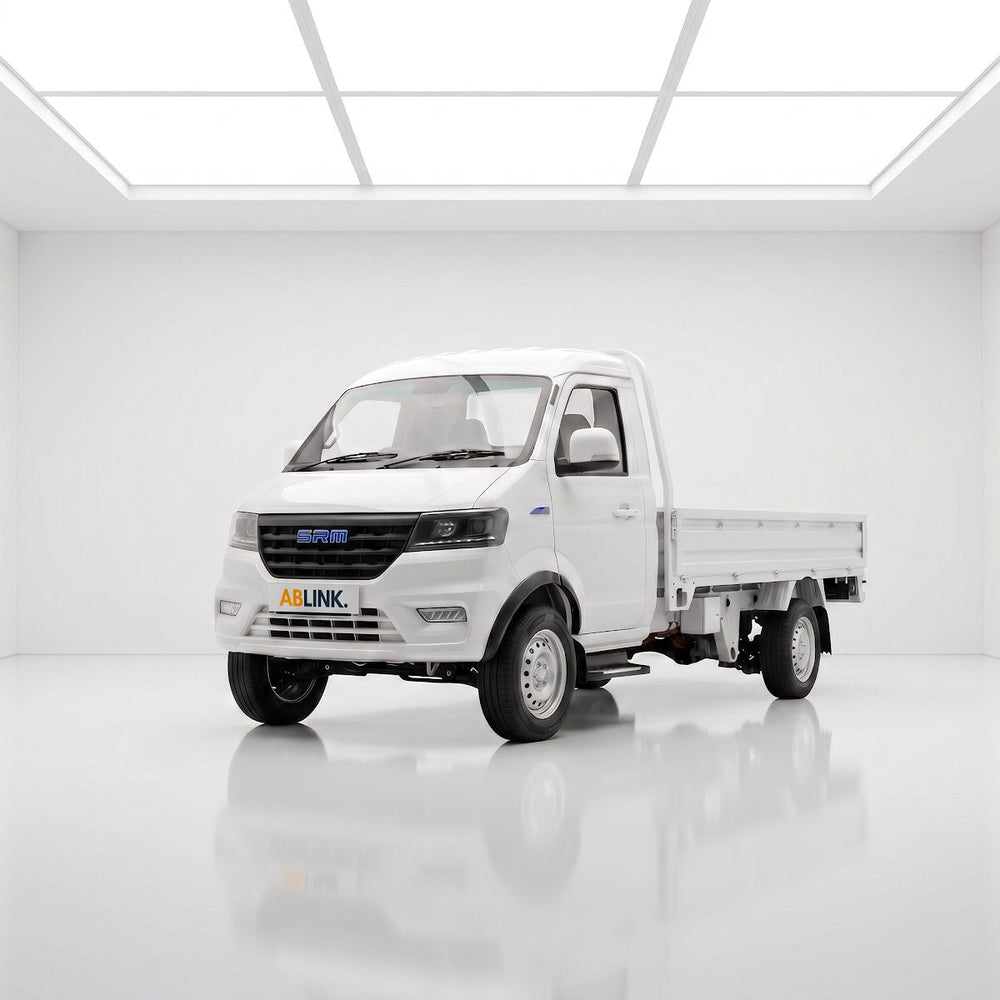
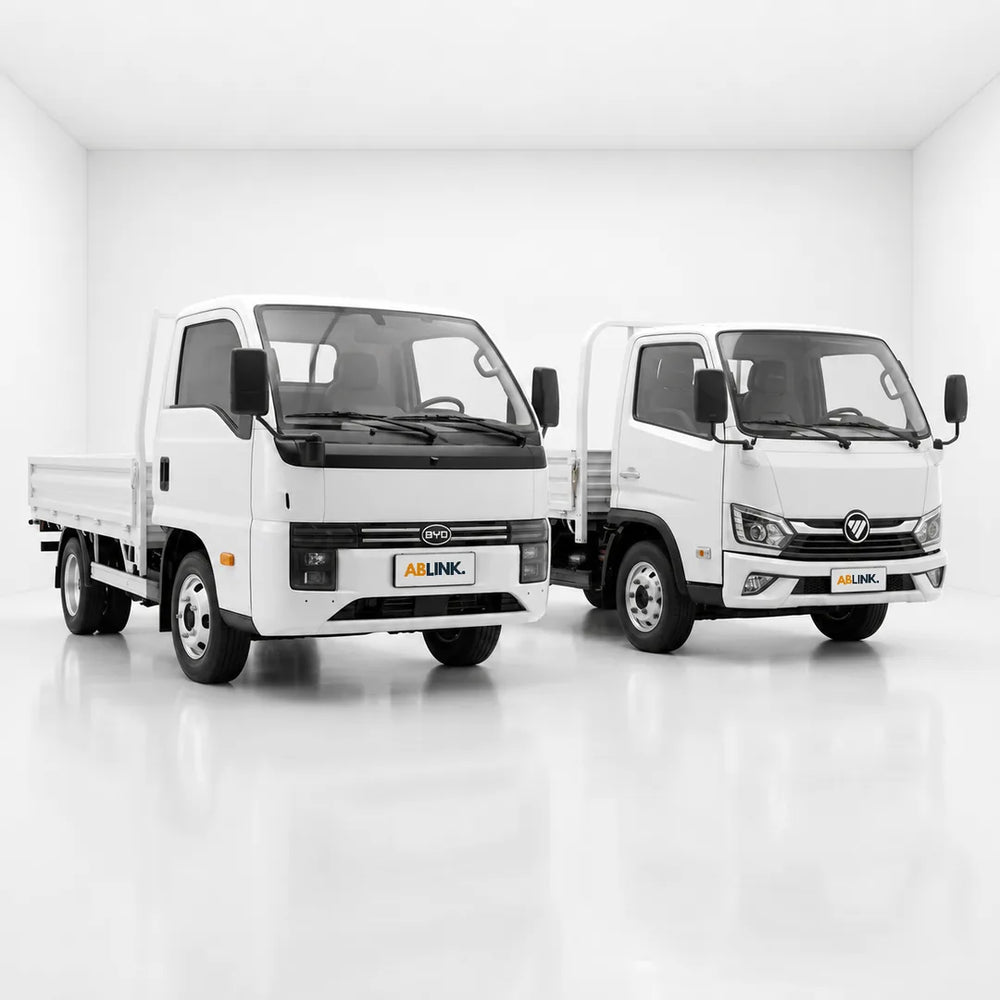
A dumper truck in Singapore is one of three quite different machines, and only one of them is legal on a public road. Contractors use "dumper" for a small off-road site dumper, for a road-registered dump truck (a tipper), and sometimes for a waste skip. Buying the wrong one is an expensive mistake, so this guide separates them.
Key takeaways
- "Dumper" covers three machines here: the off-road site dumper, the road-legal dump truck / tipper, and the skip people mean when they type "dumpster".
- Only a road-registered tipper can legally carry spoil on a public road. A site dumper stays inside the hoarding.
- A tipper needs a Class 4 licence, not Class 5 — even at 25,000 kg. The legal test is what the vehicle is built to do, not what it weighs.
- Licence class is set by unladen weight. LTA road rules are set by laden weight. Mixing up those two numbers is the most common and most expensive error we see.
- Any tipper above 5,000kg laden needs a Vehicle Parking Certificate before you can tax it, and must be parked in a designated heavy-vehicle lot between midnight and 6am.
- COE Category C closed at S$91,545 in the first August 2026 exercise — a separate cost from the vehicle body.
What is a dumper truck in Singapore?
A dumper truck is a vehicle that carries loose material and discharges it by tipping. In Singapore that description covers two legally distinct machines — an off-road site dumper and a road-registered tipper — and the word is also mistyped for a waste skip. Which one you need depends entirely on whether the material crosses a public road.
Search "dumper truck Singapore" and the results mix heavy-equipment rental yards, road-truck dealers and skip-hire companies on one page. That is not the search engine being careless. It reflects how the word is genuinely used on Singapore sites, where three machines share one nickname.
The site dumper: plant, not a vehicle
A site dumper is a compact four-wheeled machine with a front skip that tips forward. Capacity typically runs from around 0.5 tonnes to 5 tonnes. It has no COE, no road tax and no number plate, because it is classified as plant rather than a vehicle. It moves spoil, aggregate and wet concrete across broken ground inside the site boundary.
If your material never leaves the hoarding, this is the machine you want — and you want it from an equipment rental yard rather than a vehicle dealer. Operator competency for construction plant falls under workplace safety rules rather than road rules, so confirm current requirements with the Ministry of Manpower before you put anyone on one.
The dump truck, which Singapore calls a tipper
This is a road-registered goods vehicle with a hydraulic tipping body. It carries a COE, a number plate and road tax, and it can drive from your site to a disposal facility on public roads. In Singapore trade usage the word is almost always tipper, which is exactly why "dumper" searches surface so much irrelevant material — the local industry files these under a different name.
If you are moving earth off site, this is the only one of the three that can do it legally. Our tipper truck buyer's guide covers model selection in more depth, and the 10-wheel tipper comparison goes further into configuration.
The "dumpster" mix-up
A meaningful share of dumper searches are people looking for a waste skip. "Dumpster" is American English; in Singapore the container you fill with construction waste is a skip, and you hire it from a waste management contractor. No vehicle purchase is involved at all. If that is what you need, neither machine above applies.
Which one do you actually need?
| Question | Site dumper | Tipper (dump truck) | Skip |
|---|---|---|---|
| Leaves the site on public roads? | No | Yes | Collected by contractor |
| Needs COE and road tax? | No | Yes — Category C | No |
| Needs a driving licence? | No road licence; plant competency applies | Yes — Class 4 | No |
| Needs a Vehicle Parking Certificate? | No | Yes, above 5,000kg laden | No |
| Typical capacity | 0.5–5 tonnes | Up to 25,000 kg gross | Varies by contractor |
| Buy or hire from | Equipment rental yard | Commercial vehicle dealer | Waste contractor |
The rest of this guide deals with the tipper, because that is the machine carrying the regulatory weight — and the one most people are really asking about when they search for a dumper truck.
Why is a 25-tonne tipper still a Class 4 licence?
This is the single most misunderstood rule in Singapore's construction fleet, and it costs operators money in training they never needed.
The instinct is that a bigger truck must demand a higher class. It does not. Singapore's licence classes are defined first by what the vehicle is constructed to do, and only then by weight.
What Class 4 actually says
The Singapore Police Force defines Class 4 as covering "motor vehicles which are constructed to carry a load or passengers and the weight of which unladen exceeds 2,500kg", plus vehicles not constructed to carry a load with an unladen weight up to 7,250kg. Read the first limb carefully: for load-carrying vehicles there is a floor of 2,500kg and no ceiling at all.
What Class 5 actually says
Class 5 covers light and heavy locomotives — defined as "motor vehicles which are not constructed to carry any load", with 11,500kg unladen separating light from heavy. The phrase carrying all the weight is "not constructed to carry any load". A machine that carries nothing is the one that needs the higher class.
The contrast, in two vehicles we stock
The cleanest way to see the rule is to put two machines side by side.
The Isuzu CYZ52M tipper truck runs a 15.6-litre six-cylinder turbo diesel and a gross vehicle weight of up to 25,000 kg. It is built to carry a load and discharge it. Load-carrying, therefore Class 4 — despite being a 25-tonne machine.
The Mitsubishi Fuso FP70 prime mover carries nothing itself. It exists to pull a trailer. Not constructed to carry a load, so it sits under Class 5.
The prime mover is the lighter concept and the higher licence class. That inversion is precisely why the rule confuses people. For the full breakdown see our guides to Class 3 versus Class 4 and the Class 5 licence.
Where this decision usually goes wrong
The pattern we see most often is a contractor who sizes the machine to the job and forgets to size the licence to the machine. A firm wins work carting spoil to a disposal facility, buys a tipper assuming the existing Class 3 drivers can handle it, then discovers at deployment that nobody on the payroll holds Class 4. Training takes weeks. The truck sits.
The reverse error is quieter and more expensive: sending drivers for Class 5 training they never needed, on the assumption that a heavy tipper must require the heaviest licence. That is a five-figure detour on a rule that was never in force. Confirm the class against the vehicle's constructed purpose before anyone enrols in anything.
One caution from experience: holding Class 4 means a driver is licensed to drive the truck. It is not the same as being competent to operate a tipping body near overhead services or on soft ground, which is where most tipper incidents happen. Licence and competency are separate things, and only one of them is issued by the state.
Unladen versus laden: the two numbers people mix up
Almost every argument about tipper regulation traces back to one confusion. Two different weight measures govern two different things.
Unladen weight (ULW) is the vehicle empty. It sets your driving licence class.
Maximum laden weight (MLW), sometimes quoted as gross vehicle weight, is the vehicle plus its maximum legal load. It sets LTA's road and parking rules.
You can have a driver correctly licensed for the truck, on a vehicle correctly registered, and still be non-compliant on parking, blind-spot equipment or overnight storage — because those obligations attach to the laden figure and nobody checked it. Ask for both numbers when you are quoted on a vehicle. A dealer who volunteers only one is not giving you enough to plan with.
How LTA bands goods vehicles by weight
LTA sorts goods vehicles into three bands by maximum laden weight:
- Light Goods Vehicle (LGV) — up to 3,500kg
- Heavy Goods Vehicle (HGV) — 3,501kg to 16,000kg
- Very Heavy Goods Vehicle (VHGV) — above 16,000kg
A 10-wheel tipper at 25,000 kg gross is comfortably a Very Heavy Goods Vehicle. That classification carries obligations of its own — LTA lists tipper trucks among the vehicle types subject to blind-spot safety requirements, reflecting how much of the road a loaded tipper cannot see. It does not change your licence class, because licence class was never keyed to laden weight in the first place.
What does a dumper truck cost in Singapore?
There is no single figure, because a road-legal tipper carries at least three separate costs and a site dumper carries almost none of them. A site dumper is typically a rental line item measured in days or weeks. A tipper is a capital purchase plus a COE plus ongoing compliance.
For a tipper, budget in three parts: the vehicle body, the Certificate of Entitlement, and the parking and compliance overheads.
Base price, or price inclusive of COE and GST?
This is the question buyers ask us most, and it is worth being precise about. The base price is the vehicle body alone. The figure you actually pay to put the truck on the road is the price inclusive of COE and GST, and the gap between the two is substantial — Category C alone has been running above S$90,000 through 2026.
Dealers quote these apart because COE moves at every bidding exercise and cannot be fixed in advance. That is legitimate, but it means a headline number from one dealer and an all-in total from another are not comparable. Ask every dealer the same question: does this figure include COE and GST, or not? Our own new vehicle inventory is listed inclusive of COE and GST, so you can compare like for like.
COE Category C
Goods vehicles and buses bid in Category C. This is a separate cost from the vehicle body and it moves at every bidding exercise. In the first bidding exercise of August 2026, Category C closed at S$91,545. The Prevailing Quota Premium for August 2026 was S$92,599 for a ten-year renewal, or S$46,300 for five years.
Those figures are a snapshot, not a quotation. Category C has been volatile through 2026 — the same category closed at S$93,889 in late July, roughly S$2,300 higher than three weeks later. On a three-truck fleet purchase, that swing alone is the price of a small van.
Supply explains the behaviour. LTA set the total COE quota for August to October 2026 at 19,085 across all categories, with Category C provisioned for 0.25 per cent annual growth against the Category C vehicle population as at 31 December 2025. That is a deliberately tight release. Commercial vehicle demand follows construction and logistics activity rather than consumer sentiment, so when a project cycle turns, a small quota meets a sharp rise in bidding and the premium moves fast.
The practical takeaway is timing rather than prediction. Nobody can tell you where Category C closes next month. What you can control is whether you are forced to bid in a specific exercise because a vehicle is already committed, or whether you can wait a cycle. Check the current bidding result before you build a budget, and build the budget with room to move.
Vehicle Parking Certificate
Any heavy goods vehicle with a maximum laden weight above 5,000kg needs a Vehicle Parking Certificate. Every 10-wheel tipper is caught by this.
The VPC proves you have somewhere legal to park overnight, and you must produce it when registering a new heavy vehicle, renewing road tax, transferring ownership or converting the vehicle. The certificate costs S$6, is not transferable, and runs for the period of the road tax.
The operational consequence matters more than the fee. Between midnight and 6am, heavy vehicles must be parked in designated heavy-vehicle lots. If you have not secured a space, you have nowhere to keep the truck — and that is a problem to solve before purchase, not after delivery.
One 2026 change worth knowing
LTA has suspended the VPC requirement for trailers for a two-year trial running from 6 February 2026 to 5 February 2028. This applies to trailers only. If you are buying a tipper, the VPC requirement still applies to you in full — do not let a secondhand account of the trial talk you out of arranging a space.
Buy new, buy used, lease or hire?
Four routes, and the right one depends on how continuous the work is rather than on the size of the machine.
Buying new earns its keep when the machine is in regular use and the COE is amortised across years of work rather than one contract. You get a full ten-year COE term and no inherited wear on the tipping gear.
Buying used shortens the runway but also the outlay. The deciding variable is COE remaining, not mileage — a vehicle with a short term left brings the renewal decision forward, at whatever the prevailing premium happens to be. We keep a used commercial vehicle range alongside the new one, and the marketplace listings show what is currently available with the remaining COE stated on each unit.
Hiring suits a one-off project. It avoids the COE, the VPC and the overnight parking problem in a single decision. Our monthly lorry rental guide covers that route in detail.
Leasing sits between buying and hiring. Leasing a commercial vehicle keeps the truck on your operation without the capital outlay or the COE exposure, and the monthly cost is predictable in a way a COE purchase is not.
Price at least two of the four before committing. Operators who only price a new purchase often find a used unit or a lease matched their actual utilisation at materially lower risk.
Where can you buy a dumper truck in Singapore?
The answer depends on which machine you settled on above. Site dumpers come from heavy-equipment rental and plant suppliers. Road-legal tippers come from commercial vehicle dealers, because the vehicle has to be registered, taxed and COE-bid — a process a plant yard does not handle.
A dealer worth buying from carries both sides of the market. ABLINK sells new commercial vehicles and used vans and lorries, so the same team can price a new tipper against a used unit with COE remaining and tell you honestly which one fits your utilisation.
This is worth knowing before you start shopping, because a search for a dumper sale in Singapore returns both kinds of seller on the same page with no obvious way to tell them apart. A plant supplier listing a "dumper for sale" is almost always offering off-road equipment with no COE attached. If the listing does not mention COE, road tax or a licence class, you are looking at plant, not a road vehicle.
Two 10-wheel tippers sit in our heavy-duty range, and they suit slightly different operations — the Isuzu CYZ52M and the Mitsubishi Fuso Super Great FV70. Availability moves, so check the current stock position and price on each product page. Body prices are quoted separately from COE, so read both figures before comparing against another dealer's headline number.
Road-legal tippers in our range
| Isuzu CYZ52M | Mitsubishi Fuso Super Great FV70 | |
|---|---|---|
| Configuration | 10-wheel tipper | 10-wheel tipper |
| Gross vehicle weight | Up to 25,000 kg | Up to 25,000 kg |
| Engine | 15.6L 6-cylinder turbo diesel | 10.7L 6-cylinder turbo diesel |
| Body | Hydraulic tipping system | Hydraulic tipping system |
| Licence class | Class 4 | Class 4 |
| LTA classification | Very Heavy Goods Vehicle | Very Heavy Goods Vehicle |
| VPC required | Yes | Yes |
If your work involves lifting rather than tipping, the crane truck guide covers a different set of rules. And if you are still mapping which vehicle class fits the business at all, start with which commercial vehicle your business needs.
Frequently asked questions
What is a Class 3 driving licence in Singapore?
Class 3 covers motor cars with an unladen weight not exceeding 3,000kg carrying no more than seven passengers excluding the driver. It is the standard car licence. It does not cover a tipper truck, which is a goods vehicle built to carry a load.
Can a Class 3 licence holder drive a 14ft lorry in Singapore?
It depends on the lorry's unladen weight, not its body length. Class 3 covers vehicles up to 3,000kg unladen. Many 14ft lorries sit below that line and are drivable on Class 3; heavier specifications cross into Class 4. Check the unladen weight on the specific vehicle's registration details rather than assuming from body size.
What is a Class 4 driving licence in Singapore?
Class 4 covers vehicles constructed to carry a load or passengers with an unladen weight exceeding 2,500kg, and vehicles not constructed to carry a load with an unladen weight up to 7,250kg. For load-carrying vehicles there is no upper weight limit, which is why a 25,000 kg tipper remains Class 4.
How do you apply for a Class 4 licence in Singapore?
You apply through one of Singapore's approved driving centres, which handle the provisional licence, theory and practical training, and the test. Requirements and course fees vary between centres and change over time, so confirm the current process directly with the centre before enrolling.
Do I need a Class 5 licence for a 10-wheel tipper?
No. Class 5 applies to locomotives — vehicles not constructed to carry any load, such as prime movers. A tipper is constructed to carry and discharge a load, so it sits in Class 4 regardless of tonnage. This is a widespread misconception in the industry.
Does a site dumper need a COE?
No. A site dumper is construction plant rather than a road vehicle. It has no COE, road tax or number plate, and cannot legally be driven on public roads. Only a road-registered tipper can move material off site.
Talk to us before you commit
The wrong machine on the wrong licence is a costly correction. If you are weighing a tipper against a site dumper, or working out whether your drivers are already licensed for what you plan to buy, browse the current heavy-duty truck range or speak to our team about your operation.
Sources: Driving licence class definitions — Singapore Police Force. Vehicle Parking Certificate, goods vehicle classification and COE Category C — Land Transport Authority. Construction plant operator training — Ministry of Manpower.
Disclaimer: Vehicle body prices are quoted separately from COE unless expressly stated. COE premiums change at every bidding exercise and the figures above are a snapshot at the date of writing, not a quotation. Licence class, VPC and registration outcomes are subject to LTA assessment; any financing is subject to lender approval. Regulations cited were accurate at the time of writing — confirm current requirements with LTA, SPF or MOM before making a purchase decision. Specifications are indicative; confirm with Ablink.